



Secure ATM Remote Access That Works in the Field

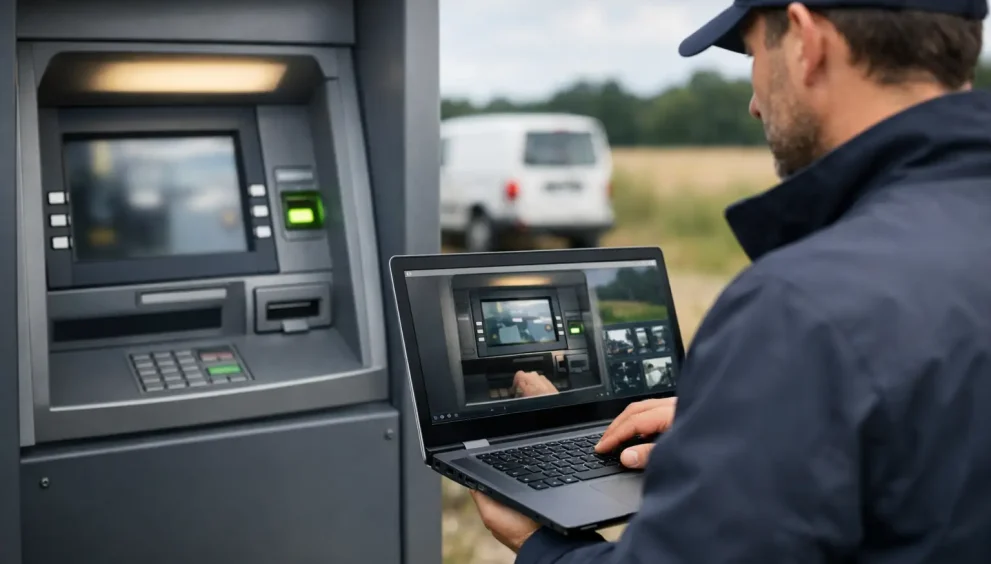
A remote support session can resolve a software fault in minutes. It can also provide a direct path from a compromised administrator account to a cash-handling endpoint. That is the operational tension behind secure ATM remote access: service organizations and banks need fast intervention across dispersed fleets, but every remote connection extends the attack surface of a device that sits at the edge of the financial network.
The issue is no longer limited to whether an ATM uses a virtual private network or whether remote desktop traffic is encrypted. Secure access is an operating model that combines identity, network design, device hardening, approval workflows, session oversight, and recovery discipline. A failure in any one of those layers can turn a legitimate support tool into an unmanaged privileged channel.
For fleet operators, the practical question is not whether to permit remote access. Most distributed ATM estates require it. The question is how to make each connection narrow in scope, attributable to a person or system, limited in duration, and defensible after the fact.
Why Secure ATM Remote Access Is Different
ATMs are not conventional office endpoints. They may run specialized applications, have peripheral dependencies that require local knowledge, operate on cellular or third-party networks, and remain in service longer than standard enterprise hardware. Some fleets also include several generations of equipment, operating systems, and management platforms.
This creates a difficult mix. A centrally managed, modern ATM may support certificate-based authentication, current endpoint controls, and detailed telemetry. A legacy unit may depend on older communications methods or require an exception until a replacement program is complete. Treating both devices as if they present the same risk can produce false confidence.
Remote access also crosses organizational boundaries. A financial institution may own the ATM, a managed service provider may monitor it, an independent service organization may dispatch technicians, and an equipment provider may need tightly defined diagnostic access. Each party may have a legitimate operational role. None should receive broader or more persistent privileges than that role requires.
The most damaging failures usually arise from convenience decisions: shared accounts for a regional support team, standing vendor access that survives a contract change, remote desktop ports exposed through an exception, or a technician using a personal hotspot during an outage. These choices can reduce immediate friction while eroding accountability and control.
Build Access Around Identity, Not Network Location
A trusted IP address is not a trusted user. Network restrictions remain useful, but they should not be the primary proof that a remote administrator is authorized to work on an ATM.
Each person who initiates a privileged session should use an individual identity protected by multifactor authentication. For high-risk actions, organizations should consider phishing-resistant factors such as hardware-backed authenticators or certificate-based credentials rather than one-time codes alone. The right method depends on the support environment, but the goal is consistent: an attacker who obtains a password should not automatically obtain ATM administration rights.
Role-based access should reflect actual tasks. A help desk analyst who needs to restart an application does not need the same rights as an engineer updating middleware or an administrator changing communications settings. Separate roles also make logging more meaningful. A record that shows an identifiable user performed a defined function is far more useful than a generic entry showing that a shared service account connected.
Privileged access management can add needed discipline, particularly for larger fleets and multi-vendor environments. It can issue temporary credentials, require approval for sensitive sessions, rotate passwords after use, and retain an audit trail. It is not a substitute for a well-designed access model, however. If roles are poorly defined or exceptions are permanent, the platform simply formalizes weak practice.
Eliminate standing privilege where practical
Just-in-time access is especially relevant for vendor and contractor support. Rather than leaving remote administration enabled continuously, an operator can grant access for a specified device group, purpose, and time window. The session can then expire automatically.
This approach introduces some operational overhead. An overnight incident may require an approver or an emergency workflow, and poorly designed approval queues can delay restoration. The answer is not to restore unrestricted accounts. It is to test an emergency access process that is fast, logged, narrowly scoped, and reviewed after the event.
Segment the Network and Limit the Path
Encryption protects data in transit, but it does not decide where a connected user can go. Secure ATM remote access requires a network architecture that limits lateral movement if an endpoint, credential, or remote management service is compromised.
ATMs should reside in controlled network segments that permit only the communications required for transaction processing, monitoring, software distribution, and approved administration. A remote support user should connect through a managed access gateway or jump environment, not directly from the public internet to an ATM. That intermediary can enforce authentication, inspect session requests, apply policy, and centralize records.
Segmentation needs to account for both north-south and east-west traffic. Restricting inbound traffic to the ATM is necessary, but an infected endpoint may still attempt to reach other devices, management servers, or corporate systems. Firewall rules should be specific to approved destinations, ports, protocols, and service functions. Broad any-to-any rules, even when created as temporary troubleshooting exceptions, deserve immediate scrutiny.
Cellular-connected ATMs warrant the same attention. Private APN arrangements, carrier controls, and encrypted tunnels can reduce exposure, but they do not remove the need for strong authentication and segmentation. A cellular connection is a transport path, not a security boundary.
Govern the Remote Session
A secure remote session should be purposeful and observable. Operators need to know who connected, which ATM or management zone they reached, when access began and ended, what privilege level applied, and whether configuration or software changes occurred.
Session recording can be valuable for highly privileged work, vendor intervention, and incident investigation. It can also create storage, privacy, and review burdens. A sensible policy may record administrative sessions while retaining metadata for lower-risk support tasks. The important point is to make retention and access rules explicit before an incident occurs.
Session timeouts and reauthentication reduce risk when a support workstation is left unattended. Command restrictions, file-transfer controls, and clipboard limitations may also be appropriate in remote administration environments. These controls should be tested against field workflows. A policy that prevents an engineer from applying an urgent, approved patch during a service window may encourage off-process workarounds.
Change control should connect remote access to operational evidence. For planned maintenance, the session should reference a ticket or approved change record. For incidents, the operator should document the fault, actions taken, and device status on closure. This matters when a transaction issue, cash discrepancy, or software regression emerges later and the team needs to reconstruct events.
Secure the Devices Behind the Connection
Remote access controls cannot compensate for an ATM with weak local defenses. The endpoint should be hardened according to its supported operating environment, with unnecessary services disabled, application execution restricted, security updates managed, and anti-malware or endpoint detection capabilities used where compatible with the ATM software stack.
Patch management deserves a realistic approach. Financial institutions cannot always apply updates on the same timetable as office IT because ATM application certification, peripheral drivers, and vendor support matrices may constrain deployment. Still, postponement should be a documented risk decision, not an informal habit. Compensating controls may include tighter network policy, reduced remote privileges, monitoring, and an accelerated retirement schedule.
Secure boot, disk encryption, firmware controls, and physical tamper protections also matter, though their availability varies by ATM generation. Remote access strategy should be aligned with these endpoint capabilities. A fleet inventory that cannot identify operating system version, terminal software, communications method, and support status makes prioritization far harder.
Make Vendors Accountable Without Slowing Service
Third-party access is often necessary, particularly when diagnosing software defects or specialized hardware behavior. It should be governed by a defined support model rather than informal trust.
Contracts and operating procedures should specify approved access paths, named or individually attributable accounts, multifactor authentication requirements, permitted hours, data-handling expectations, logging responsibilities, and incident notification timelines. Access should be reviewed when staff change roles, a service agreement ends, or a vendor’s support scope changes.
Vendor technicians also need an efficient path during a serious outage. The best programs distinguish routine access from emergency access and establish who can authorize each. A clear escalation matrix is more effective than a blanket exception made in the name of uptime.
Test Failure, Not Just Connectivity
Many organizations validate remote access by confirming that an engineer can connect to an ATM. That is only the beginning. They should also test whether access is denied when an account lacks approval, whether a session ends at its scheduled expiration, whether logs identify the user and device accurately, and whether emergency access creates a complete record.
Tabletop exercises can expose gaps between security policy and field practice. Consider a compromised vendor credential, a failed jump server, a regional network outage, or a technician who needs to recover a device while the central management platform is unavailable. These scenarios reveal whether teams have secure fallback procedures or simply revert to unmanaged methods under pressure.
Review should be continuous rather than annual. Remote access logs, failed authentication attempts, dormant accounts, rule exceptions, and unusual session times can identify control drift before it becomes an incident. Operations, security, and service management teams need a shared view of these signals because no single function owns the full risk.
The strongest remote-access programs do not make ATM support harder for its own sake. They make authorized work predictable, traceable, and contained, while making unauthorized access materially more difficult. That balance is built in daily operational decisions, especially the small exceptions that teams are tempted to leave in place.