

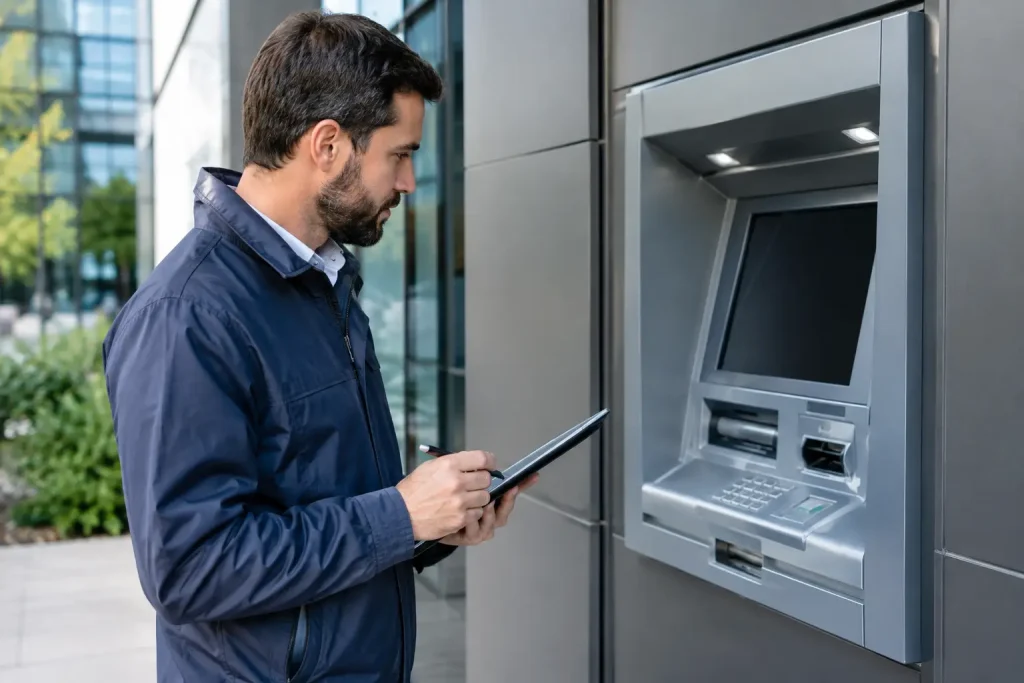
GRG ATMs: What Operators Should Evaluate


A new ATM platform rarely enters a fleet as a simple hardware purchase. For institutions considering GRG ATMs, the central question is not whether a terminal can dispense cash and accept deposits. It is whether the equipment can be supported, monitored, secured, integrated, and replenished at the standard the network already requires.
GRG Banking is a significant global supplier of cash automation and self-service equipment, with an ATM portfolio that spans through-the-wall, lobby, freestanding, recycling, and deposit-oriented configurations. For US operators, its relevance is tied to a broader market reality: banks, credit unions, deployers, and service providers are looking for alternatives that can reduce concentration risk and give them more flexibility in a changing equipment market.
That does not make any platform an automatic fit. ATM procurement decisions have long service lives, and the operational consequences of a poor fit usually emerge after deployment – in certification delays, unavailable parts, difficult software upgrades, or inconsistent field support.
Where GRG ATMs Fit in the Market
GRG competes in a market where incumbent ATM suppliers retain large installed bases, established service channels, and deeply embedded software relationships. That installed-base advantage matters. A platform may be technically capable, but a bank with thousands of terminals already tied to a particular remote-management stack, transaction middleware environment, and maintenance workflow will not replace equipment without a clear operational case.
GRG ATMs can be most relevant in several situations: a new site rollout, a branch transformation program, replacement of aging hardware, a managed-service deployment, or a strategy intended to avoid depending on one equipment manufacturer. The supplier may also draw attention where institutions need configurations that support cash recycling, higher note capacity, assisted self-service, or more flexible physical formats.
The right comparison is not simply unit price against unit price. Operators should compare the fully deployed platform: terminal configuration, certified applications, monitoring, cash-management capability, warranty terms, spare-parts access, field-service coverage, and the cost of maintaining a distinct device family over time.
Hardware Capability Is Only the Starting Point
ATM buyers often begin with the obvious specifications: cassette count, note capacity, display size, dispenser type, deposit capability, and physical footprint. Those factors matter, particularly for locations with high transaction volumes or constrained real estate. They do not, however, determine whether a device will work well in a live estate.
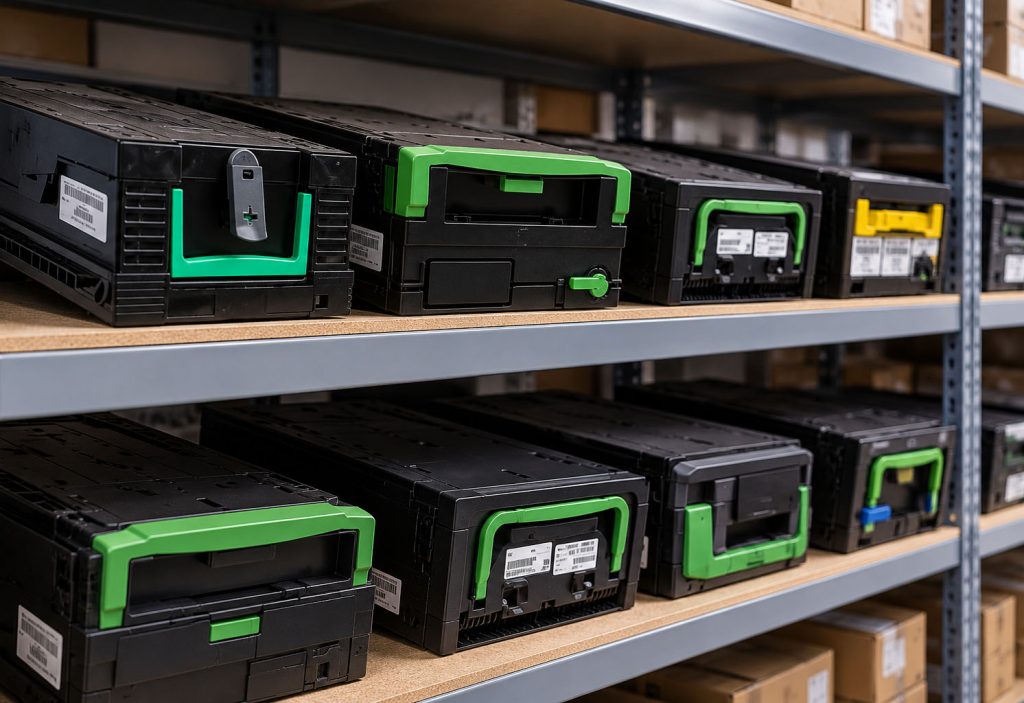
Cash-recycling capability illustrates the point. Recycling can reduce cash-in-transit activity and improve cash availability where deposit volumes are sufficient and note quality is well managed. But it also adds operational complexity. Institutions need defined processes for suspect notes, reconciliation exceptions, cassette management, technician training, and software handling of recycler states. A recycler is not automatically the lowest-cost choice for every branch or off-premises location.
The same applies to deposit automation. A terminal that accepts cash and checks may support branch staffing goals, but only if the bank’s back-office workflows, image quality standards, exception handling, and customer-support procedures are ready for it. Hardware functionality must map to an operating model, not just a product data sheet.
Configuration discipline matters
A consistent fleet configuration can reduce training, accelerate troubleshooting, and simplify spare-parts planning. That benefit can erode when each location receives a custom combination of modules, printers, scanners, safes, and software options.
Before selecting a platform, operations teams should define a manageable set of standard configurations. The decision should include what can be serviced in the field, what requires a specialized technician, and which components are likely to drive repeat calls. A slightly higher initial equipment cost can be justified if it produces fewer configuration exceptions across the network.
Software and Integration Are the Real Gatekeepers
In the US market, hardware must operate within an established web of ATM applications, transaction processors, switch interfaces, encryption services, remote-management tools, and security controls. Compatibility should be validated early, not treated as a final implementation detail.
For GRG ATMs, as with any new hardware family, operators should establish which software stack will run on the proposed configuration and what certifications are required. This includes the terminal application, device drivers, middleware, remote software distribution process, electronic journal collection, key-management process, and support for the required transaction set.
XFS and related standards can make integration more practical, but standards compliance does not eliminate testing. Device behavior, driver maturity, error reporting, peripheral configuration, and recovery from fault conditions still affect how the terminal performs in the field. A function that works in a lab can create avoidable service complexity when it meets real cash, real networks, and real customer behavior.
Institutions should also examine how well a new platform fits their monitoring discipline. Can operations teams see actionable device status? Are fault codes meaningful and consistently exposed? Can the terminal support remote diagnostics, software deployment, and configuration control without frequent site visits? These questions are especially relevant for deployers with geographically dispersed fleets and lean technical teams.
Service Coverage Can Decide the Outcome
A terminal supplier’s product capability is only one part of the support model. The more consequential question is who responds when a dispenser jams, a card reader fails, a safe alarm occurs, or a software issue takes a terminal out of service on a weekend.
Service coverage for GRG equipment can vary by geography, deployment partner, and contract structure. Buyers should avoid broad assumptions based on national claims alone. They should assess the actual coverage available for their footprint, including technician density, response commitments, escalation paths, local parts availability, and experience with the exact terminal configuration under consideration.
A useful procurement exercise is to walk through common failure scenarios with prospective suppliers and service partners. Ask how a cash-dispense fault is triaged, who owns the resolution when the issue crosses hardware and software boundaries, and how replacement parts are sourced after the warranty period. The answers can reveal gaps that are not visible in a standard service-level agreement.
Parts strategy deserves similar attention. Multi-vendor fleets can create resilience, but they also increase inventory complexity. Service organizations need clear forecasts for high-failure components, repairable units, depot processes, and obsolescence planning. A low acquisition price offers limited value if a terminal remains unavailable because a routine part is difficult to obtain.
Security and Lifecycle Planning Cannot Be Deferred
Physical and logical security requirements should be evaluated at the configuration level. This includes secure key loading and management, supported encryption approaches, anti-skimming options, software patching procedures, BIOS and operating-system controls, cabinet and safe specifications, and the ability to maintain compliance with payment-network and institutional policies.
Security is also a lifecycle issue. Operators should obtain clarity on supported operating systems, patch availability, firmware management, and the supplier’s process for addressing vulnerabilities. The industry has repeatedly learned that an ATM fleet can become expensive to maintain when operating-system support ends before the institution has a realistic replacement path.
Lifecycle planning should extend beyond the terminal itself. Consider peripheral availability, application compatibility through future upgrades, certification ownership, and the cost of retiring or redeploying equipment. A platform that fits a five-year business case may be less attractive if its support horizon is unclear after year seven.
A Practical Evaluation Path for GRG ATMs
The most reliable way to evaluate a new ATM supplier is through controlled validation rather than broad assumptions. A pilot should include more than a handful of transactions. It should test cash handling, deposit and recycler exceptions where applicable, host communications, remote management, software updates, accessibility features, journal retrieval, security procedures, and technician workflows.
Field teams should be involved before the final selection, not after the purchase order. Their feedback on cabinet access, module replacement, diagnostic quality, documentation, and repair time often identifies issues that procurement scoring models miss. Likewise, cash operations staff can identify whether a proposed cassette design or recycler workflow will complicate balancing and replenishment.
The strongest case for GRG equipment is likely to emerge where the supplier’s hardware configuration, certified software environment, and available service model align with a defined operational need. The weakest case is one built primarily on a favorable capital price.
ATM fleets are long-lived operational systems. The equipment on the floor matters, but the better decision is the one that remains serviceable, secure, and manageable after the sales process is over.