



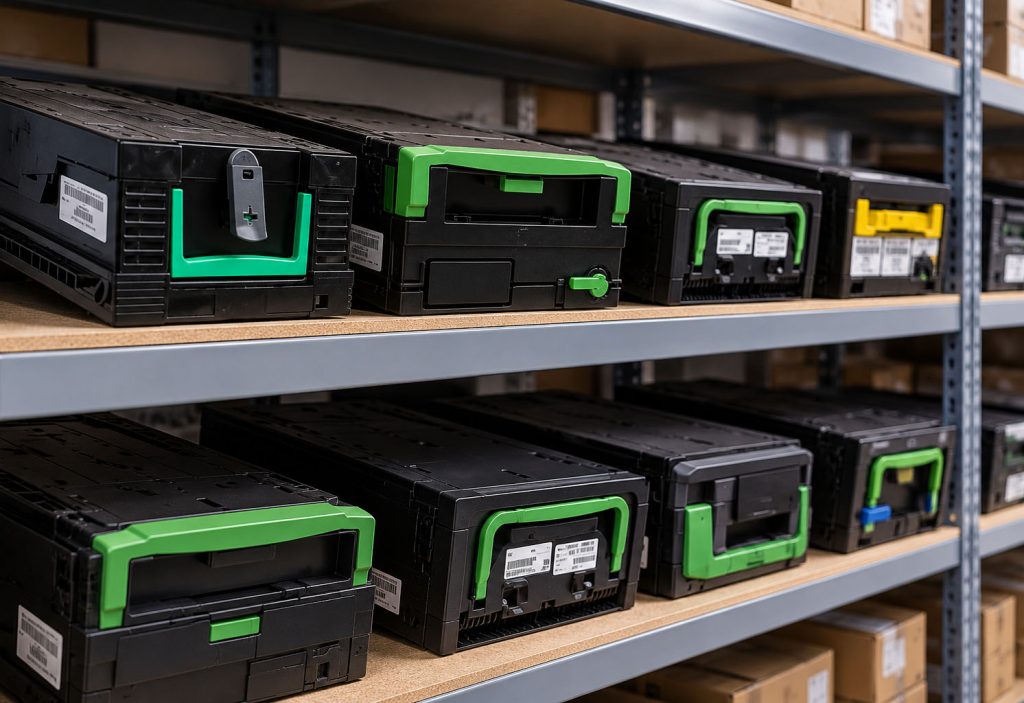


ATM Hardware Lifecycle Planning That Holds Up


An ATM fleet rarely fails all at once. What usually happens is slower and more expensive – rising first-time fix failures, growing parts exceptions, more truck rolls for aging peripherals, and increasing tension between security requirements and what the installed base can still support. That is where atm hardware lifecycle planning becomes less of a budgeting exercise and more of an operating discipline.
For banks, independent deployers, and service organizations, the challenge is not simply deciding when an ATM is old. It is deciding when hardware age starts creating unacceptable business risk. A terminal can still be transacting while quietly becoming harder to maintain, harder to patch, and harder to align with branch strategy, ADA expectations, encryption requirements, and software roadmaps. If lifecycle planning starts only when failures spike, the organization is already behind.
Why ATM hardware lifecycle planning is often underestimated
Many fleets are managed in cycles shaped by capital approval windows rather than by actual service data. That approach works reasonably well when the estate is fairly uniform and vendor support is stable. It breaks down when fleets are mixed across generations, operating systems, communication modules, dispensers, card readers, and deposit components.
The cost issue is also frequently misread. Operators tend to focus on the purchase price of replacement units, while underestimating the compound cost of extending aging hardware. Those costs show up in higher incident volume, longer mean time to repair, more emergency parts sourcing, technician workarounds, and growing dependence on hard-to-find components. At the same time, compliance and security requirements keep moving. A machine that is mechanically serviceable may no longer be strategically viable.
That is why lifecycle planning should not be owned solely by procurement or finance. It needs input from field service, ATM operations, information security, branch strategy, and vendor management. Each group sees a different part of the failure curve.
Start with the real condition of the installed base
The first step is not setting a replacement date. It is establishing a credible baseline for the fleet. In practice, many operators still lack a single view of hardware age, module configuration, software compatibility, support status, and incident history at the terminal level. Without that baseline, lifecycle planning becomes too dependent on assumptions.
Useful planning starts by grouping the fleet into meaningful cohorts. Age matters, but not by itself. A seven-year-old cash dispenser in a low-volume branch may present less risk than a younger unit in a high-traffic retail site with recurring communications and reader issues. Model family, transaction mix, deployment environment, and service history all matter.
A practical framework often includes terminal age, major component age, vendor support status, parts availability, incident frequency, repeat failure patterns, and software dependency. It should also capture whether a device is tied to planned branch renovations, image upgrades, deposit automation changes, or network modernization. Hardware decisions rarely stand alone.
The best plans separate replace, refurbish, and extend
Not every aging ATM should be replaced. Some should be retired quickly because the economics no longer make sense. Others can remain in service if key modules are refreshed and the machine still aligns with network and software requirements. The discipline is in making that distinction early and consistently.
Replace decisions are usually clearest when vendor support is ending, security controls can no longer be brought to policy, or recurring failures are damaging availability targets. Refurbish decisions make more sense when the cabinet, core platform, and site economics remain sound, but high-wear modules are driving service cost. Extension strategies can work in lower-volume or transitional locations, but only if there is an explicit risk threshold and a realistic plan for parts support.
This is where many organizations run into trouble. They treat extension as a neutral option when it is really an active choice that requires tighter controls. Once a fleet segment moves beyond standard lifecycle assumptions, planners should expect more exceptions, more field variability, and more dependence on technician skill. That may still be acceptable, but it should be acknowledged in the operating model.
Timing matters more than many replacement plans assume
Lifecycle planning is often framed as a calendar decision, but the better approach is to align replacement timing with operational events already in motion. Branch transformations, software migrations, communications upgrades, encryption changes, and deposit strategy shifts all affect the economics of hardware replacement.
A fleet refresh done just before a major software platform change can create avoidable integration work. Waiting too long, on the other hand, can force rushed deployments when security or OS support deadlines close in. The most effective programs usually stage work across multiple planning horizons – immediate risk removals, medium-term modernization tied to infrastructure changes, and long-term standardization.
There is also a field operations reason to avoid compressed rollouts. Large replacement waves can strain installation resources, increase punch-list work, and create temporary service instability. A more measured plan may look slower on paper, but often produces better availability and cleaner cutovers.
ATM hardware lifecycle planning should be driven by service data
Service records are often the most underused asset in lifecycle planning. Many operators collect substantial incident data but do not convert it into replacement logic. Counting calls is not enough. The more useful question is what type of failures are increasing, how often they repeat, and whether they point to terminal-level decline or broader model-level weakness.
For example, a rising incident count driven by one replaceable module is different from deterioration across dispensers, readers, power components, and communications interfaces. One suggests targeted refurbishment may buy more time. The other suggests the machine is entering a stage where service complexity will continue to rise even if individual faults are cleared.
Mean time between failure, repeat dispatch rates, no-fault-found events, and parts backorder frequency can all sharpen planning decisions. So can technician notes, which often reveal patterns not visible in coded fault data. If a field team is repeatedly improvising to keep certain models in service, that is lifecycle information even if the machine remains technically available.
Vendor support and parts strategy can shift the picture quickly
A hardware lifecycle plan that ignores supplier posture is incomplete. Formal end-of-support notices matter, but so do quieter signals such as slower parts turnaround, shrinking refurb pools, firmware stagnation, or reduced escalation depth for older platforms. These shifts may not stop operations immediately, but they change the risk profile.
Parts strategy deserves special attention. Some organizations assume they can bridge aging fleets through harvested parts or third-party channels. Sometimes that works. Sometimes it creates new variability, especially when component quality, firmware compatibility, or repair history is inconsistent. The answer depends on fleet scale, technical standardization, and the maturity of the service network.
For a large, diverse estate, parts improvisation can become expensive fast. For a smaller, well-understood cohort scheduled for retirement, it may be a reasonable bridge. The key is not to confuse a temporary support tactic with a durable lifecycle strategy.
Standardization has operational value, but flexibility still matters
Many banks want fewer hardware variants for clear reasons: simpler stocking, easier technician training, cleaner software certification, and more predictable service outcomes. Lifecycle planning is one of the few chances to reduce inherited complexity across the estate.
Still, full standardization is not always the right answer. Site profiles vary. A high-volume deposit-heavy location may justify a different platform than a low-volume cash-dispense site or a remote unit where service access is limited. The objective is not absolute uniformity. It is controlled variation with a clear rationale.
That distinction matters because over-standardization can create its own risk. If every site gets the same platform regardless of transaction mix or service environment, some locations will be overbuilt and others underserved. Good lifecycle planning keeps the fleet simpler without pretending all locations behave the same.
Capital discipline should reflect business impact, not just age
Age-based replacement schedules are easy to explain in budget meetings, but they can miss the real issue. The question is not whether a terminal has reached an arbitrary year threshold. It is whether keeping it in service still supports the institution’s cost, uptime, compliance, and customer access goals.
That means capital cases should connect hardware condition to operational outcomes. If an aging cohort is driving dispatch volume, causing avoidable cash-out conditions, or limiting software and security options, the replacement argument becomes much stronger. If another cohort is old but stable, extending it may be entirely defensible.
The strongest plans make those distinctions visible. They do not treat every old machine as a crisis, and they do not assume every functioning machine is worth preserving.
The most useful closing principle is simple: plan for the fleet you actually have, not the one your asset spreadsheet suggests. ATM hardware ages in the field, under specific transaction loads, service models, and site conditions. Lifecycle planning works when it reflects that reality early enough to give operators choices.