

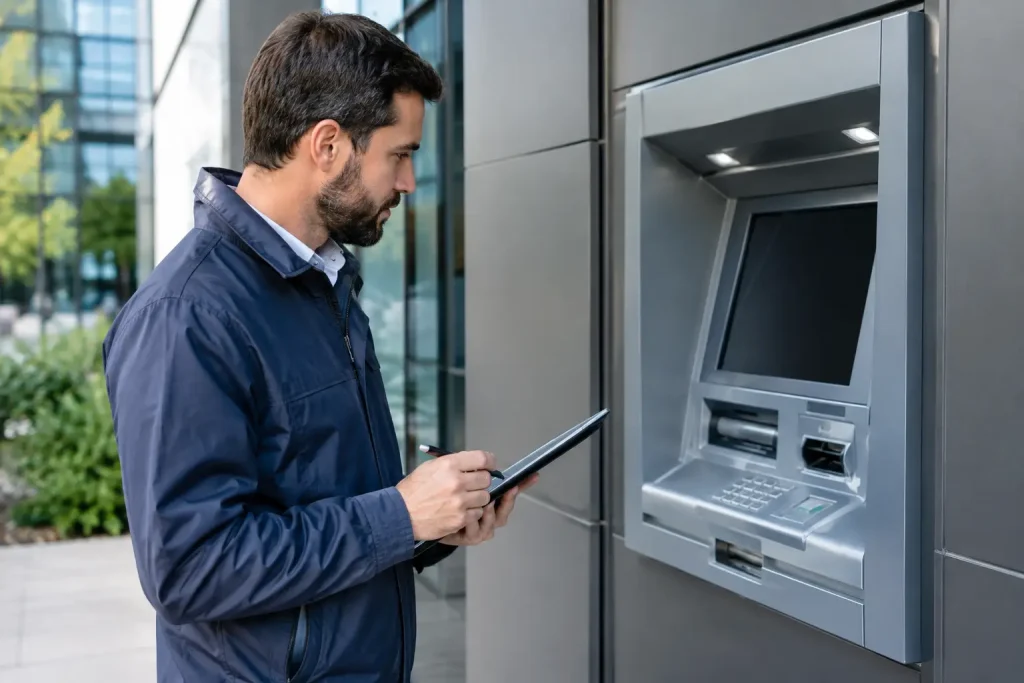
What Self Service Banking Equipment Includes

A branch refresh rarely starts with aesthetics anymore. It starts with queue pressure, service costs, aging ATM fleets, and the question of which transactions still require staff intervention. That is where self service banking equipment becomes more than a hardware category. It becomes an operating model decision.
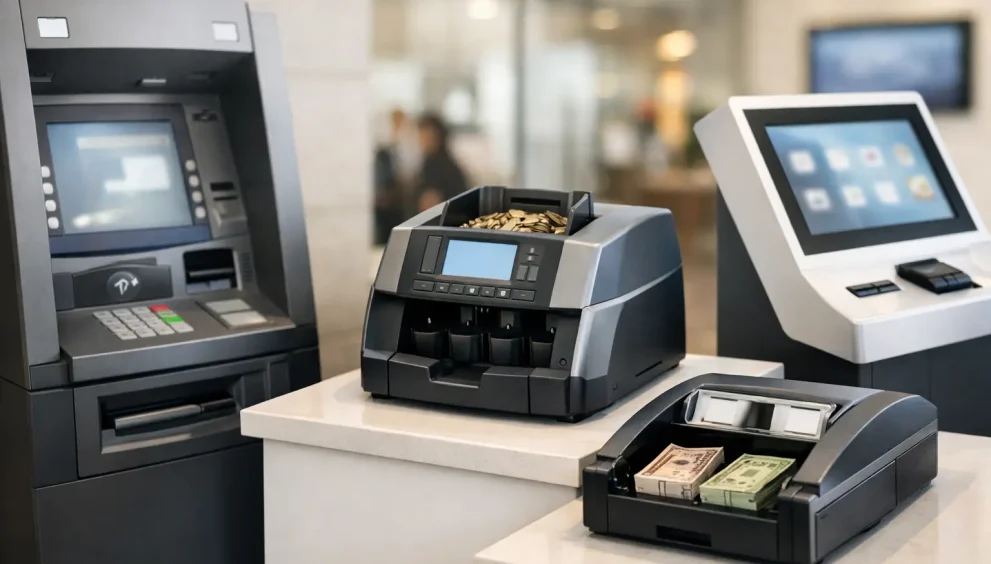
For banks, credit unions, independent deployers, and service organizations, the term covers a wider range of devices than many procurement discussions suggest. It includes traditional cash dispensers, cash recyclers, teller assist systems, interactive teller machines, multifunction kiosks, check deposit terminals, and the software, security, and connectivity layers that allow those endpoints to operate reliably. Treating all of that as one interchangeable category can create expensive mistakes. The equipment may sit in a branch lobby or vestibule, but the requirements behind it vary significantly by use case.
Self service banking equipment is no longer a single-device category
In many institutions, the ATM was once the primary self-service endpoint and the planning model was straightforward: cash withdrawal, balance inquiry, basic deposits, and fleet uptime. That model still exists, especially in off-premise deployments and smaller branch environments. But branch transformation has expanded the role of self-service channels.
A modern equipment mix may include cash recyclers that support assisted service, kiosks designed for account servicing or card issuance, and ITMs that shift selected teller interactions to remote staff. These systems are often grouped together in strategy presentations, yet they place different demands on estates, service organizations, and core banking integrations.
That distinction matters. A simple cash dispenser can be deployed with a relatively narrow operating profile. A recycler or ITM introduces more moving parts, more software dependencies, and more training requirements. The return may be stronger transaction migration and better labor allocation, but only if the institution has the service discipline and integration maturity to support it.
The main types of self service banking equipment
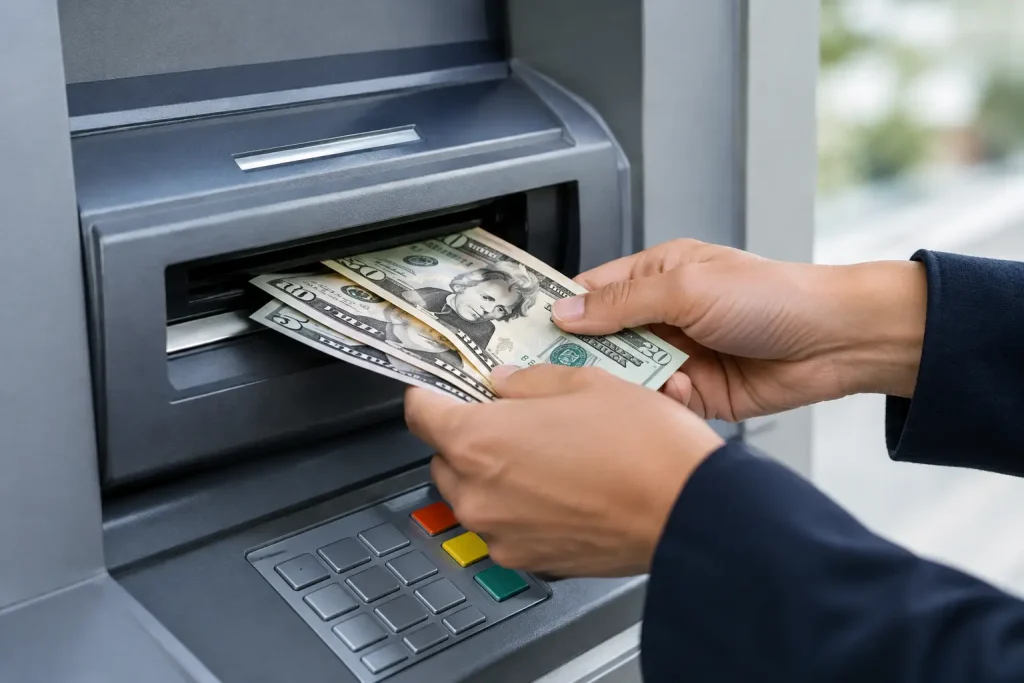
ATMs remain the anchor of most self-service fleets because they solve a high-volume, well-understood transaction set. Dispense, deposit, transfer, and statement capabilities are still central to branch and off-premise strategy. The difference now is that many ATM estates are expected to do more while lasting longer, which puts pressure on upgrade paths, parts availability, and software support.
Cash recyclers serve a different purpose. They are often positioned inside the branch as part of teller transformation rather than as a direct customer endpoint, although customer-facing recycler deployments also exist. Their value is operational: reducing manual cash handling, improving inventory efficiency, and supporting closed-loop cash usage. The trade-off is service complexity. Recyclers can improve branch cash operations, but they are less forgiving when maintenance standards slip.
Interactive teller machines sit between traditional ATM functionality and live-assisted service. They can extend service hours and consolidate staffing models across locations, especially where branch traffic is uneven. But ITM economics depend heavily on adoption rates, video quality, workflow design, and remote teller staffing. Installing the unit is the easy part. Sustaining a service model that customers and staff will actually use is harder.
Self-service kiosks cover a broad range of functions, from card reissue and PIN services to account onboarding and document capture. In some deployments, they reduce pressure on branch staff. In others, they become underused because the transaction set is too limited or the user flow is poorly designed. Kiosk strategies succeed when they solve a clear operational bottleneck rather than trying to imitate every branch interaction.
What operators should evaluate beyond the hardware
Procurement teams often begin with device capability, footprint, and price. Those are valid filters, but they are not enough. In field terms, self service banking equipment should be evaluated as a full lifecycle asset.
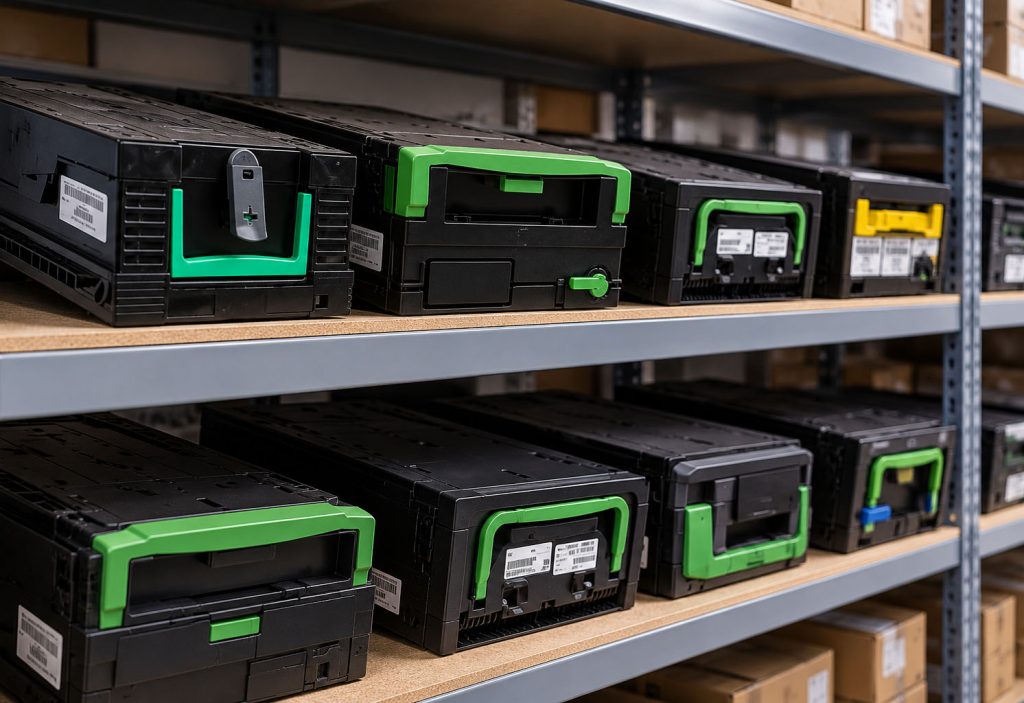
Serviceability is one of the first factors to test. Can first-line maintenance be handled by branch staff or route technicians? How often do cassettes, deposit modules, printers, and card readers require intervention? Are replacement parts standardized across the fleet, or does every model create its own inventory burden? Equipment that looks efficient on paper can become expensive if it increases truck rolls or stretches mean time to repair.
Software compatibility is another decisive issue. Middleware, transaction routing, remote monitoring, security controls, and core integration all affect operational stability. Institutions replacing older terminals often discover that modernization is constrained less by cabinet hardware than by application architecture and certification work. This is especially relevant when a mixed fleet includes devices from multiple vendors or when legacy software remains embedded in branch operations.
Security requirements also vary by endpoint type. A vestibule ATM and an in-branch ITM do not face the same threat profile, even if they share some components. Physical hardening, logical access control, encryption, patch management, camera integration, and fraud monitoring need to reflect the actual deployment environment. A broader self-service strategy increases the attack surface, so governance has to scale with it.
Deployment decisions depend on transaction design
One reason self-service investments miss expectations is that institutions focus on machine features before defining the transaction journey. A terminal may support a wide menu of services, but customers only use what is easy to understand and reliably available.
Cash withdrawal and deposit functions are mature and familiar. Account servicing, onboarding, document workflows, and assisted video transactions require more careful design. If the on-screen flow is slow, if authentication steps are inconsistent, or if staff redirect customers back to the counter, migration stalls quickly.
Location also changes the equation. Off-premise units are typically judged on availability, security, and transaction throughput. In-branch self-service devices may be judged on whether they reduce queue times, support smaller branch formats, or help reassign staff to advisory roles. The same terminal can look successful in one environment and underperform in another because the expected outcome is different.
Standardization helps, but local realities still matter
Large financial institutions often pursue standardization across self-service fleets to simplify training, software management, and parts logistics. That strategy usually makes sense. Common platforms can reduce support costs and make rollout planning more predictable.
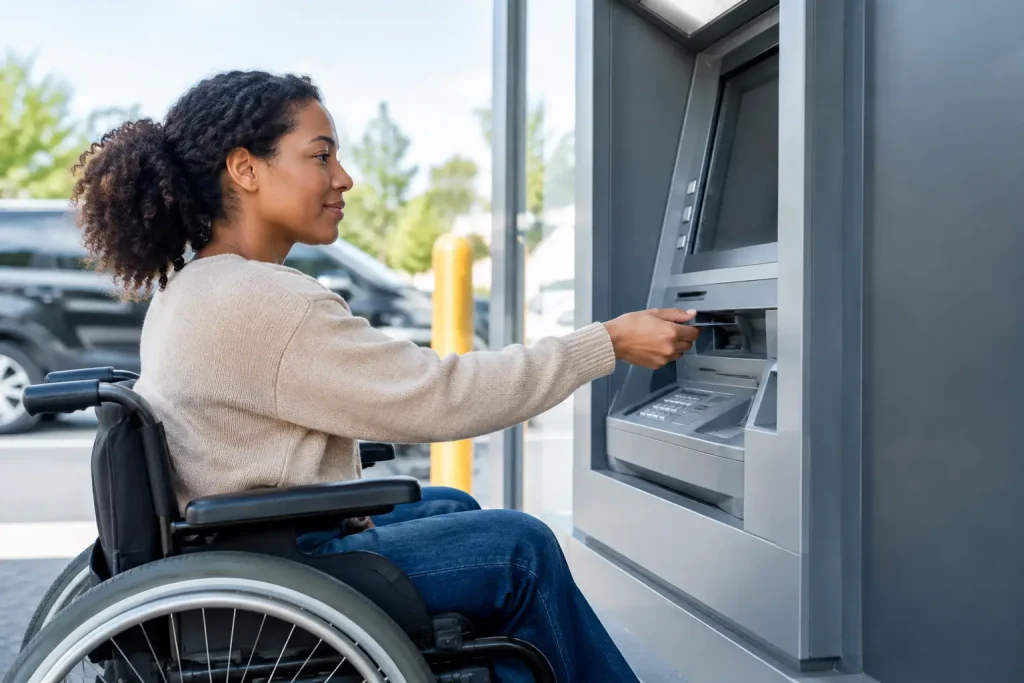
Still, full standardization is not always practical. Urban branches, rural branches, flagship locations, and off-premise sites do not always need the same mix of devices. A branch with high cash usage may benefit from recycler support. A low-volume branch may justify only a conventional ATM. A site serving multilingual or underbanked populations may need different interface and accessibility priorities.
This is where many portfolio decisions become more operational than strategic. Standardize where it reduces support friction, but allow variation where transaction demand, physical layout, or staffing model clearly justifies it. Uniformity for its own sake can produce underused equipment and unnecessary complexity.
Why the service model matters as much as the equipment
No self-service device performs better than the service model behind it. Field support, remote diagnostics, spare parts planning, software update discipline, and incident response determine whether the investment delivers value.
This is particularly true as institutions extend device roles beyond basic ATM functions. The more critical the endpoint becomes to branch operations, the smaller the tolerance for downtime. An out-of-service off-premise ATM is a revenue and customer experience issue. An out-of-service recycler or ITM can disrupt branch workflows more directly, especially in lean staffing environments.
Operators should also pay attention to who owns the incident path. In some estates, hardware, software, telecom, and transaction processing responsibilities are spread across multiple vendors and internal teams. That arrangement can work, but only with clear accountability and well-defined escalation. Otherwise, self-service equipment failures turn into coordination failures.
The next phase is integration, not just replacement
Much of the market discussion around self service banking equipment focuses on replacing old terminals. That remains a real issue given aging fleets, OS migration pressure, and changing security requirements. But the more important shift is integration.
Banks are increasingly evaluating how self-service endpoints fit into branch transformation, cash optimization, remote support, and channel orchestration. A device is no longer judged only by whether it completes a transaction. It is judged by how it fits into staffing models, monitoring systems, fraud controls, and customer journey design.
That changes the purchasing conversation. The strongest deployments are usually not the ones with the longest feature list. They are the ones where hardware choice, software stack, service coverage, and transaction design are aligned from the start.
For decision-makers, that is the practical lens to keep. The right equipment is not simply the newest terminal or the most multifunctional one. It is the endpoint your operation can support consistently, your customers will actually use, and your infrastructure can absorb without creating a new layer of operational drag.