



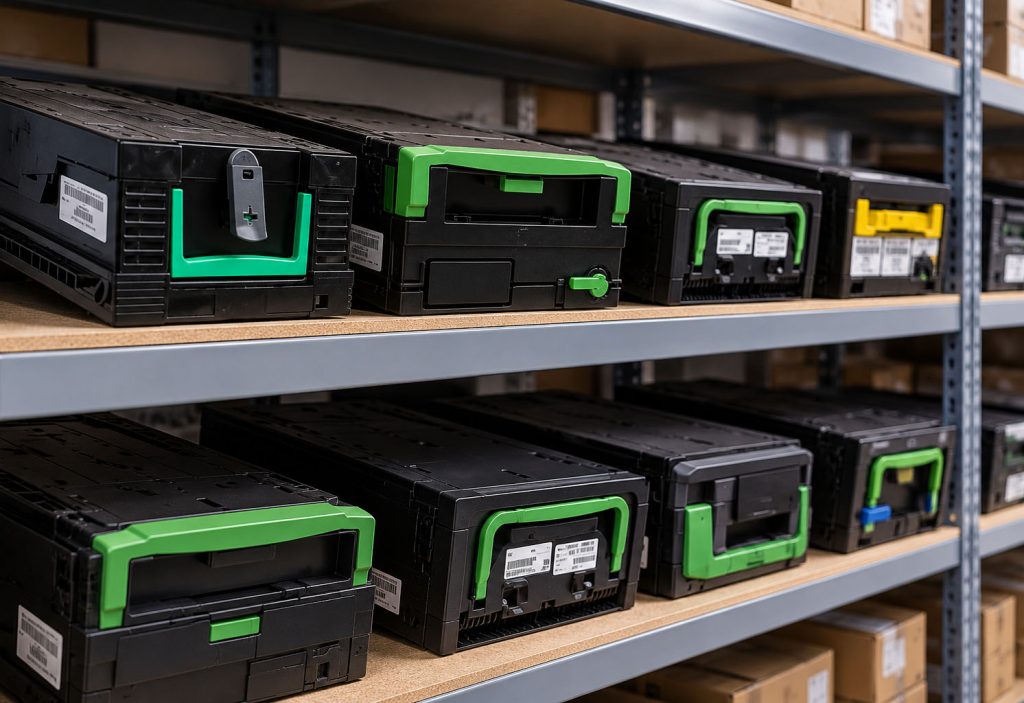


Building a Branch Cash Automation Strategy


Cash handling costs rarely show up as a single line item. They are spread across teller labor, balancing exceptions, armored carrier schedules, device downtime, shrink risk, and the time branch managers spend dealing with avoidable operational friction. That is why a branch cash automation strategy should not start with hardware selection. It should start with a hard look at where cash still creates manual effort, control gaps, and service delays across the branch.
For banks and credit unions, the question is no longer whether cash automation belongs in the branch. The more useful question is what role it should play in a branch model that may include universal bankers, self-service kiosks, recyclers, smart safes, remote support, and a changing transaction mix. The right answer depends on branch format, cash volumes, staffing model, and service expectations. A high-volume urban branch, a suburban advisory branch, and a rural location with limited armored service will not need the same design.
What a branch cash automation strategy is really solving
A sound branch cash automation strategy is aimed at reducing manual cash touchpoints while improving control over the cash that remains in circulation inside the branch. That can mean teller cash recyclers at the line, a centralized recycler in the cash room, smart safes for commercial deposits, or self-service devices that absorb routine withdrawals and deposits. In many deployments, it means a combination rather than a single device class.
The strategic objective is broader than labor reduction. Banks usually want more predictable balancing, better auditability, fewer cash exposure points, and greater flexibility in staffing. Automation can support all of those goals, but only if the operating model changes with it. Installing recyclers while keeping the same cash ordering practices, branch procedures, and exception workflows often limits the return.
This is where some projects go off track. Institutions approve equipment based on a narrow business case tied to teller transaction displacement, then discover that branch cash logistics, software integration, and service coverage have a larger effect on outcomes than the original assumptions.
Start with workflow, not the device catalog
The most reliable automation programs begin with a branch workflow assessment. That means mapping how cash enters the branch, where it is stored, who handles it, how often it is verified, when discrepancies occur, and how exceptions are resolved. Without that baseline, automation decisions can become too dependent on vendor feature sets rather than operational priorities.
For some institutions, the largest gain comes from automating teller-side dispense and deposit activity. For others, the real issue is back-office cash visibility or the time required to prepare vault transfers and shipments. A branch that struggles with commercial cash deposits may benefit more from deposit automation and secure validation than from additional customer-facing self-service.
Transaction volume matters, but so does transaction variability. A branch with moderate average volume and large swings tied to local business cycles may need a different cash buffer and device configuration than a branch with stable daily traffic. Strategy should account for peaks, not just averages.
Choosing between teller automation, self-service, and centralized cash
Most branch programs revolve around three automation layers: assisted service at the teller line, customer self-service, and centralized cash handling in the back office. Each solves a different problem.
Teller cash recyclers improve control at the point of service and can reduce open-drawer exposure. They are often the most practical first step because they fit existing branch interactions while tightening balancing and audit trails. They also support staffing models where one employee rotates between advisory and transaction tasks.
Self-service deposit and withdrawal devices address routine traffic and can extend access beyond staffed hours in some branch formats. But their value depends heavily on customer behavior, branch layout, and software usability. A self-service unit that is physically present but poorly positioned or poorly integrated into branch operations may do little to reduce counter transactions.
Centralized recyclers and smart safes target back-office efficiency and internal controls. These platforms can be effective where multiple staff members currently handle vault access, cash preparation, or deposit consolidation. They may also strengthen dual-control processes, though they can introduce new maintenance and training requirements.
In practice, institutions often overestimate how much one device category can replace another. A recycler does not automatically solve customer migration to self-service. A kiosk does not eliminate the need for disciplined vault management. A branch cash automation strategy works best when each layer has a defined operational role.
Integration and serviceability are where the strategy becomes real
Cash automation projects are often approved on the strength of branch-side economics, but long-term success depends on infrastructure and support. Device software, core connectivity, transaction routing, monitoring tools, cash forecasting, and service dispatch all influence uptime and staff confidence.
If a branch recycler is down, employees quickly revert to manual workarounds. If downtime becomes frequent, those workarounds become the default operating model. At that point, the institution is carrying the cost of automation without receiving the full control or labor benefit.
This makes service design a strategic issue, not just a maintenance issue. Banks need to evaluate first-line support, preventive maintenance cycles, parts availability, incident response times, and remote diagnostics capabilities before scaling deployments. A strong pilot can still fail in a broader rollout if field support is thin or inconsistent across markets.
Software integration deserves equal scrutiny. Cash automation generates the most value when branch teams can see transaction status, device health, and cash positions without switching between disconnected systems. Fragmented visibility leads to manual reconciliation steps that erase part of the gain.
The branch network should not be treated as uniform
One common mistake is applying a single automation model across the entire branch estate. Standardization matters, but uniformity has limits. Branches differ by square footage, transaction composition, labor mix, security posture, and proximity to service resources.
A segmentation model is usually more effective. High-volume branches may justify multiple recycler positions and stronger deposit automation. Smaller sites may need a lighter footprint with more emphasis on universal banker support. Branches in markets with higher armored transport costs or longer replenishment windows may place greater value on cash recycling and forecasting accuracy.
This also affects the replacement cycle. Some legacy branches may not support larger-footprint devices without layout changes, power work, or network upgrades. In those locations, a phased approach may be more practical than forcing a full redesign into a standard capital plan.
Metrics that matter in a branch cash automation strategy
Banks often focus on headcount assumptions because those numbers are easy to model. The more useful measures are operational. Cash touches per transaction, balancing time, exception frequency, outage duration, vault transfers, carrier visits, and branch-level cash idle levels provide a clearer view of whether automation is improving the operating model.
Customer measures matter too, but they should be interpreted carefully. Shorter wait times are valuable, yet they may result from staffing changes, branch traffic shifts, or digital migration rather than automation alone. The goal is not to over-credit the device. It is to understand how automation changes the branch system as a whole.
A practical scorecard should combine financial, operational, and control metrics. That gives leadership a better basis for deciding where to expand, where to adjust workflow, and where a device type may not fit the branch profile.
Why change management is usually the hidden variable
Branch teams will expose the strengths and weaknesses of any automation plan quickly. If procedures are unclear, if balancing rules conflict with system logic, or if training does not match real branch conditions, staff will create local workarounds. Those workarounds may keep the branch running, but they usually weaken control and consistency.
That is why training should be tied to actual branch scenarios: suspected note jams, partial deposits, balancing delays, opening and closing procedures, cash threshold alerts, and contingency operations during outages. Technical training alone is not enough. Employees need to understand what changes in their workflow and why the new process is safer or faster.
Managers also need realistic expectations. Cash automation can reduce manual handling and tighten controls, but it does not remove cash complexity from the branch. It changes where that complexity sits. Some of it moves into service management, software support, and exception handling. Institutions that plan for that shift tend to perform better than those that treat automation as a simple equipment upgrade.
Timing the move matters as much as the technology
The strongest case for branch automation often appears during broader branch transformation work – teller line redesigns, staffing model changes, ATM modernization, or core platform updates. Bundling too much change at once can raise execution risk, but treating cash automation as a standalone purchase can leave value on the table.
A measured rollout is usually the better path. Start with branches that have clear pain points, reliable support coverage, and enough transaction activity to test the operating model under real pressure. Use that pilot to refine procedures, service expectations, and data collection before committing to network-wide assumptions.
The institutions getting the most from branch automation are not necessarily the ones buying the most equipment. They are the ones matching cash technology to branch purpose, support capability, and measurable operating needs. That discipline matters more than any product category claim, and it is usually what separates a promising deployment from a durable strategy.
As branch formats continue to shift, cash will remain operationally significant even where transaction volumes decline. The better question is not whether cash belongs in a modern branch, but how much manual effort and control risk an institution is still willing to tolerate around it.