



NCR Atleos ATM Review for Fleet Operators

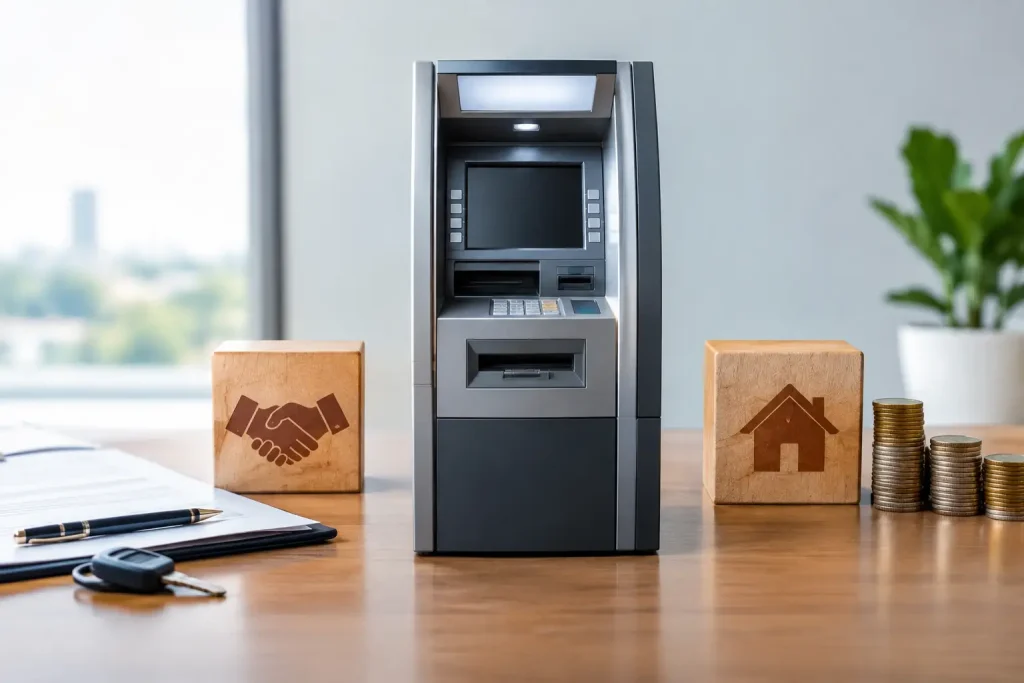
A useful NCR Atleos ATM review starts with a distinction that procurement teams sometimes miss: Atleos is not one ATM platform or a single service offering. It is an ATM and self-service infrastructure provider with a broad installed base, multiple hardware configurations, software capabilities, managed-services options, and a large field-service footprint. The right evaluation is therefore less about whether an Atleos ATM is “good” and more about whether the proposed configuration fits the institution’s transaction mix, estate strategy, operating model, and support requirements.
For banks replacing aging fleets, independent deployers expanding placements, and operators consolidating vendors, that distinction has material consequences. A model that works well in a high-volume branch vestibule may be poorly matched to a lightly used retail site. Likewise, a managed service can reduce internal workload while limiting some control over repair processes, parts strategy, and upgrade timing.
NCR Atleos ATM Review: Where the Portfolio Fits
NCR Atleos entered the market as the ATM-focused business separated from NCR Corporation. Its position is built on a long history in bank self-service, a sizable installed base, and capabilities that extend beyond the terminal itself. The company addresses ATM hardware, cash management, software, transaction processing and network-related services, installation, maintenance, and managed ATM programs.
That breadth is a practical advantage for organizations seeking fewer integration points. A bank can evaluate terminal hardware alongside monitoring, software lifecycle planning, field maintenance, and cash operations rather than treating each as an isolated purchase. For large fleets, this can simplify accountability when a problem crosses the boundary between a device, application, network connection, and service dispatch.
The trade-off is concentration. An operator that adopts a broad Atleos stack should establish clear data-access rights, service-level definitions, exit provisions, and interface requirements before deployment. The operational value of a single-provider model depends on contract discipline and on how much flexibility the organization intends to preserve for third-party software, processors, cash-in-transit partners, and maintenance providers.
Hardware Assessment: Configuration Matters More Than Branding
The Atleos hardware lineup has historically been associated with the SelfServ family, including through-the-wall, freestanding, and cash-recycling configurations. As with any major ATM supplier, capability varies substantially by terminal specification. A procurement review should not treat the brand name as a substitute for examining the bill of materials and intended site use.
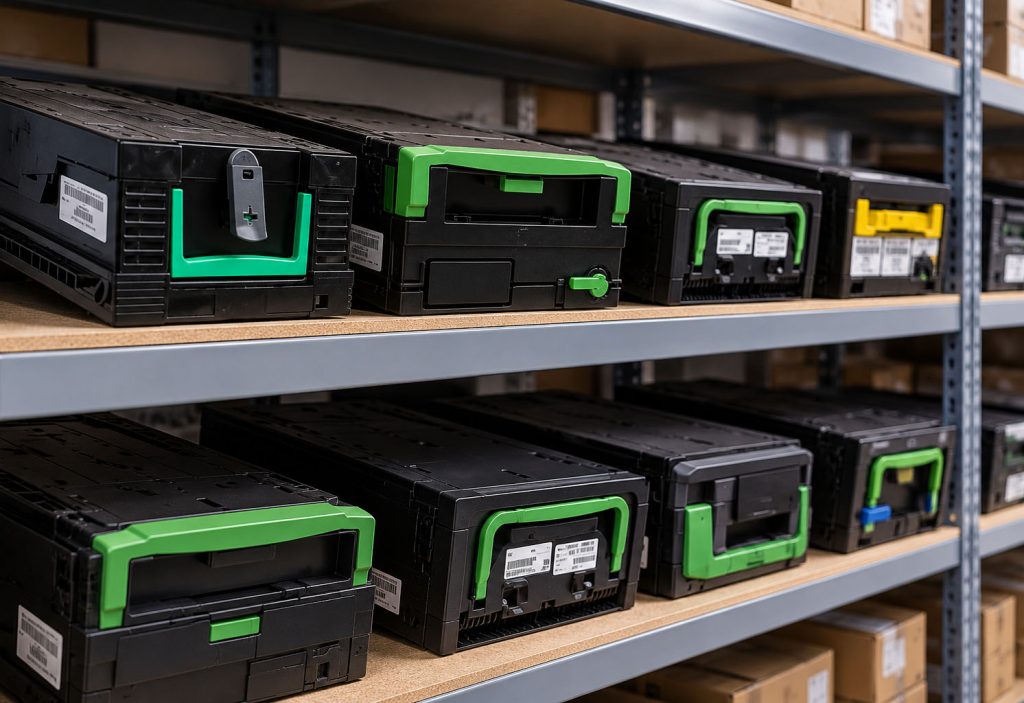
For cash-dispense installations, the primary questions are cassette capacity, note handling, reject-bin sizing, deposit needs, accessibility requirements, printer configuration, and the serviceability of the chosen enclosure. High-volume locations may justify larger cash capacity or recycling, while low-traffic sites may prioritize a smaller footprint and lower acquisition cost. A poorly matched cash configuration creates avoidable replenishment visits and cash-out risk, regardless of the manufacturer.
Cash recycling deserves particular scrutiny. It can reduce cash handling and support deposit-led workflows, but it adds mechanical complexity and changes the service model. Operators need realistic assumptions about deposit note quality, jam recovery procedures, reconciliation exceptions, and technician readiness. Recycling is often compelling in branch transformation programs and cash-intensive environments. It is less automatically justified where deposit volumes are modest or where local service resources lack experience with recycler maintenance.
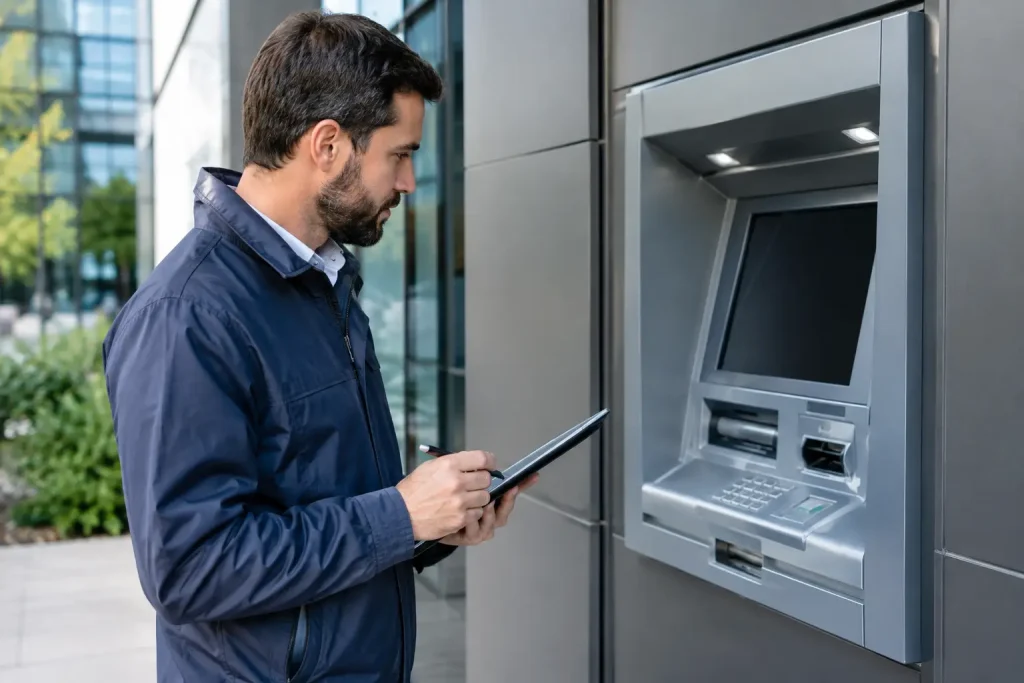
Physical design also remains operationally relevant. Through-the-wall deployments introduce building-envelope, fascia, lighting, drainage, and access-panel considerations that rarely appear in product literature. Freestanding units require attention to anchoring, sight lines, electrical quality, communications resilience, and the practical ability of technicians to work safely at the site. Hardware selection should include a site survey, not just a configuration worksheet.
Software, Interoperability, and Lifecycle Planning
ATM hardware decisions increasingly hinge on the software layer. Financial institutions need a clear view of the operating environment, application architecture, remote-management tools, security components, and compatibility with the acquirer or processor. Atleos has the scale and legacy presence to support enterprise deployments, but a buyer should verify the exact software and integration model proposed for its program.
This is especially relevant for institutions moving from older Windows-based estates or proprietary application stacks. Migration plans should cover application certification, device-driver behavior, electronic journal handling, remote software distribution, key management, and rollback procedures. A terminal replacement project can expose dependencies that have been invisible for years, including custom host messages, local monitoring rules, or nonstandard receipt formats.
Interoperability should be tested rather than assumed. Standards such as XFS have improved device abstraction, but implementation details still matter. Teams should ask how the terminal handles integration with existing monitoring platforms, transaction-switch infrastructure, fraud tools, and asset-management systems. They should also clarify whether third-party applications can access the required device functions without creating a support dispute between vendors.
The most useful lifecycle question is not simply how long the machine will remain in service. It is whether the proposed platform has a documented route for operating-system updates, security patching, application releases, and eventual hardware refresh. A low initial purchase price can lose its appeal if an estate faces a compressed migration later because software support or parts availability has changed.
Service Delivery Is a Core Part of the Evaluation
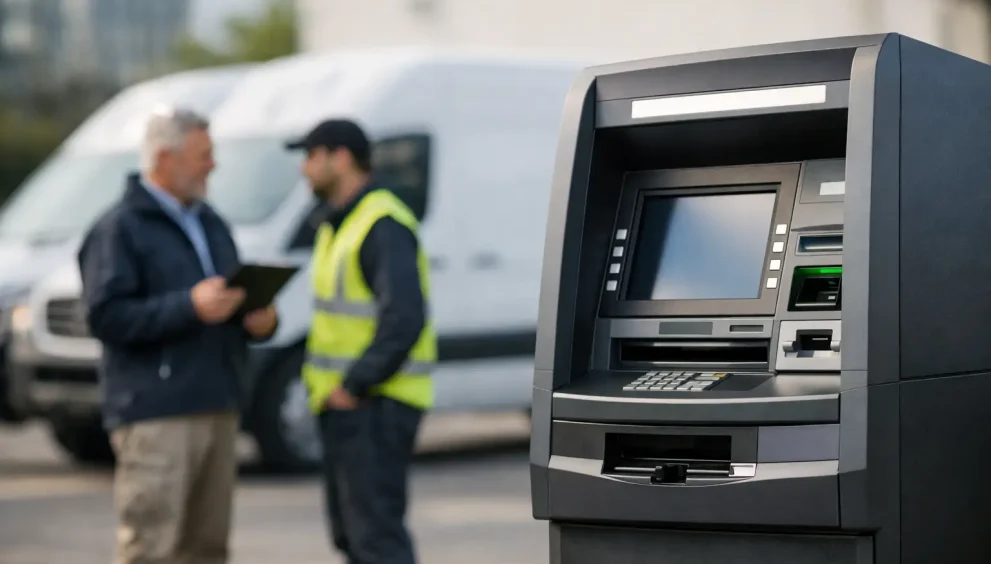
Atleos has a meaningful service and managed-operations presence, which is likely to be central to its appeal for organizations that want to reduce internal field coordination. The quality of that proposition, however, is determined locally and contractually. National coverage does not guarantee the same response time, first-time-fix rate, or parts availability in every market.
Service managers should request performance data that is relevant to their deployment geography and device type. Mean time to repair is useful, but it should be read alongside repeat-call rates, cash-out duration, technician arrival windows, remote-resolution rates, and the treatment of excluded faults. A terminal returned to service quickly but repeatedly for the same dispenser issue is not delivering dependable availability.
Parts logistics deserve equal attention. Ask which modules are stocked locally, which are sourced from regional depots, and how the provider handles end-of-life components. For fleets with a mix of legacy and current terminals, the migration plan must account for the period when two or more hardware generations require support. That overlap often creates the most difficult inventory and training burden.
Managed services can be attractive for smaller banks, credit unions, and deployers without a large internal operations team. They can also help larger institutions standardize work across dispersed markets. Yet outsourcing does not remove the need for governance. The operator still needs access to incident data, root-cause reporting, terminal inventory records, configuration status, and performance reviews that identify recurring site or device issues.
Security and Compliance Considerations
Any ATM review should move beyond a vendor’s security feature list. The relevant question is whether the terminal, software, remote-access process, and operating procedures work together to reduce real exposure. Physical attack defenses, anti-skimming options, encrypted PIN entry, logical access controls, and security patch processes all need to be evaluated as part of a complete deployment design.
For PCI-related requirements and payment-network expectations, organizations should confirm the certification status of the exact device and components being ordered. A family name or earlier configuration is not enough. The same caution applies to encrypted PIN pad choices, contactless readers, cameras, and anti-skimming hardware.
Remote access is another area where service convenience can conflict with risk control. Strong authentication, role-based privileges, session logging, approval procedures, and clear ownership of credentials are basic requirements. Institutions using third-party maintenance should define who can initiate a remote session, what actions are permitted, and how changes are documented.
Cost: Evaluate the Operating Model, Not Just the Terminal Price
Atleos may be a strong contender where fleet scale, broad service coverage, or an integrated managed-services model outweigh the value of sourcing each layer separately. It may be less attractive for operators seeking highly specialized hardware, maximum independence across every layer of the stack, or a narrowly defined low-cost deployment with limited service needs.
The commercial comparison should include acquisition cost, installation, communications, software licensing, maintenance, parts, consumables, cash servicing, compliance upgrades, and expected downtime costs. For a bank branch network, the cost of a terminal outage may include staff intervention, customer dissatisfaction, and lost self-service capacity. For an independent deployer, it may be more directly measured in lost interchange revenue and emergency dispatch expense.
A sound business case also separates one-time migration costs from recurring expense. Application testing, host certification, site remediation, training, and old-equipment removal can materially change the economics of a replacement program. These costs are manageable when identified early; they become disruptive when treated as exceptions after contracts are signed.
The Practical Verdict
NCR Atleos is best assessed as an established ATM infrastructure provider with the breadth to support large, complex self-service programs. Its strongest case is usually operational: standardized hardware options, enterprise-scale service capabilities, and the possibility of combining terminal deployment with software and managed operations.
That does not make it the automatic choice for every estate. Buyers should assess the exact terminal configuration, local service performance, software roadmap, integration boundaries, and contractual controls rather than relying on portfolio reputation alone. A structured pilot across representative locations will reveal more than a showroom demonstration, particularly when it measures cash availability, remote diagnosis, technician experience, and exception handling. The most durable ATM decision is the one that remains supportable after the installation team has left the site.