





How to Improve First Time Fix in ATM Service


A repeat truck roll on a cash dispenser fault rarely comes down to one bad decision. More often, it reflects a chain of small misses – weak fault data, incomplete parts staging, unclear work instructions, or a technician arriving without the context needed to isolate the failure quickly. That is why knowing how to improve first time fix matters so much in ATM service. It affects uptime, service cost, customer experience, and the credibility of the operating model behind the fleet.
For banks, independent deployers, and service organizations, first-time fix is not just a technician metric. It is a systems metric. When it improves, the underlying gain usually comes from tighter integration between monitoring, dispatch, inventory, training, and device standardization. When it stalls, the problem is often structural rather than individual.
How to improve first time fix starts before dispatch
Many field organizations still treat first-time fix as a field execution issue alone. That is too narrow. By the time a technician is on site, most of the variables that shape the outcome have already been set.
The dispatch decision is one of the most important. If the service desk opens a call with poor fault classification, the technician may be sent with the wrong parts, the wrong skill profile, or the wrong expectation of what is failing. A dispenser jam, for example, may present as a recurring cash handling issue but actually stem from note quality, cassette setup, sensor contamination, firmware behavior, or a worn transport component. If the initial triage collapses all of that into a generic code, repeat visits become much more likely.
Remote diagnostics can reduce that ambiguity, but only if the data is usable. Error logs, device telemetry, transaction context, recent service history, and software event data need to be available in a form that helps the service desk make decisions. More data is not automatically better. The operational question is whether the team can distinguish between a hard failure, an intermittent fault, a consumable issue, and a symptom created by upstream software or network conditions.
Better triage beats faster dispatch
There is a natural tendency in high-volume service environments to optimize for speed. That can be the right choice for certain high-priority outages, but speed without diagnosis often just moves inefficiency downstream.
A more effective approach is to improve call triage quality. That means using fault trees tied to actual device models, not generic scripts. It means checking recent repeat incidents on the same terminal before assigning the work. It also means validating whether the incident is truly hardware-related. In ATM environments, cash, software, communications, encrypting devices, and peripheral subsystems can all create symptoms that look similar at first glance.
This is where fleet complexity starts to matter. A mixed estate with multiple OEMs, different software stacks, varying note handling modules, and inconsistent retrofit histories will always be harder to service on the first visit. Service leaders looking at how to improve first time fix should be honest about that baseline. Some underperformance reflects process gaps. Some reflects a fleet architecture that makes predictable service execution difficult.
Parts availability is usually a planning problem
One of the most common reasons for a failed first visit is straightforward: the technician did not have the right part. But that outcome is rarely just a van stock issue.
In practice, parts failure begins with poor demand forecasting, weak repair loop discipline, or low confidence in fault identification. If dispatch cannot determine whether a terminal needs a card reader assembly, a shutter mechanism, a power supply, or only cleaning and recalibration, organizations tend to compensate in one of two expensive ways. They either overstock broadly, which raises carrying costs and control problems, or they understock and accept more repeat visits.
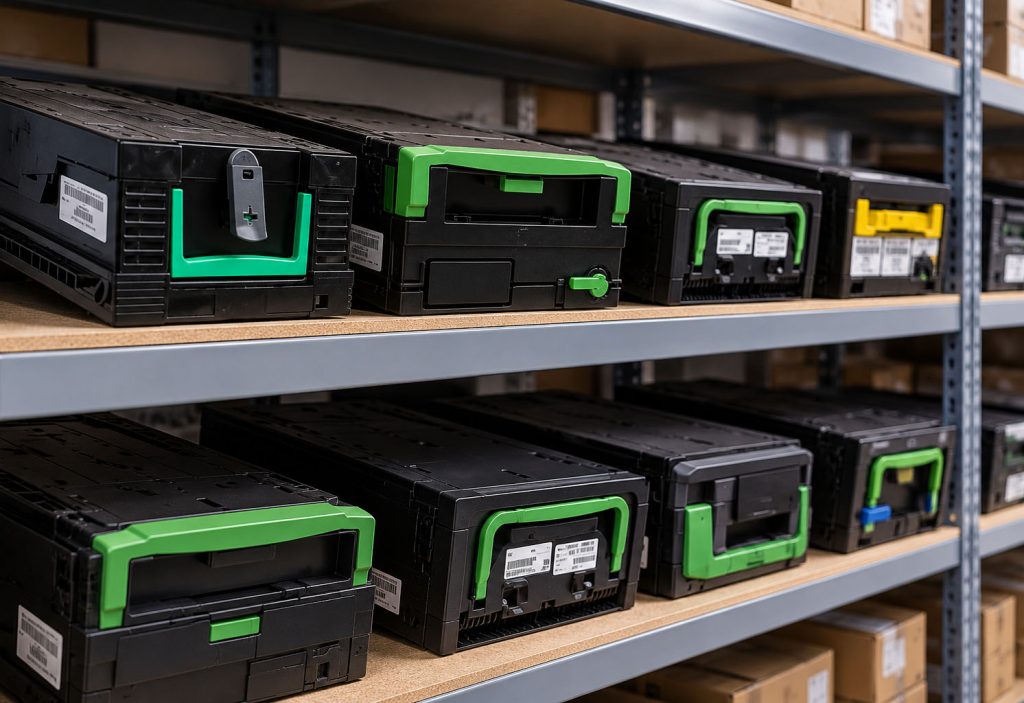
The better path is more selective. High-failure and high-impact components should be tied to model-specific stocking rules and local failure patterns. Van stock should reflect actual service demand by geography, terminal type, and incident history, not a static national list. A branch-heavy estate and a retail off-premises fleet may need very different stocking logic even when they use some of the same hardware.
Repairable parts strategy also matters. If repaired modules return slowly, or if quality control on repaired parts is inconsistent, technicians lose confidence in installed replacements. That can create a cycle where the first visit becomes temporary restoration rather than durable fix.
Technician readiness is narrower than training
Training matters, but it is only one part of technician readiness. In ATM service, the real issue is whether the assigned person has the current knowledge, documentation, tool access, and escalation path needed for the specific device and failure mode.
This is where many organizations overestimate their preparedness. A technician may be certified on a platform but still struggle with a field-modified terminal, a rare firmware combination, or a recurring issue tied to local site conditions. A terminal in a pharmacy vestibule behaves differently from one in a climate-controlled branch lobby. Dust, heat, power quality, and customer usage patterns all affect service outcomes.
Documentation should reflect that reality. Service guides that stop at component replacement are not enough. Technicians need concise failure context, known issue patterns, and current advisories on software and peripheral interactions. If those insights sit in email threads or remain with a few senior specialists, first-time fix rates will plateau.
Escalation design matters as well. A technician who can reach a competent second-line resource during the visit can often avoid a repeat dispatch. That may involve remote support, live log review, or quick confirmation of a suspected root cause. The field benefit is significant, especially on intermittent faults and multi-system issues.
Standardization has a direct service payoff
Organizations often discuss standardization in procurement terms, but its field service value is just as important. The more variation introduced across the estate, the harder it becomes to achieve consistent first-time fix performance.
This applies to hardware models, image versions, peripheral configurations, encrypting device families, and even physical installation standards. A fleet that looks standardized on paper can still be operationally fragmented if local exceptions accumulate over time. Those exceptions create ambiguity for dispatchers, stock planners, and technicians.
That does not mean every fleet should pursue strict uniformity. There are business reasons to support different device classes and deployment formats. But every exception should be evaluated against service complexity. If a configuration improves one business metric while degrading maintainability across thousands of calls, the trade-off should be visible.
Measure root causes, not just outcomes
Most service organizations track first-time fix as a headline KPI. Fewer break it down in a way that supports action.
A useful measurement model separates avoidable repeat visits from unavoidable ones. If a terminal requires a follow-up because a part was unavailable, that points to inventory and triage. If the first repair addressed a symptom but not the root cause, that points to diagnostics and technical knowledge. If access issues prevented completion, that is a scheduling and site-readiness issue rather than a technician failure.
This distinction matters because blunt KPI pressure can distort behavior. Teams may close calls too aggressively, swap more parts than necessary, or avoid documenting uncertainty. Those practices can improve the appearance of performance in the short term while driving cost and repeat incidents later.
A better operating model reviews repeat visits by device family, failure category, region, technician cohort, and service partner. It also looks at mean time between repeat incidents after closure. A first visit should count as a real fix only if the issue stays resolved for a reasonable period.
Service design and vendor alignment still matter
Many ATM estates rely on multiple service partners, depot providers, software suppliers, and hardware vendors. That is normal, but it creates handoff risk. If one party owns monitoring, another owns field service, and a third controls software support, accountability can blur when incidents cross boundaries.
Improving first-time fix in that environment requires clear service design. Fault ownership, diagnostic responsibilities, parts authorization, and escalation paths should be defined before incidents occur. Otherwise, field teams spend too much time proving where the problem is instead of correcting it.
Vendor support quality also affects outcomes, especially for newer device generations and software-heavy service events. A strong OEM or technology partner can improve first-time fix through better documentation, known issue bulletins, and practical remote support. A weaker one pushes complexity into the field organization.
The operational goal is fewer avoidable visits
For leaders asking how to improve first time fix, the answer is rarely a single program or dashboard. It is a coordinated effort to improve diagnosis before dispatch, tighten parts planning, reduce fleet variation where possible, and give technicians better support at the point of service.
Some gains come quickly. Better fault coding, cleaner service history, and smarter van stock rules can reduce repeat visits within a quarter. Other improvements take longer, especially when they depend on estate modernization or changes in vendor governance. Either way, the most reliable progress comes from treating first-time fix as an end-to-end operational discipline rather than a field metric alone.
The practical test is simple: when a technician arrives at an ATM, does the organization give that person the highest possible chance of resolving the real problem on that visit? If the answer is inconsistent, that is where the next round of improvement should begin.