


Cardless ATM Adoption Changes ATM Operations

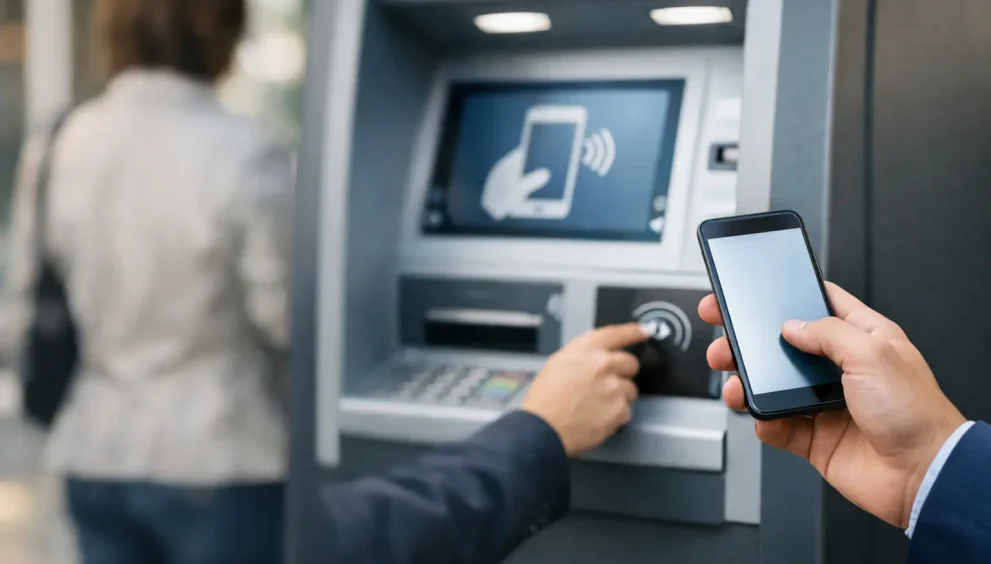
A cardless transaction can appear to be a modest interface change: the customer starts on a mobile device, authenticates, and retrieves cash without inserting a card. For operators, cardless ATM adoption is more consequential. It introduces another transaction path into an environment already shaped by legacy software, network rules, cash availability, physical security, and field-service constraints.
The relevant question is not whether cardless access will replace cards across every channel. It is whether the capability improves access and transaction completion rates for a defined customer base without creating avoidable operational burden. The answer varies by institution, network configuration, ATM age, and the maturity of the mobile banking platform.
Why cardless ATM adoption is moving beyond pilot programs
Cardless cash access has been available in various forms for years, including one-time codes, QR-based sessions, near-field communication, and mobile-wallet authentication. Earlier deployments often remained limited because the customer journey was inconsistent, application usage was uneven, or the necessary ATM software and host integrations were not broadly deployed.
Several conditions have changed. Mobile banking enrollment is higher, contactless acceptance has become familiar at point of sale, and banks are under continuing pressure to keep self-service channels relevant as branch formats evolve. A cardless withdrawal can also help a customer who has misplaced a card, is waiting for a replacement, or prefers not to use a physical card at an off-premises machine.
Those benefits are real, but they should not obscure the central operational fact: cardless capability is an additional authentication and transaction method, not a simple card-reader substitute. It must coexist with EMV processing, magnetic-stripe fallback where still supported, contactless card transactions, deposit functions, surcharge logic, and the institution’s established exception-handling procedures.
The deployment model determines the operational impact
The term cardless ATM can describe substantially different architectures. In one model, the mobile app generates a one-time withdrawal token or code. The ATM sends that code through the transaction switch for validation, then authorizes the dispense. In another, the app initiates a session using a QR code shown at the ATM. Contactless implementations may use a mobile wallet credential through the NFC reader, generally following an EMV contactless path.
These models have different implications for terminals and support teams. A QR flow may require a camera or scanner, software support for the chosen user interface, and protection against damaged or obscured display elements. NFC depends on reader hardware, kernel certification, antenna performance, and the interaction between the ATM application and payment stack. Token-based flows may place less demand on new terminal hardware, but they increase reliance on host integration, time synchronization, token expiration logic, and clear customer messaging.
For fleet managers, this means the first planning decision is architectural rather than promotional. A capability designed around existing NFC hardware may be feasible on only part of a mixed fleet. A code-based approach may reach more terminals, but it can create a longer on-screen flow and more abandonment if customers encounter connectivity problems between the app and the ATM.
Fleet segmentation should come before broad enablement
A practical rollout begins with an inventory that goes beyond model number and age. Operators need to identify application versions, middleware, screen capabilities, receipt-printer condition, network connectivity, reader configurations, and any local restrictions imposed by deployer agreements or processor certification.
The highest-volume locations are not automatically the best first locations. A pilot is more useful when it includes enough transaction volume to expose real issues while remaining manageable for support teams. Institutions should include a representative mix of branch vestibules, drive-up units, retail locations, and machines with varying network quality. A deployment limited to pristine branch hardware can conceal problems that will appear immediately in the wider estate.
Authentication introduces new security and fraud questions
Removing the physical card does not remove fraud risk. It changes the attack surface. Card-skimming exposure may decline for a transaction that does not use the card reader, but mobile-account takeover, social engineering, compromised devices, token interception attempts, and fraudulent cash-out activity remain material concerns.
Controls should be designed around the specific transaction method. One-time codes need short validity windows, single-use enforcement, sensible withdrawal limits, and protections against repeated failed attempts. QR-based processes should bind the session to the correct ATM and expire promptly if the interaction is abandoned. NFC mobile-wallet transactions depend on device authentication and tokenization controls, but the terminal still needs to handle declined transactions and communication interruptions reliably.
Risk teams also need transaction telemetry that distinguishes cardless events from conventional withdrawals. Useful signals include authentication failures, code-entry retries, abandoned sessions, app-to-ATM handoff failures, repeated attempts across locations, and unusual changes in cash-out patterns. Without that visibility, fraud analysts may see only a withdrawal record and lose the context needed to identify emerging abuse patterns.
Physical security remains relevant as well. A customer focused on a phone screen can be less aware of the surroundings. ATM operators should review screen prompts, privacy messaging, camera coverage, and the placement of QR codes or contactless indicators. The goal is not to add warnings at every step, but to reduce avoidable confusion that can leave a customer standing at an ATM with an active transaction session.
Uptime depends on the full transaction chain
Traditional ATM availability monitoring often centers on terminal status, cash levels, dispenser conditions, and communications to the processor. Cardless service requires a broader view. An ATM can be mechanically available while the mobile handoff service, token-validation platform, identity service, or application programming interface is unavailable.
This distinction matters when determining whether an incident belongs to the terminal, the ATM application, the switch, the mobile platform, or a third-party service. Service desks need diagnostic paths that identify where the customer journey stopped. A vague report that a cardless withdrawal “did not work” is not enough to direct a technician or network team effectively.
Monitoring should capture transaction-stage outcomes: initiation, mobile authentication, token or credential validation, ATM authorization, dispense, confirmation, and reversal. Correlating those events with terminal logs and host records reduces the time needed to identify systemic failures. It also prevents unnecessary truck rolls for an issue that originated upstream.
Fallback behavior deserves equal attention. If cardless authentication fails before cash is authorized, the customer should receive a clear end state and be able to use another available method. If cash is dispensed but the confirmation path fails, established cash-reconciliation and reversal processes must work just as they do for card-based transactions. The customer-facing design cannot be separated from the back-office exception model.
Field service teams need narrower, better-defined changes
Cardless deployments do not necessarily create more hardware calls, but they can shift the character of support work. Contactless reader faults, damaged QR displays, touchscreen calibration issues, outdated application components, and failed certificates can all present as customer access problems. Teams need a way to distinguish these from dispenser faults or general communications issues.
Training should be role-specific. First-line support needs concise symptom-based procedures and escalation criteria. Remote operations teams need access to relevant application and network status data. Field technicians need clear guidance on which components they are authorized to replace or configure, and which issues require remote software remediation or vendor escalation.
Change management is particularly important on shared or outsourced service models. A software release affecting cardless screens, host messages, or timeout values can alter customer behavior without triggering a conventional hardware alert. Release notes should identify the transaction flows affected, validation steps, rollback conditions, and any added requirements for terminal certification.
Measuring adoption without mistaking availability for demand
A feature enabled across a fleet is not necessarily a feature adopted by customers. Management teams should separate availability, attempted use, completed transactions, and repeat use. Completion rate is especially valuable because it can reveal friction in the mobile-to-ATM handoff that transaction totals alone may miss.
Comparable performance matters more than a single aggregate number. Cardless results should be reviewed by location type, terminal configuration, mobile operating system where data is available, time of day, and customer journey. A low completion rate at locations with poor cellular coverage, for example, may point to an environmental issue rather than a flawed authentication design.
Cost analysis should include more than implementation expense. Consider certification work, mobile-app development, transaction-switch changes, monitoring enhancements, staff training, help-desk contacts, vendor dependencies, and the possible reduction in certain card-related service issues. The financial case will differ between a large bank with an integrated mobile ecosystem and an independent deployer serving a broad, non-enrolled customer population.
Cardless access is most credible when it is treated as part of ATM channel engineering rather than as a mobile feature placed on top of the fleet. Institutions that define the transaction architecture, support ownership, fraud controls, and recovery paths before scaling will be better positioned to learn from real usage and adjust the service without compromising reliability.