





ATM Deployment Project Guide for Reliable Rollouts


A deployment can look complete when the cabinet is powered, connected, and accepting transactions. That is often the point where the most expensive problems begin. A credible ATM deployment project guide must account for the operating conditions that follow installation: cash replenishment, network resilience, monitoring, first-line service, compliance, and clear ownership when a terminal falls out of service.
For financial institutions, deployers, and service organizations, the core challenge is not installing an ATM. It is putting a repeatable operating model behind each location without allowing exceptions to multiply across the fleet. The best projects establish that model before equipment is ordered or a truck is dispatched.
Define the ATM deployment project before selecting equipment
An ATM project charter should state more than the number of planned terminals and target activation date. It should identify the business purpose for each deployment type. A branch-lobby terminal, an off-premises retail unit, and a drive-up replacement may share hardware families, but their site conditions, transaction patterns, availability expectations, and service economics are different.
Start by separating the fleet into practical deployment classes. This makes it easier to standardize configurations, installation methods, cash schedules, and support coverage. It also prevents a common failure mode: treating a difficult site as a routine install because it was included in a broad rollout count.
The project team should establish measurable acceptance criteria early. These commonly include transaction certification, communications availability, surveillance coverage where required, cash balancing procedures, alarm reporting, accessibility, signage, and documented handoff to operations. A terminal should not move from project status to production simply because it has processed a single successful withdrawal.
Governance matters most when responsibilities cross organizational lines. The financial institution, processor, network provider, equipment supplier, installer, armored carrier, landlord, and field service organization may all have a role. Assign one accountable owner for every handoff, including site readiness, key management, connectivity activation, cash loading, and incident escalation. A responsibility matrix is less glamorous than a launch plan, but it prevents delays from becoming disputes.
Site readiness is a deployment control, not a field checklist
Many deployment schedules fail because site surveys are treated as administrative work. They are operational controls. A detailed survey verifies physical dimensions, slab or wall construction, clearances, delivery path, electrical capacity, grounding, communications entry points, cellular signal quality, lighting, environmental exposure, and the practical ability of technicians and cash teams to access the unit.
Physical conditions should be evaluated against the actual terminal configuration, not a generic equipment footprint. A recycler, for example, can change power, service-clearance, cash-handling, and maintenance requirements. Exterior locations introduce weather exposure, vehicle impact risks, accessibility concerns, and security considerations that do not apply to a lobby terminal.
Site readiness also requires a realistic assessment of landlord and municipal dependencies. Permit requirements, electrical work, bollards, concrete pads, exterior signage, and after-hours access can all sit outside the deployer’s direct control. These dependencies belong on the critical path. Leaving them as local follow-up items usually produces avoidable idle time for installers and missed activation dates.
A useful gate is to require documented site approval before equipment is released for delivery. It may feel slower at the front end, particularly in a large refresh, but it reduces storage costs, redelivery events, rushed remediation, and installation quality issues later.
Design connectivity, security, and monitoring as one operating system
Connectivity decisions should be based on transaction requirements and recovery expectations, not simply on the lowest monthly carrier cost. Wired broadband, private network services, cellular primary connections, and cellular failover each have different strengths. The right choice depends on location risk, transaction volume, local carrier performance, installation lead times, and the organization’s tolerance for outage duration.
Network design needs clear standards for segmentation, firewall rules, remote access, certificate handling, software distribution, and logging. Teams should verify who owns each boundary between the ATM, router, carrier, processor, and monitoring platform. A connection may be technically live while still lacking the visibility or support pathway needed to restore service quickly.
Security planning should cover both cyber and physical exposure. Use controlled build images, documented software versions, approved patch processes, hardened remote-management access, and a defined process for credential rotation. Physical measures may include alarm integration, camera positioning, anti-skimming controls, lighting, secure anchoring, and access procedures for service personnel.
There is no universal security configuration. A high-volume exterior terminal near a branch may warrant a different combination of controls than a low-volume unit inside a controlled-access facility. The discipline is to document the risk decision rather than allowing site-level variation to emerge by accident.
Build cash operations into the rollout schedule
Cash is often planned too late because the deployment team views it as an operational activity that begins after installation. In practice, cash readiness determines whether a certified terminal can enter service. Cash ordering, denomination mix, cassette configuration, balancing rules, replenishment frequency, insurance, route access, and exception handling all need to be settled before the first production load.
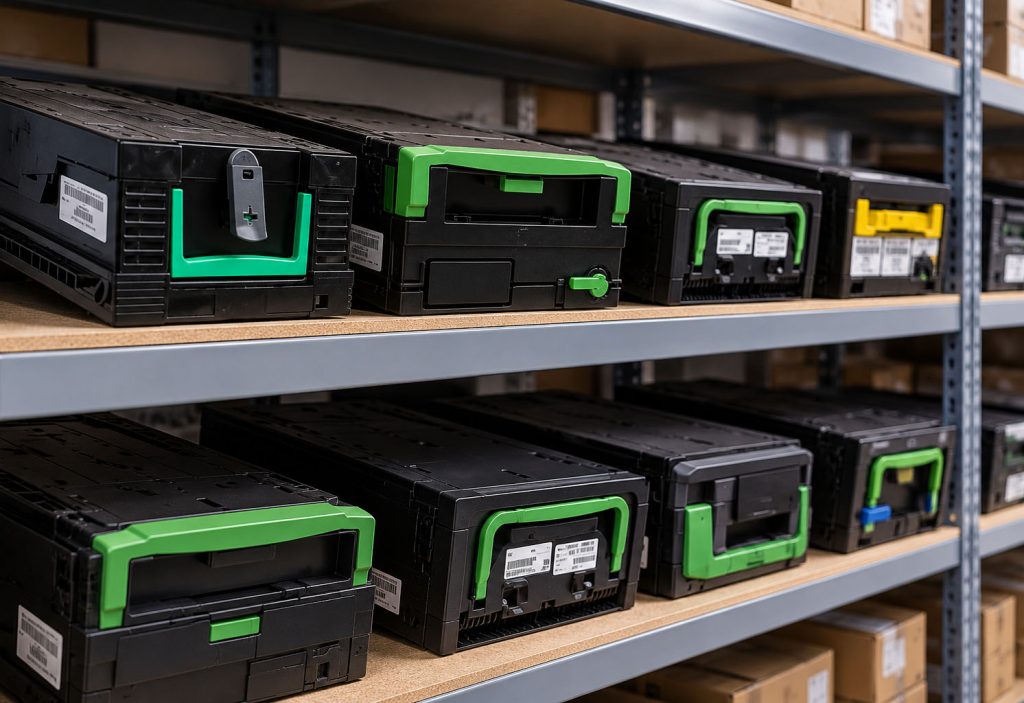
For recycler deployments, the operating model needs additional scrutiny. Recirculation settings, note fitness rules, cassette thresholds, reject handling, and reconciliation processes must align with the institution’s cash policy and the capabilities of its chosen service partners. A recycler can reduce cash touches in the right environment, but it can also introduce operational complexity when forecasting, balancing, and first-line procedures are not mature.
Capacity planning should use expected withdrawal demand, location hours, holiday patterns, and service-window constraints. A terminal that is technically available but regularly cash-out during peak demand is not meeting its business purpose. Conversely, overfunding every terminal ties up working capital and can increase security exposure.
Test the complete transaction path before go-live
Installation testing confirms that components power on and communicate. Production readiness testing confirms that the whole service works. Both are necessary.
The test plan should cover transaction authorization, host response, receipt and journal output, cash dispense or deposit behavior, error handling, remote monitoring alerts, alarm events, and settlement reporting. If the device supports contactless or cardless transactions, those functions should be tested under the same network and host conditions that will apply after go-live.
Test failure scenarios as well as normal transactions. Disconnect the primary communications path where failover is expected. Confirm that alerts reach the right support queue. Validate that a low-cash or cassette-error event produces a usable operational response, not just a status message on a dashboard. Verify remote software distribution and recovery procedures with a controlled pilot rather than discovering their limits during a fleet incident.
A pilot should represent the difficult parts of the rollout, not only the easiest branch or best-prepared retail site. Include a location with typical connectivity constraints, ordinary field access, and the same service model planned for scale. The goal is to expose process weaknesses while the project still has room to adjust standards.
Plan the handoff to service before the installation team leaves
The handoff package should give operations a reliable record of what was installed and how it is configured. At minimum, it needs terminal identifiers, serial numbers, software and firmware versions, network details, photographs where useful, keys and access-control records, warranty status, site contacts, service instructions, and an escalation path.
First-line maintenance is especially sensitive. Whether staff performs basic recovery tasks or every event goes to a field technician, the boundary must be unambiguous. Training should reflect the actual terminal configuration and site conditions. A generic quick-reference card will not solve a cash-feed issue, a communications failure, or a safely managed customer dispute.
Service-level targets should distinguish between response, restoration, and transaction availability. A technician can arrive within the contracted window while the terminal remains unavailable because a part, credential, network repair, or cash action is still pending. Measure the outcomes that matter to the business, then review the recurring causes of downtime by location and deployment class.
Control change as the rollout scales
The first few deployments often generate changes to physical standards, network settings, test scripts, or service procedures. That is expected. The risk appears when changes are applied informally to some sites but not others. A controlled baseline for hardware, software, network configuration, and documentation makes later troubleshooting far more manageable.
Track exceptions separately from standard sites. A nonstandard router, custom enclosure, unusual power arrangement, or special access rule may be justified, but it should carry an owner and a lifecycle plan. Exceptions become expensive when their history is lost and the next service provider encounters an undocumented variation years later.
A successful ATM rollout is not defined by the installation count on launch day. It is defined by whether the fleet can be monitored, funded, serviced, secured, and restored consistently after the project team has moved on. Treating deployment as the first phase of operations, rather than the final phase of procurement, produces better decisions at every stage.