



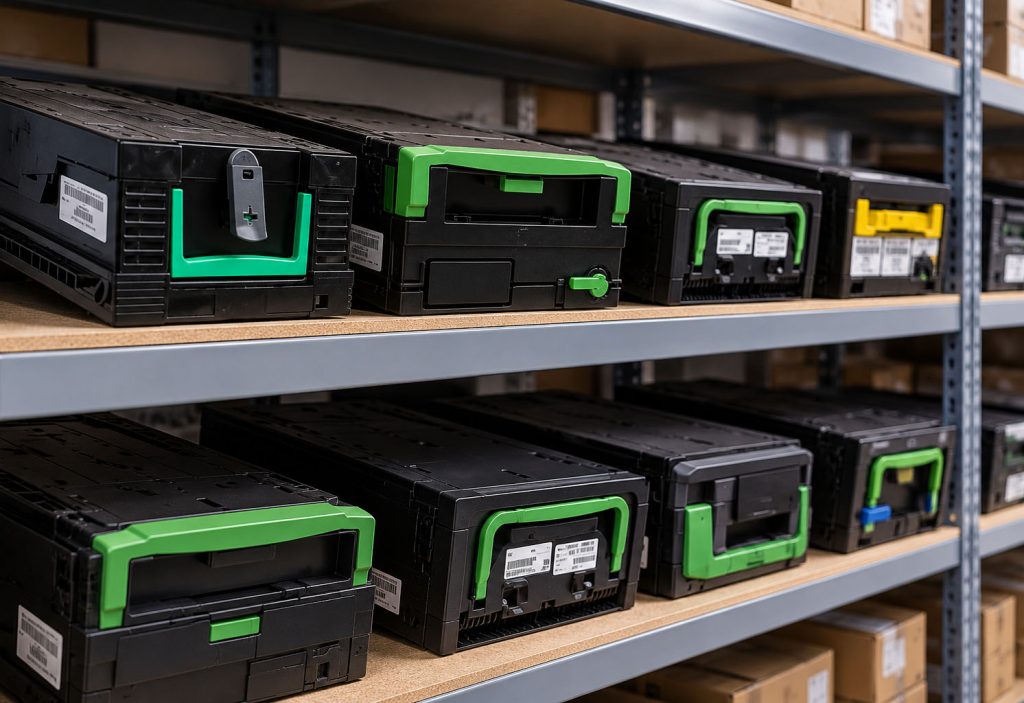


ATM Parts Supply Chain Under Pressure

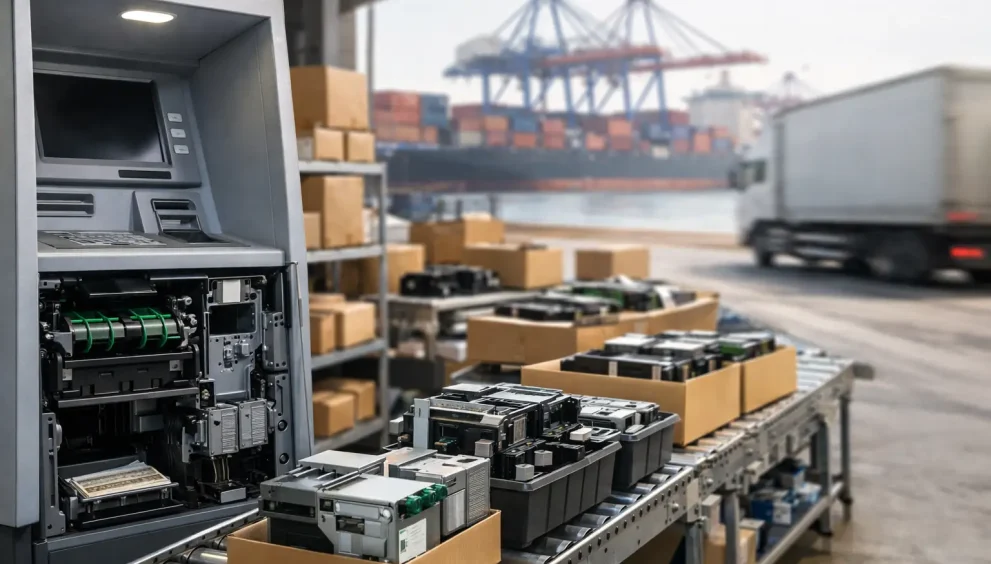
A dispenser fault that should take one visit to resolve can turn into a week-long outage when the required module is not on the shelf, not in the depot, and no longer in regular production. That is the operational reality behind the ATM parts supply chain. For banks, independent service organizations, and deployers managing mixed fleets, parts availability is no longer a background procurement issue. It is directly tied to uptime, first-time fix rates, truck rolls, and the economics of keeping older terminals in service.
The pressure is coming from several directions at once. Many installed ATM bases in the US still include mature platforms with long service histories, but the vendor landscape has shifted, product lines have been rationalized, and component lifecycles are shorter than the service expectations attached to banking equipment. Add in transport volatility, uneven refurbishment quality, and regional stocking gaps, and the result is a supply environment that is harder to plan around than it was even a few years ago.
Why the ATM parts supply chain has become more complex
The simplest explanation is that ATM lifecycles and electronics lifecycles are not aligned. Financial institutions often expect a terminal to remain economically useful well beyond the point at which key subassemblies are actively manufactured in volume. A card reader, power supply, PC core, display, receipt printer, or dispenser controller may still be field-relevant years after upstream suppliers have moved on.
That mismatch creates cascading effects. OEM inventory gets tighter, authorized channels become more selective, and secondary markets take on greater importance. Once that happens, quality variation becomes a bigger issue. Two parts with the same label may have very different field performance depending on whether they are new, harvested, repaired, or refurbished to a defined standard.
There is also a fleet-mix problem. Many operators are not supporting one ATM model from one era. They are supporting a blend of branch ATMs, retail units, cash recyclers, and self-service kiosks, often across multiple manufacturers and software stacks. Each platform has its own failure patterns, firmware dependencies, and spare-parts profile. Standardizing service is difficult when the inventory strategy is fragmented from the start.
Aging fleets change the economics of spare parts
As fleets age, parts demand does not always decline in a predictable way. In some cases, demand rises because failure rates increase on wear components and on electronics exposed to years of heat, dust, vibration, and inconsistent power conditions. In other cases, demand becomes lumpy. A specific module may be stable for months and then suddenly difficult to source after a manufacturer issues an end-of-support notice or a major operator begins buying remaining stock.
This matters because service organizations typically balance three competing costs: carrying too much inventory, expediting emergency orders, and extending outages while waiting for supply. There is no universal right answer. A large bank with concentrated geography may justify deeper regional stocking. A distributed independent deployer may prefer a leaner model with depot-based repair and selective field stock. The right approach depends on fleet standardization, SLA commitments, and how expensive downtime is in each location type.
Refurbishment complicates the picture further. Refurbished parts often make economic sense, especially for mature platforms, but only when testing standards are disciplined and failure analysis is real. If refurbishment is treated as cosmetic cleanup rather than component-level repair and validation, operators can see repeat failures that erase the initial savings. Cheap supply becomes expensive when it drives second visits and customer disruption.
Not all part shortages have the same operational impact
A shortage of fascia components or cabinet hardware is inconvenient. A shortage of dispenser modules, encrypted PIN pad assemblies, communication boards, or power components is a service-level problem. The operational impact depends less on the part category itself than on whether the part disables cash dispense, transaction capability, or compliance.
That is why better parts planning starts with failure criticality, not just historical consumption. Some low-volume items deserve priority stock because they create extended outages when missing. Some high-volume consumables can be managed with more flexibility because substitutes or quick replenishment are available.
Supplier strategy now matters as much as inventory strategy
The ATM parts supply chain is often discussed as a stocking problem, but supplier structure is just as important. Many organizations still rely on a patchwork of OEM channels, third-party brokers, repair depots, and regional resellers. That may work in stable periods, but it creates exposure when a part becomes constrained or when traceability is needed for recurring failures.
Supplier diversification helps, but only up to a point. Adding more sources does not automatically improve resilience if all of them draw from the same shrinking pool of recovered inventory. What matters is visibility into provenance, testing methods, turnaround times, and actual available stock rather than theoretical access.
For critical components, procurement teams increasingly need to know more than price and lead time. They need to know whether the part is new surplus, OEM service stock, repaired, remanufactured, harvested from decommissioned units, or cross-compatible with another platform revision. Those distinctions affect not just cost but also software compatibility, security posture, and expected service life.
Data quality is still a weak point
A recurring issue in ATM parts operations is poor normalization of part data. Different vendors may use different naming conventions for what is effectively the same item, while similar-looking components can have revision differences that matter in the field. If service records are inconsistent, organizations struggle to forecast demand accurately or identify repeat-failure patterns.
This is one reason why mature service operations put more effort into part-master discipline and failure coding than they did in the past. Better data supports better stocking decisions, but it also helps determine when a fleet has crossed the line from maintainable to economically inefficient. If a terminal family requires increasing effort to locate compliant parts, and if those parts carry a higher repeat-failure rate, replacement planning becomes easier to justify.
Forecasting should include service model changes
Historical demand alone is not enough when the service model is changing. A move toward more recycling units, software upgrades that affect peripheral compatibility, a branch transformation program, or a shift from in-house repair to outsourced field service can all alter parts demand. Forecasting needs to reflect operational change, not just past usage.
There is also a geographic factor. Rural service territories and high-security urban locations do not carry the same outage cost or replenishment risk. A part that can be delivered overnight to a metro depot may require a different stocking policy when the machine is in a remote market with limited technician density.
Security and compliance add another layer
Parts sourcing in the ATM environment is not only about mechanical fit. Security-sensitive components raise additional concerns around certification, key handling, tamper status, and software integrity. Encrypted PIN pads, card readers, communications devices, and system boards require more controlled sourcing and validation than standard cabinet parts.
That creates a practical divide in the market. Some categories are well suited to a broader aftermarket ecosystem. Others require tighter controls, documented handling processes, and vendor relationships that support auditability. Service managers who treat all parts categories the same can create avoidable compliance risk.
What stronger parts programs look like
The most effective operators are moving away from purely reactive buying. They are segmenting fleets by strategic value, identifying critical failure points by platform, and aligning stocking policy with actual uptime commitments. They are also putting more scrutiny on repair loop performance, because a slow or inconsistent depot can destabilize inventory even when nominal stock levels look adequate.
A stronger model usually includes three things. First, it distinguishes between strategic stock, working stock, and salvage recovery. Second, it ties field inventory to technician capability so expensive modules do not sit idle in the wrong places. Third, it treats refurbishment as a controlled engineering process rather than a purchasing category.
That does not mean every organization needs a large warehouse footprint or extensive in-house repair capability. In some cases, disciplined vendor management and better asset visibility will produce more value than carrying additional inventory. The operational answer depends on fleet age, platform diversity, service geography, and contract structure.
What is becoming harder to defend is the assumption that parts supply will remain available on short notice for aging ATM estates. That assumption has already failed in many environments, and the downstream effects show up first in service metrics, then in budget pressure, and finally in replacement decisions. The organizations that adapt fastest are usually the ones that stop treating spare parts as a purchasing line item and start treating them as infrastructure.