




Why Do ATMs Go Offline?


A machine can look perfectly normal to a customer and still be effectively unavailable. The screen is on, the topper is lit, and the enclosure appears fine, yet no transactions are getting through. That gap between apparent availability and actual service is why the question “why do ATMs go offline” matters operationally. For banks, independent deployers, and service organizations, offline incidents are rarely caused by one simple fault. They usually sit at the intersection of communications, endpoint health, software behavior, cash-state conditions, and recovery discipline.
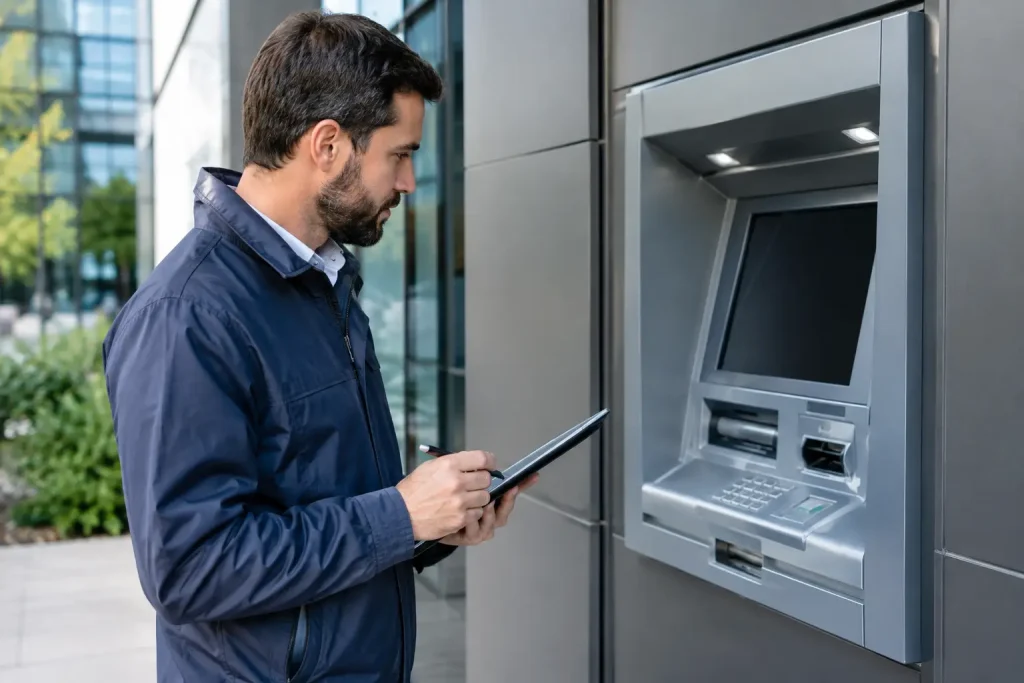
From a field perspective, “offline” also means different things to different stakeholders. A customer may see an ATM as offline because it is not dispensing cash. A processor may define offline as loss of host communication. A monitoring platform may only flag offline when heartbeats stop. A technician may arrive on site and find that the terminal is powered, connected to part of the stack, but blocked by a device fault that prevents transactions. Those distinctions matter because they shape diagnosis, dispatch priority, and root-cause reporting.
Why do ATMs go offline in real deployments?
The short answer is that ATMs depend on multiple systems staying healthy at the same time. If any one of those dependencies fails, the terminal may drop off the network, stop authorizing transactions, or intentionally place itself out of service.
In real deployments, the biggest contributors are usually communications failure, unstable power, hardware component faults, software or application errors, and state-based operational conditions such as low cash, full reject bins, or security lockouts. What makes ATM downtime difficult is that many events are interdependent. A weak communications circuit may cause repeated transaction retries, which can trigger software instability. A dirty power environment may not shut the unit down completely, but it can cause peripherals to reset and leave the terminal in a hung state.
That is why simple uptime percentages often hide the real issue. A fleet can show acceptable average availability while still suffering recurring intermittent offline events at specific sites, on certain carriers, or on a particular hardware generation.
Communications failures are still the first place to look
For many fleets, the most common answer to why do ATMs go offline is loss of communications. The ATM may rely on wired broadband, cellular, MPLS, VPN infrastructure, or some hybrid design. Every layer in that path is a potential failure point.
The most obvious case is a carrier outage or local circuit failure. But a large share of communications-related downtime comes from less dramatic conditions: unstable signal strength, misconfigured failover, expired certificates, modem faults, router lockups, DNS issues, VPN tunnel drops, or intermittent packet loss severe enough to break transaction traffic even though the site appears technically connected.
Cellular-connected ATMs add flexibility, but they also introduce variability. Coverage may be acceptable most of the time and still degrade enough during weather events, congestion periods, or local radio changes to interrupt service. Wired circuits are not immune either. A branch remodel, contractor damage, or changes to store-level networking at retail locations can take terminals offline without any ATM hardware fault at all.
This is one reason mature operators separate “communication down” from “terminal down” in monitoring and service reporting. Treating both as the same event can distort root-cause analysis and lead to unnecessary dispatches.
Power problems do more than shut a terminal off
When people think about power-related outages, they often picture a full blackout. In practice, brownouts, voltage fluctuation, poor grounding, tripped breakers, and degraded UPS performance can be just as disruptive.
An ATM may remain powered during unstable electrical conditions but still lose a peripheral, reboot unexpectedly, or freeze during initialization. Card readers, dispensers, encrypting devices, communications hardware, and Windows-based controllers do not always fail gracefully when voltage is inconsistent. The result can be a machine that appears alive at a glance but cannot complete a transaction cycle.
Remote locations and older retail sites are especially vulnerable. Shared circuits, poor electrical maintenance, and limited on-site awareness can extend time to recovery. In those environments, a recurring offline pattern may actually be a facility issue rather than a service-provider issue.
Hardware faults often begin as intermittent incidents
Cash dispensers, card readers, receipt printers, sensors, encrypting pin pads, and the PC core all create opportunities for the ATM to enter an out-of-service state. What matters operationally is that hardware failures often do not start as clean failures. They begin with intermittent errors that are easy to misclassify.
A dispenser may produce occasional pick failures before locking out. A card reader may show rising read errors before a full fault. A failing hard drive or aging SSD may allow the ATM to boot sometimes and fail other times. A fan issue can create thermal instability that only appears during parts of the day. These are offline events in the making, not isolated annoyances.
For service managers, this is where event history matters more than single tickets. Repeated recoverable errors on one device usually signal deterioration, contamination, wear, or site conditions that a reboot will not solve for long.
Cash handling modules are a special case
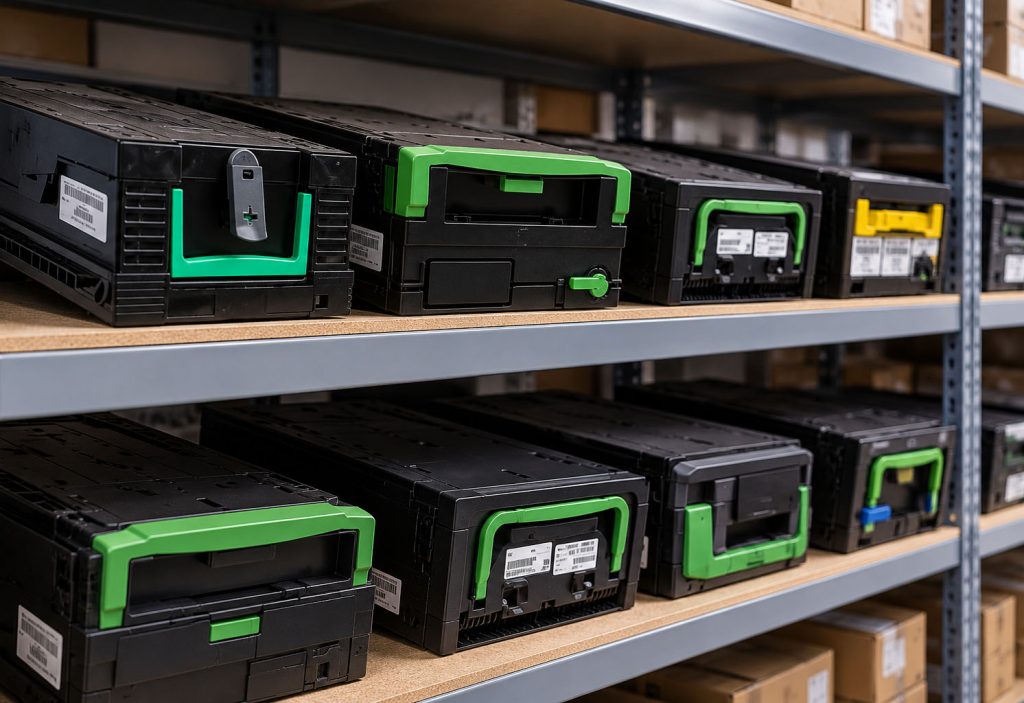
Dispensers generate a disproportionate share of service complexity because they combine mechanical wear, note quality variability, cassette management, and software controls. A terminal can lose transaction capability because of jam rates, reject-bin limits, purge states, cassette misconfiguration, or sensor issues, even when the rest of the terminal is communicating normally.
In customer terms, the ATM is offline. In system terms, it may still be reachable and healthy except for the cash path. That distinction affects whether the issue is resolved by remote intervention, first-line cash servicing, or a parts-based field visit.
Software and application issues are less visible but highly disruptive
Many ATM estates still include a mix of software versions, middleware layers, host interfaces, security agents, and peripheral drivers accumulated over multiple refresh cycles. That complexity can create offline incidents that are harder to isolate than a straightforward hardware fault.
Application hangs, failed updates, corrupt files, certificate problems, Windows service failures, memory exhaustion, and peripheral driver conflicts can all take a terminal out of service. Sometimes the ATM is technically online but not processing transactions because the application stack has frozen or a required service did not restart correctly after patching.
Software-driven downtime becomes more likely when estates are heterogeneous. Different OEM generations, image baselines, and remote management tools can make behavior inconsistent across the fleet. A patch that is uneventful on one configuration may destabilize another. That does not mean modernization should be delayed. It means change control, pilot validation, and rollback planning remain critical.
Security controls can intentionally force an ATM offline
Not every outage is accidental. ATMs are designed to take themselves out of service under certain security conditions, and rightly so.
Encryption key issues, tamper events, unauthorized cabinet access, malware protection triggers, failed authentication to required services, and suspicious process behavior may all lead the terminal to suspend transaction capability. In some cases, a terminal remains visible to management systems but is unavailable for customer use until a secure recovery procedure is completed.
This creates a trade-off that operators know well. Stronger controls can increase false positives or operational friction if not tuned carefully, but weaker controls create larger downstream risk. The goal is not to eliminate security-driven outages. It is to reduce unnecessary ones through better policy management, testing, and event correlation.
Operational states are often misread as technical failure
Some ATMs go offline because they are doing what they were configured to do. Low cash thresholds, cassette empty states, full deposit bins, full reject bins, journal or receipt issues, and branch-defined service windows can all remove the terminal from service.
These are not always failures in the engineering sense, but they are availability failures in the business sense. A terminal that is online, powered, and communicating but out of cash is still unavailable to the user. For operators, this is where service orchestration matters as much as technical support. Forecasting, cash logistics, first-line maintenance, and remote state visibility all influence how often an ATM appears to have gone offline.
This is also why incident categorization matters. If recurring downtime is driven by replenishment timing or poor cash forecasting, replacing communications hardware will not improve uptime.
Why recurring offline events are harder than major outages
A major outage gets attention quickly. Intermittent offline behavior is more expensive over time because it generates repeat tickets, unnecessary dispatches, customer complaints, and weak confidence in monitoring data.
The hardest cases are the ones where the terminal self-recovers before a technician arrives. Those incidents often involve environmental conditions, marginal devices, carrier instability, or software timing problems. They require pattern analysis, not just break-fix response. Site-level history, event sequencing, and cross-fleet comparisons are usually more useful than isolated ticket notes.
That is especially true for large ATM estates where one recurring issue may show up only on a subset of terminals sharing the same modem model, software image, branch network design, or hardware revision.
Reducing offline time starts with better classification
Operators cannot eliminate every ATM outage, but they can reduce mean time to detect and mean time to restore by tightening how incidents are defined and escalated. The first step is distinguishing true communications loss from transaction disablement, hardware fault, application failure, and operational state conditions.
The second step is making sure remote tooling reflects the reality of service availability, not just network reachability. A terminal that answers a ping but cannot authorize a withdrawal should not be treated as healthy. The third step is feeding field outcomes back into engineering and vendor management so that chronic site issues, weak components, and unstable configurations are addressed structurally rather than repeatedly reset.
For most fleets, the question is not simply why an ATM went offline once. It is why certain machines, locations, or configurations go offline more often than they should. That is where uptime improvement becomes less about reacting to alarms and more about understanding the operating environment the fleet is actually running in.
The most useful mindset is to treat offline events as signals, not just interruptions. The machine that drops today often reveals the design, maintenance, or service gap that would have affected ten more terminals next month.