



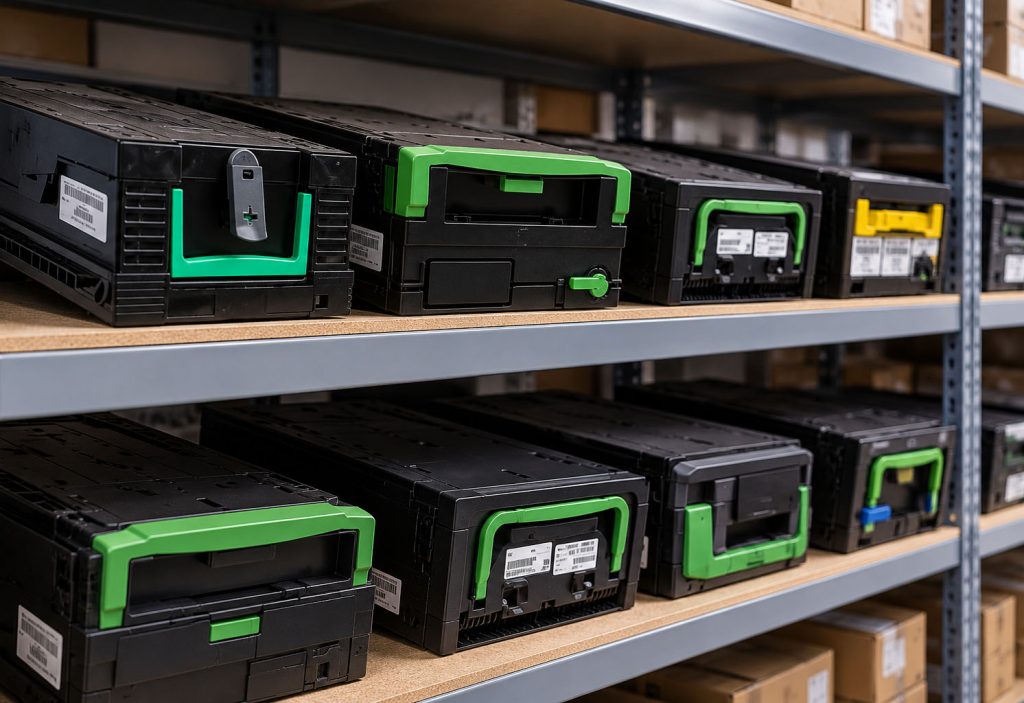


EMV Migration for ATMs: What Still Matters


A surprising number of ATM estates are still living with the aftereffects of partial chip enablement. A terminal may read EMV cards, yet the surrounding stack – application logic, host messaging, key management, fallback controls, and field support – can still behave like a magstripe-era deployment. That gap is why EMV migration for ATMs remains an operational issue, not just a completed compliance milestone.
For banks, independent deployers, and service organizations, the hard part was never simply adding a chip reader. The hard part has been making the ATM, switch, host, processor, and servicing model behave consistently under real transaction conditions. An EMV project that looks complete on a spreadsheet can still generate exceptions in the field, from increased call volumes to transaction reversals, card capture disputes, and confused fallback behavior.
Why EMV migration for ATMs is still operationally relevant
In many fleets, EMV is no longer a headline initiative. It is part of the installed base. Even so, the migration continues to shape upgrade budgets, hardware replacement cycles, and software certification plans. Older terminals may support chip transactions only through patched software versions. Others may rely on card readers and encrypting PIN pads that are approaching end-of-support, making EMV maintenance inseparable from broader platform modernization.
The liability shift was one driver, but it was not the only one. EMV also changed transaction flow, error handling, and security assumptions at the terminal edge. A chip transaction introduces more decision points than a simple magstripe read. That affects not just fraud exposure, but timing, customer prompts, journal data, and the way field technicians diagnose issues. If the estate includes multiple OEMs, legacy controllers, or mixed host environments, those complications increase quickly.
There is also a strategic issue. Institutions planning branch transformation or self-service refreshes often discover that unresolved EMV gaps limit what they can do next. Deposit automation, software migration, contactless support, remote monitoring, and future cardholder experiences all depend on a predictable and current transaction stack. In that sense, unfinished EMV work can hold back broader ATM modernization.
The migration is wider than the card reader
EMV programs often begin with hardware because the gap is visible. A non-EMV card reader is easy to identify and replace. But experienced operators know the reader is only one layer. The terminal application must support the right kernel behavior, cardholder prompts, and exception logic. The encrypting PIN pad has to align with security and certification requirements. The host and processor must interpret chip data correctly and respond within expected timing windows.
Then there is the certification burden. Any material change to terminal hardware, software image, host interface, or transaction routing can trigger retesting. In large estates, that creates sequencing problems. An operator may have hundreds or thousands of terminals ready for deployment, but a delay in host certification or a processor queue can slow rollout for months. During that time, mixed-state fleets become harder to support.
Field operations also feel the impact. EMV-related service calls are not always obvious at first contact. A terminal that appears to have a reader issue may actually be experiencing an application mismatch, poor card seating behavior, firmware inconsistency, or a host-side response problem. Without clear fault isolation, first-line support can misclassify incidents and dispatch the wrong part.
Common friction points in ATM EMV programs
The most persistent issues tend to appear after initial go-live, when transaction volumes expose edge cases. Fallback is a frequent example. Some fallback activity is legitimate, but repeated fallback on specific terminals can indicate reader wear, dirty transport paths, software handling issues, or even attempted fraud. If monitoring tools do not separate occasional exceptions from systemic patterns, operators lose a useful early warning signal.
Application version control is another recurring problem. Fleets that have grown through mergers, outsourcing changes, or phased refreshes often contain more software variation than expected. EMV behavior can differ slightly across versions, especially when vendor-specific patches have accumulated over time. That variation complicates testing, training, and root-cause analysis.
Interoperability is also more fragile than many project plans assume. The ATM OEM, application provider, processor, network, and financial institution may all be technically compliant while still producing inconsistent real-world outcomes. Compliance at each layer does not automatically guarantee smooth behavior across the transaction chain.
Service organizations see the downstream effect. Spare parts planning changes when card readers, PIN pads, and supporting modules are tied to specific EMV-approved configurations. Technician training also has to go beyond swap procedures. Teams need to understand transaction symptoms well enough to distinguish hardware failure from software or network issues. Otherwise, repeat visits increase and mean time to resolution stretches out.
Hardware replacement versus life extension
One of the more practical questions in EMV migration for ATMs is whether to extend the life of older machines or accelerate replacement. There is no universal answer. If a terminal can support current EMV requirements through stable software, available parts, and maintainable security components, a life-extension path may be reasonable. That is especially true in low-volume locations where full replacement economics are difficult to justify.
But the math changes when EMV remediation piles onto other aging-platform problems. If the terminal also has an outdated operating environment, shrinking parts availability, poor remote visibility, and limited support for newer peripherals, incremental upgrades can become more expensive than they first appear. In those cases, EMV acts less as a standalone project and more as a forcing function for fleet rationalization.
This is where operators need discipline. A short-term fix that preserves service for 12 months may be the right move. A short-term fix that creates another nonstandard configuration across a national estate usually is not. The cost is rarely just in hardware. It shows up in truck rolls, training overhead, certification complexity, and exception handling.
Contactless and EMV are related, but not identical
Some institutions now revisit EMV in the context of contactless upgrades. That is understandable, but it can blur two different issues. A fleet may be EMV-capable for inserted chip card transactions and still require substantial work to support contactless acceptance reliably. Contactless introduces its own hardware requirements, kernel considerations, cardholder messaging, and transaction rules.
For US ATM operators, demand for contactless cash access still varies by issuer strategy, mobile wallet adoption, and transaction type. The case for deployment depends heavily on channel strategy and customer mix. Still, teams evaluating contactless often discover older EMV decisions that need cleanup first. Inconsistent software baselines, aging readers, and limited host flexibility can all get in the way.
What a realistic migration plan looks like now
At this stage, the most effective EMV programs are usually less about broad conversion and more about disciplined normalization. That means identifying where the estate still contains unsupported readers, outdated firmware, inconsistent application builds, or recurring fallback and card-read exceptions. It also means checking whether transaction monitoring is detailed enough to show where problems originate.
A realistic plan usually starts with segmentation. High-volume financial institution sites, off-premise units, aging branch terminals, and recently refreshed machines should not all be treated the same way. Their risk, economics, and service implications differ. The goal is not to make every ATM identical overnight. The goal is to reduce unnecessary variation while protecting uptime and controlling certification effort.
Operators also benefit from treating EMV as a cross-functional issue. Too many projects were handed off from compliance or IT to field support after launch. In practice, EMV performance depends on coordination across terminal engineering, host teams, operations, service providers, and fraud management. If those groups do not share common defect data and escalation paths, issues linger longer than they should.
The long tail of EMV support
The industry has moved well past the first phase of chip migration, but the long tail remains significant. Older terminals are still in service. Mixed estates still exist. Certifications still consume time. And service teams still deal with the consequences when transaction design and field reality do not line up.
That is why EMV should be viewed less as a finished box to check and more as part of the ATM estate’s operating condition. For some fleets, the right move is selective remediation. For others, it is replacement tied to a broader software and hardware refresh. Either way, the useful question is not whether EMV was implemented. It is whether the current implementation is supportable, consistent, and aligned with the next round of self-service investment.
The institutions that handle this well tend to be the ones that look past formal compliance and focus on day-two performance. That is where EMV stops being a project and becomes what it should have been all along – a dependable part of the transaction infrastructure.