



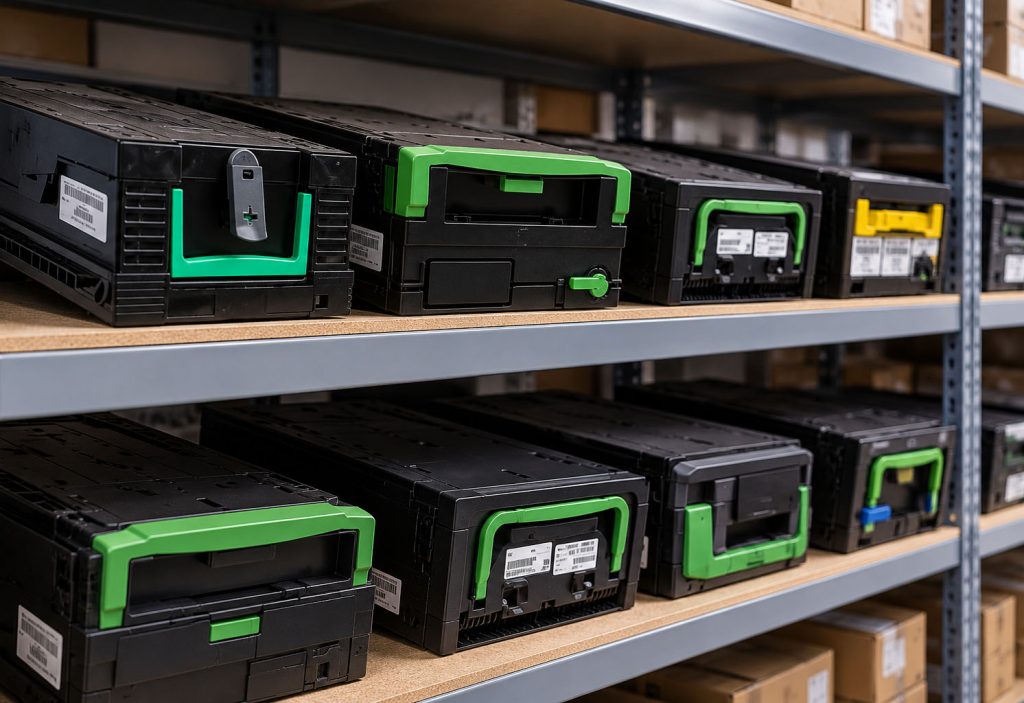


ATM Fleet Management Guide for Operators


An ATM estate can look healthy on a dashboard and still underperform badly in the field. A fleet with acceptable headline uptime may be absorbing repeat service calls, poor cash forecasting, aging communications hardware, and security exceptions that only surface after an outage or audit. That is why an effective ATM fleet management guide starts with a simple premise: manage the fleet as an operating system, not as a collection of machines.
For banks, independent deployers, managed service providers, and technology teams, the challenge is not just keeping terminals online. It is maintaining predictable availability, controlling service costs, reducing avoidable truck rolls, and making platform decisions that hold up across a mixed estate of hardware vintages, software baselines, and site conditions. The strongest programs treat fleet management as a cross-functional discipline that connects operations, service, cash, security, and lifecycle planning.
What ATM fleet management actually covers
ATM fleet management is often reduced to monitoring terminal status and dispatching technicians. In practice, it is broader than that. It includes device health, software consistency, spare parts strategy, cash performance, communications resilience, security controls, first-line maintenance execution, and retirement planning. If any one of those areas is weak, the rest of the operation carries the cost.
A useful way to think about the fleet is through failure patterns rather than asset counts. A 500-unit estate with standardized hardware, stable telecommunications, and disciplined software governance may be easier to run than a 150-unit fleet assembled through acquisitions, partial refreshes, and overlapping service contracts. Scale matters, but variation usually matters more.
That is also where many ATM programs become expensive. Leaders may believe they have a service issue when they actually have a standards issue. They may see rising downtime and assume technician performance is slipping, when the underlying cause is an unsupported peripheral set, weak remote diagnostics, or a site environment that is driving repeated component failures.
The operating metrics that matter most
Every fleet is measured, but not every fleet is measured in a useful way. Uptime remains necessary, but by itself it can hide a great deal. A terminal that experiences frequent short disruptions, recurring receipt printer faults, or repeated cash-out events may still post an acceptable availability number while delivering poor customer experience and higher operating cost.
A better measurement framework combines uptime with mean time to repair, first-time fix rate, repeat incident rate, cash-out frequency, communication failure rate, and software compliance by terminal group. Age segmentation matters as well. A fleet-wide average can mask the fact that one model family or one telecom carrier is driving a disproportionate share of incidents.
Transaction context is equally important. An off-premise ATM in a high-volume retail corridor should not be managed by the same thresholds as a low-volume branch vestibule unit. Service-level expectations, cash forecasting tolerance, and parts stocking all change by channel, location type, and usage profile. Good fleet management is not one standard applied blindly. It is a common operating model adapted to terminal roles.
Standardization is usually the biggest performance lever
If there is a single lesson repeated across large ATM estates, it is that standardization reduces friction everywhere. It simplifies technician training, improves parts planning, supports cleaner software distribution, and makes incident trends easier to interpret. It also shortens decision cycles because teams are not constantly dealing with exceptions.
That does not mean every terminal must be identical. Mergers, phased refresh programs, and local market constraints make that unrealistic in many networks. But there should be a clear target architecture. That includes approved hardware families, peripheral combinations, operating system versions, security tools, communications options, and image management practices.
Without that discipline, fleet management becomes reactive. Different service partners carry different assumptions, ticket coding loses value, and root-cause analysis turns into a model-by-model exercise. Standardization is not glamorous, but it is often the difference between a manageable fleet and one that consumes leadership attention week after week.
Service management is more than dispatch
An ATM fleet management guide should spend as much time on service model design as on monitoring technology. Many ATM estates underperform because the operating model is fragmented. One provider handles first-line maintenance, another handles second-line break-fix, the bank manages telecom separately, and software support sits with a different team again. Each party may perform reasonably well in isolation while the fleet performs poorly overall.
The key issue is accountability at the incident level. When a terminal goes down, who owns triage, who decides whether a truck roll is justified, who validates fix quality, and who closes the loop on recurring faults? If those handoffs are vague, resolution times rise and repeat visits follow.
This is where remote diagnostics and event quality matter. Better fault data can reduce unnecessary dispatches, but only if event hierarchies are calibrated and operational teams trust them. Too much noise creates alert fatigue. Too little detail forces technicians to arrive unprepared. The trade-off is between visibility and usability, and many estates need tuning rather than more data.
Cash management can distort fleet performance
Operational leaders sometimes separate cash optimization from fleet management. On paper that makes sense. In the field, the customer usually experiences them as one problem. A terminal that is online but out of cash is functionally unavailable.
Cash performance should therefore be managed alongside device health. Forecast accuracy, cassette configuration, replenishment windows, seasonal demand shifts, denomination mix, and reject behavior all affect whether a machine is truly serving demand. A technically healthy fleet can still disappoint badly if cash handling assumptions are wrong.
The more nuanced point is that aggressive cash optimization can create service risk. Reducing idle cash and replenishment frequency may improve treasury efficiency, but it can also narrow the margin for forecast error. That matters most on volatile sites, event-driven locations, and terminals with irregular transaction patterns. The right balance depends on usage stability, service response capability, and the business cost of a cash-out.
Security and compliance have to be operationalized
Security is often discussed as a separate control layer, but in ATM operations it lives or dies through routine fleet discipline. Patch latency, unsupported software, weak configuration control, unmanaged USB exposure, delayed key management tasks, and incomplete physical inspections all turn into fleet management problems very quickly.
The operational question is not whether a control exists in policy. It is whether the fleet can execute it consistently. Mixed estates make that harder, especially when older terminals cannot support the same security stack or patch cadence as newer platforms. In those cases, compensating controls may be necessary, but they should be treated as temporary, not normal.
Security also needs better alignment with service logistics. If a component replacement or image reload creates a compliance gap for several days, the process is not finished just because the ATM is back in service. Stronger programs track return-to-compliance as closely as return-to-operation.
Use lifecycle planning before the fleet forces the decision
Many ATM refresh cycles are triggered by crisis – operating system deadlines, component obsolescence, certification pressure, or rising failure rates that become impossible to ignore. That is expensive timing. A mature fleet program uses lifecycle planning to make replacement decisions before supportability collapses.
This requires more than knowing terminal age. Leaders need visibility into incident frequency by model, parts availability, software support limits, telecom dependencies, and whether the device still fits the intended customer journey. An older ATM may remain viable in a low-volume, low-complexity role while becoming a poor choice for deposit-heavy or software-dependent use cases.
Refresh planning also benefits from segmenting by economics rather than calendar alone. Replacing the oldest units first is not always the best move. Sometimes the smarter decision is to retire the subset producing the highest cost per transaction, the longest repeat repair chain, or the greatest compliance burden.
Data quality is the hidden constraint
Most fleet teams already have dashboards. Fewer have data they trust enough to make operational changes confidently. Ticket codes may be inconsistent, terminal inventories outdated, software baselines incomplete, and incident closure notes too vague to support pattern analysis. When that happens, organizations rely on anecdote and vendor escalation rather than evidence.
Improving data quality is not glamorous work, but it has practical value. Clean asset records support better dispatch. Consistent fault taxonomy improves root-cause analysis. Reliable software inventories make patch planning easier. Better linkage between incidents, parts usage, and terminal cohorts helps identify where standardization or retirement will have the biggest impact.
The objective is not perfect data. It is decision-grade data. A fleet operation that can clearly identify avoidable dispatches, unstable hardware groups, chronic site issues, and compliance lag is already in a stronger position than one collecting more information without structure.
Building an ATM fleet management guide into daily operations
The most effective ATM programs do not treat fleet management as a quarterly reporting exercise. They build it into routine operating reviews, vendor governance, cash planning, and technology roadmap decisions. That means looking beyond individual outages and asking whether the fleet is getting simpler or more complex over time.
If complexity is rising, cost and downtime usually follow. More device types, more exceptions, more support paths, and more inconsistent data create drag across the estate. The remedy is rarely a single tool or contract change. It is a disciplined operating model built around standardization, accountable service management, cash availability, security execution, and timely lifecycle decisions.
For teams responsible for availability and cost, the practical test is straightforward: if the same incidents keep returning, the fleet is telling you something about architecture, process, or standards. Listening early is cheaper than waiting for the next outage spike.