





What Causes ATM Cash Outages?

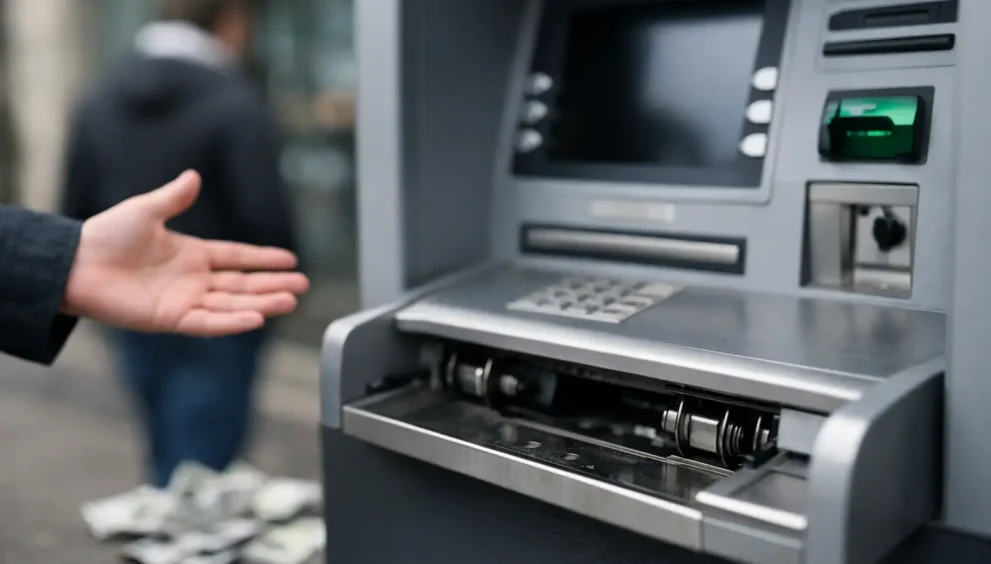
A machine can be online, passing diagnostics, and still fail at the one task that matters most to the customer – dispensing cash. That disconnect is why the question of what causes ATM cash outages matters well beyond customer inconvenience. For banks, independent deployers, and service organizations, a cash outage is usually the visible symptom of a deeper breakdown in forecasting, replenishment execution, device health, or service coordination.
From an operations standpoint, cash availability depends on more than cassette fill levels. It sits at the intersection of demand planning, route execution, hardware performance, software controls, and exception handling. When one part of that chain slips, the outage appears at the terminal.
What causes ATM cash outages in practice
The simplest answer is that the ATM runs out of usable notes. In practice, that outcome can be triggered by several different failures, and they do not carry the same operational fix. Some are planning problems, some are field-service problems, and some are device-level faults that make cash physically present but unavailable for dispense.
That distinction matters. If a terminal is empty because forecast demand was too low, the solution sits in cash planning and route management. If the ATM still has notes on site but a cassette, dispenser, or reject-bin issue prevents dispense, the problem shifts to maintenance and first-line service discipline. Treating every outage as a replenishment issue can mask recurring equipment or process failures.
Cash forecasting errors are still a leading cause
Many outages begin before the armored carrier arrives – or fails to arrive. Forecasting remains one of the most common weak points in ATM cash management, especially across mixed fleets with variable transaction behavior, seasonal peaks, event-driven demand, or uneven migration to digital channels.
A terminal may be loaded according to historical averages and still experience a shortage if demand shifts abruptly. Holiday weekends, payroll cycles, local events, weather disruptions, and nearby branch closures can all change withdrawal patterns. Rural, transit-adjacent, and retail-hosted machines often show more volatility than planners expect.
Forecasting also breaks down when institutions rely too heavily on static replenishment schedules. A route designed around normal weekly demand may not absorb a sudden spike in usage. The result is familiar: the ATM is technically serviced on time according to schedule, but operationally late relative to actual demand.
Better forecasting helps, but it is not a perfect control. Models are only as useful as the transaction data, local context, and exception monitoring behind them.
Denomination mix can create a cash outage even when notes remain
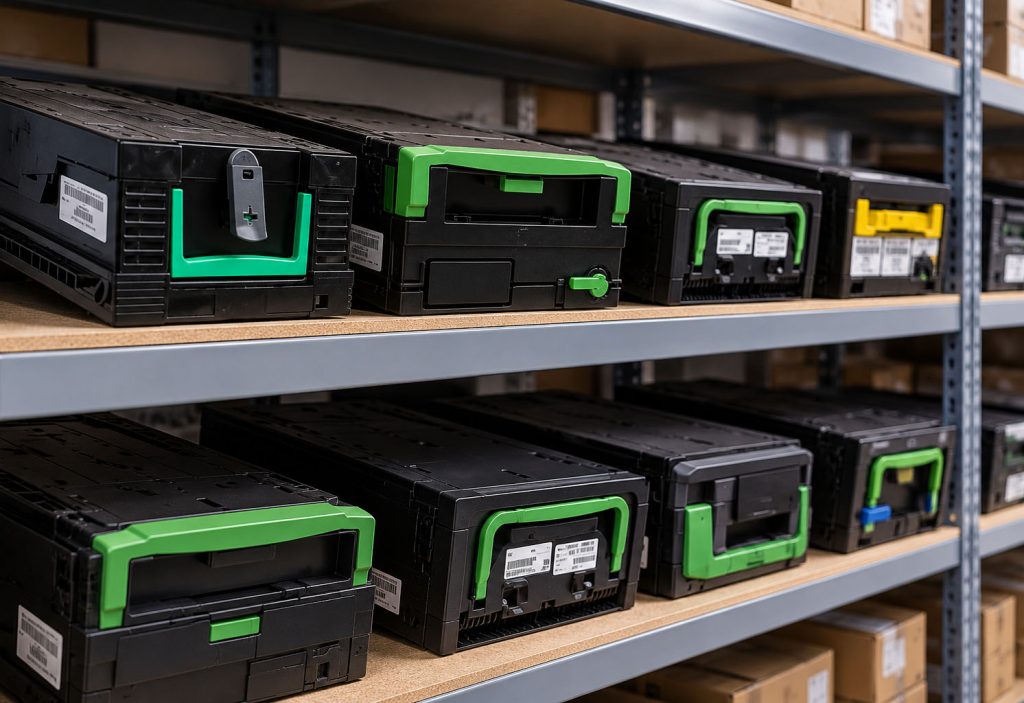
An ATM does not need to be completely empty to be effectively out of cash. If withdrawal demand concentrates on one denomination and that cassette depletes early, the machine may be unable to satisfy transaction requests even with other notes still loaded.
This becomes more noticeable in fleets with limited cassette flexibility, fixed note configurations, or software settings that do not adapt well to changing dispense patterns. A terminal may show residual cash in the vault while customer-facing transactions fail because the available denomination mix no longer supports requested amounts. From a service perspective, that is still a cash outage.
Replenishment execution is often where plans break down
Even accurate cash planning can fail in the field. Late carrier arrivals, route compression, site access issues, key management problems, and incomplete replenishment visits all contribute to outages that are less about analytics and more about execution discipline.
In multi-vendor environments, accountability can blur quickly. The bank may own forecasting, a cash-in-transit provider may own replenishment, a maintainer may own first-line service, and a managed service provider may monitor alerts. If handoffs are poorly defined, a low-cash alert can sit in the gap between teams without timely action.
The issue is not only missed visits. Short-loading, incorrect cassette swaps, balancing errors, and delayed posting of service activity can all reduce real cash availability. In some cases, the ATM is assumed to be replenished because the visit was closed in the system, while the terminal remains at risk due to an incomplete load or unresolved dispenser condition.
Site access and retail coordination matter more than they appear
Retail and off-premise deployments add another layer of complexity. Restricted store hours, security protocols, landlord rules, and local staffing issues can delay replenishment or prevent service windows from being used efficiently. If the carrier or technician cannot gain access as planned, the machine may remain online but continue running down toward zero.
These problems rarely show up in high-level dashboards as root causes. They surface later as repeat outages at the same locations, often attributed broadly to service performance when the actual issue is the operating environment around the terminal.
Hardware faults can make available cash non-dispensable
One of the most misunderstood answers to what causes ATM cash outages is that the cash may still be physically present. Dispenser module wear, pick failures, transport issues, shutter faults, note thickness variation, and cassette feed problems can all stop dispense while leaving notes in the machine.
This is where cash availability and mechanical availability diverge. A machine may be powered, connected, and even partially transacting, yet unable to complete cash withdrawals because notes are jamming, being rejected excessively, or failing validation thresholds.
The reject bin is an important indicator here. High reject activity often points to note quality issues, cassette setup errors, or dispenser calibration problems. If reject-bin capacity is reached, some terminals will suspend cash dispensing altogether until serviced. From the user perspective, it is a cash outage. From the operator perspective, it is a maintenance failure with cash management consequences.
Preventive maintenance helps, but there is a trade-off. Aggressive service intervals can improve availability while increasing cost and truck rolls. Extending intervals reduces direct expense but may allow wear-related failures to accumulate, especially in high-volume or harsh-environment deployments.
Note quality and cassette handling remain operational variables
Not all cash loads are equal. Fit notes, correctly staged cassettes, and disciplined loading procedures are still basic controls, yet note quality remains a recurring source of dispense trouble. Worn, damp, curled, or mixed-condition notes can increase reject rates and feed failures.
Cassette condition matters as well. Damaged components, improper note alignment, overfill, underfill, or inconsistent loading technique can affect how notes are picked and transported. A terminal with cash on hand can still become unavailable if the loaded notes are not reliably dispensable.
This is one reason why cash outages often resist simple categorization. The event may be logged as out of cash, while the underlying trigger was really note handling, cash quality, or cassette preparation.
Software, sensors, and status logic can create false or early outages
ATMs depend on sensors and software thresholds to decide whether cash is available. If those components misread cassette levels, reject-bin status, or dispenser health, the terminal may place itself out of service earlier than necessary. In that case, the outage is logical rather than physical.
Misconfigured thresholds are a common example. If low-cash settings are too conservative, a machine may stop dispensing while usable inventory remains. If thresholds are too loose, the terminal may continue accepting withdrawals until it cannot complete transactions cleanly. Neither condition is ideal, and both can distort replenishment priorities.
There is also the issue of stale or incomplete telemetry. Monitoring platforms are only useful when device data is timely and accurate. If status messages are delayed, dropped, or inconsistently mapped across vendors, operations teams may act on the wrong picture of fleet cash health.
Communications and host issues can present as cash outages
Not every no-cash customer experience is caused by an empty or faulty dispenser. Host authorization failures, transaction processor issues, communications instability, or encryption-related faults can interrupt dispense transactions in ways that look, at the site level, like a cash outage.
This is especially relevant when terminals are still online for some functions but failing withdrawal transactions. Frontline teams may initially classify the incident as out of cash because that is the visible symptom. Only later does analysis show a network, software, or host-side problem.
For operations leaders, this creates a triage challenge. Dispatching a replenishment visit to a terminal with a processor-side fault wastes time and money. But assuming a host issue when the machine is actually low on notes can extend downtime. Clear event codes and disciplined incident correlation are essential.
What causes ATM cash outages at the fleet level
At fleet scale, cash outages usually come from system design rather than one isolated miss. Overlapping service providers, fragmented monitoring, weak exception management, outdated forecasting assumptions, and inconsistent first-line maintenance all raise outage risk.
Fleets with strong availability tend to share a few characteristics. They align cash forecasting with local demand patterns, validate service completion beyond simple visit closure, monitor reject activity and note quality, and treat repeat low-cash incidents as process failures rather than isolated events. They also recognize that an ATM can fail cash delivery for reasons that cross organizational boundaries.
That broader view is important because outage reduction is rarely solved by one more cash load. The durable fix usually sits in coordination – between planning teams, carriers, maintainers, software platforms, and site operators.
Cash outages are easy to see but harder to diagnose correctly. The institutions that improve availability fastest are usually the ones that stop asking only whether the ATM had cash and start asking whether the cash on site was forecast correctly, loaded correctly, readable by the machine, and supported by the surrounding service model.