

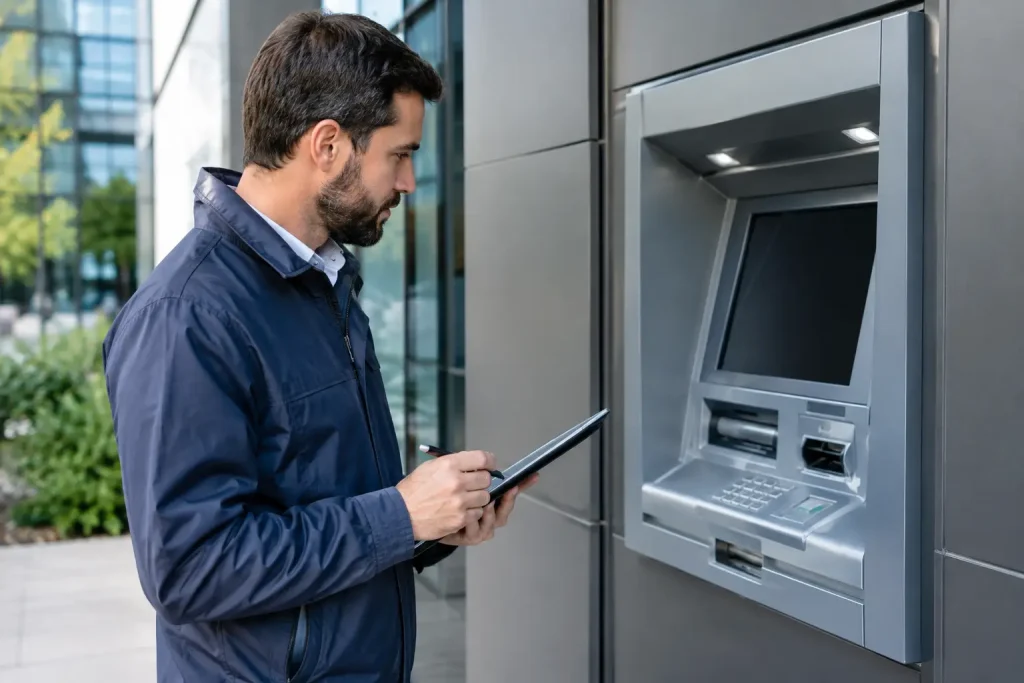
The Future of Branch Kiosks Is Operational


A branch kiosk that saves a customer five minutes but creates two additional exceptions for branch staff is not an efficiency project. It is a new operational burden. That distinction will shape the future of branch kiosks more than screen size, artificial intelligence claims, or the number of transactions a vendor can demonstrate in a showroom.
For financial institutions, branch self-service is moving beyond the simple question of whether to install a kiosk. The more consequential questions are which transactions it should own, how it fits with teller and ATM workflows, who supports it when it fails, and whether customers can recover quickly when a transaction cannot be completed. A kiosk program succeeds when it reduces friction across the branch operating model, not when it merely shifts a line from the teller counter to a touchscreen.
The Future of Branch Kiosks Depends on Transaction Design
The strongest kiosk use cases are familiar, repeatable, and easy to validate. Check cashing, cash withdrawals, deposits, bill payments, card-related requests, account servicing, and scheduled appointments may all fit, depending on the institution’s systems and risk controls. But each transaction adds dependencies: identity verification, core connectivity, imaging, cash recycling, card issuance, receipt management, and sometimes remote assistance.
That is why the broadest transaction menu is not automatically the best one. A branch may benefit more from a kiosk that reliably handles a defined set of high-volume tasks than from a multipurpose unit that creates frequent handoffs to staff. Banks should begin with transaction data from their own locations. Which activities consume teller time? Which have predictable exception rates? Which customers already use digital or ATM self-service without assistance?
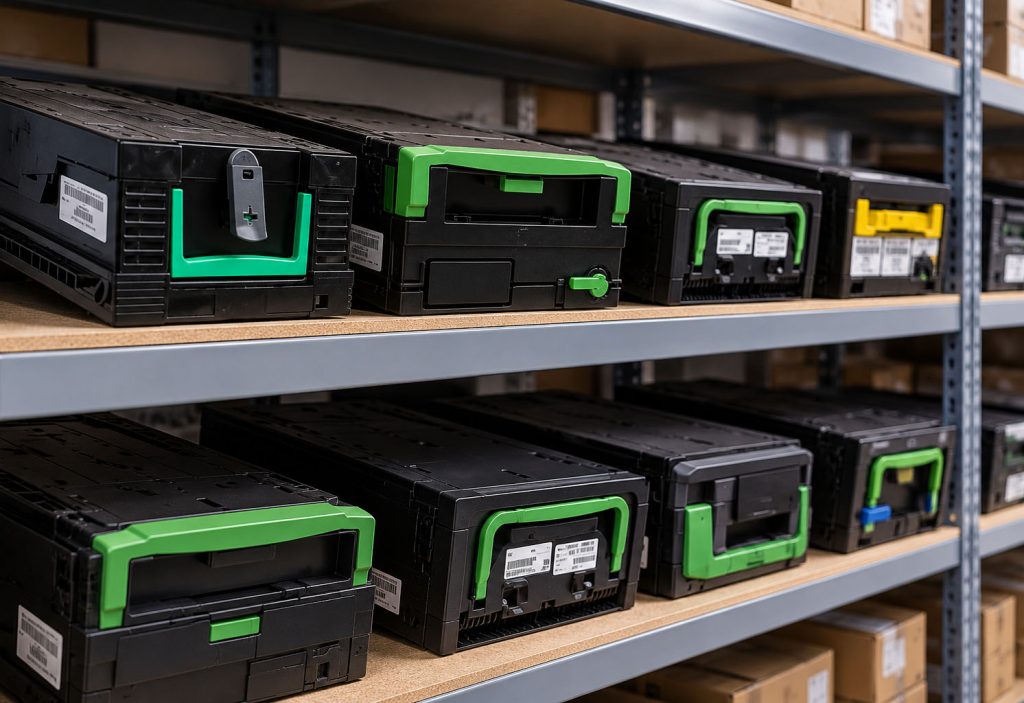
Cash remains a central design issue. In many deployments, a kiosk that accepts or dispenses cash can offer meaningful value, particularly where teller lines are driven by routine transactions. Yet cash capability also introduces cassette management, balancing requirements, suspect note procedures, replenishment planning, recycler diagnostics, and service dispatch considerations. The economics differ sharply between a lightly used advisory branch and a high-volume location with substantial cash traffic.
Integration Will Matter More Than the User Interface
Customers judge the experience at the screen, but operations teams live with the integrations behind it. A kiosk that cannot present accurate account information, post transactions consistently, or communicate a clear status to branch personnel will lose credibility quickly. The future branch kiosk is therefore less a standalone device than a controlled endpoint in a larger banking and service infrastructure.
Core banking integration is only one layer. Institutions also need to consider customer authentication, card management platforms, transaction switching, deposit imaging, fraud monitoring, customer relationship management tools, document workflows, and remote support channels. Legacy environments can make this difficult, especially when different lines of business maintain separate systems and ownership models.
Interoperability should be examined before procurement, not after equipment arrives. That means testing more than happy-path transactions. Teams should ask what happens when a deposit image is rejected, a cash recycler reaches a threshold, a card is retained, a network connection drops during authorization, or a customer abandons an identity-verification process. The answer should include both the system behavior and the person responsible for resolution.
A kiosk can also create avoidable complexity when its management tools sit outside existing fleet-monitoring and incident-management practices. Separate portals may be acceptable for a small pilot. At network scale, they can obscure fault trends and increase the time required to diagnose recurring issues. Banks and service providers should favor architectures that make device health, transaction exceptions, software versions, and security events visible to the teams already accountable for the branch fleet.
Remote assistance needs a disciplined operating model
Video banking and remote assistance are often presented as natural companions to branch kiosks. They can be effective, particularly in smaller locations where staff coverage is limited or where specialists serve multiple branches. However, remote assistance is not a substitute for an operating model.
The institution needs defined service hours, staffing levels, escalation paths, accessibility procedures, and clear rules for when a remote agent can intervene. It must also decide what occurs when the customer needs physical help with cash, documents, identification, or a device fault. If the result is a customer waiting at an unattended kiosk for a branch employee to become available, the technology has simply moved the queue.
Hardware Choices Must Reflect Field Conditions
Branch kiosks increasingly combine functions once divided among teller stations, ATMs, and specialized self-service devices. That does not remove the mechanical realities of cash movement, receipt printing, document scanning, card handling, and customer interaction. It concentrates them in a device that must often operate for long periods with limited on-site technical support.
Serviceability should carry significant weight in hardware selection. Field teams need practical access to components, clear diagnostic information, reliable parts availability, and procedures that do not require excessive branch disruption. A device may appear attractive on acquisition cost yet become expensive when common failures require specialized labor, extended downtime, or repeated visits.
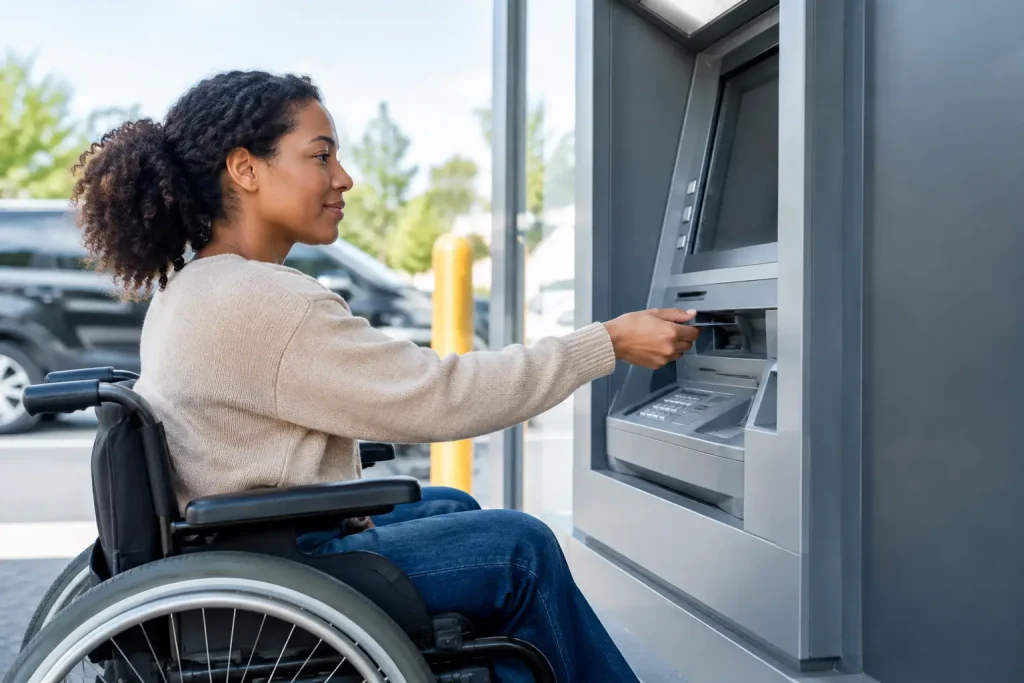
Physical placement matters as well. Kiosks need adequate clearance for customers, cash servicing, accessibility, and maintenance. They need power and network resilience appropriate to their role. A placement near the entrance may increase awareness but can expose the unit to congestion, glare, privacy concerns, or poor sightlines for staff. A placement deeper in the branch may improve privacy but limit adoption. There is no universal floor-plan answer.
Institutions should also distinguish branch kiosk uptime from ATM uptime. Both matter, but failure consequences may differ. A down ATM can redirect customers to another terminal or digital channel. A down kiosk in a reduced-staff branch may block the very process designed to make that location viable. Service-level targets should reflect transaction criticality, local alternatives, and the branch’s staffing model.
Security and Exception Handling Will Define Trust
As kiosks take on more account servicing and identity-sensitive activity, their attack surface expands. Physical security, malware controls, application allowlisting, patch management, encryption, network segmentation, session timeouts, and tamper detection remain foundational. So does monitoring for abnormal transaction behavior.
The less visible risk is the exception experience. Customers do not judge a system only by completed transactions. They judge it by what happens when a deposit is disputed, cash is not presented correctly, identification fails, or an account restriction appears unexpectedly. A vague error message followed by a referral to the teller line undermines confidence in self-service, especially for customers who were directed to the kiosk in the first place.
Clear status messages, printed or digital confirmation, transaction traceability, and fast access to support are operational controls as much as customer-experience features. Branch employees also need concise procedures and sufficient visibility into the event to help without guessing. That requires training, but it also requires systems that provide usable information at the point of need.
Deployment Should Be Treated as a Measured Program
The case for branch kiosks will vary by market, branch format, customer base, and labor model. A full-service suburban branch, an urban transaction-heavy location, and a small advisory office should not necessarily use the same configuration. Standardization is valuable, but forced uniformity can produce poor economics.
A disciplined pilot should measure more than transaction counts. Banks should track completion rates, exception categories, staff interventions, downtime, cash-related service events, customer abandonment, and the effect on teller workload. They should also compare results by location and customer segment. High usage does not prove success if it coincides with high intervention rates or increasing maintenance costs.
Vendor accountability should extend beyond installation. Contract discussions should cover software support, security update cadence, parts logistics, remote diagnostics, integration responsibilities, fault ownership, and reporting quality. For managed deployments, the boundary between the institution, device provider, network operator, and field service organization must be explicit. Ambiguity is manageable during a pilot and costly during a broad rollout.
The most durable branch kiosk strategies will not try to eliminate human service. They will assign routine, well-supported work to self-service and preserve staff time for advice, exceptions, and relationships that require judgment. The useful question is not whether a kiosk can replace a teller transaction. It is whether the branch can resolve that transaction more reliably, securely, and efficiently from start to finish.