
Cash Dispenser vs Recycler: Which Fits Best?

A branch transformation plan can look efficient on paper until cash handling assumptions meet live volumes, CIT schedules, and service calls. That is where the cash dispenser vs recycler question becomes less about hardware preference and more about operating model. For banks, credit unions, and deployers evaluating self-service strategy, the distinction affects staffing, cash forecasting, uptime, security procedures, and total cost over time.
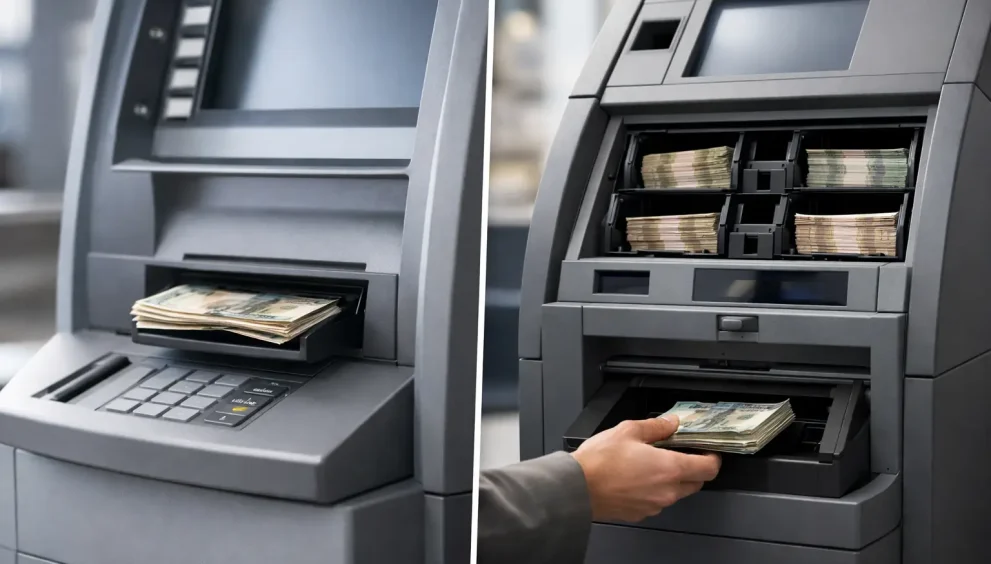
At a basic level, a cash dispenser only dispenses notes from cassettes loaded by staff or cash-in-transit providers. A cash recycler both accepts and validates deposited notes, then reuses fit currency for future withdrawals. The functional difference sounds simple. The operational consequences are not.
Cash dispenser vs recycler: the core difference
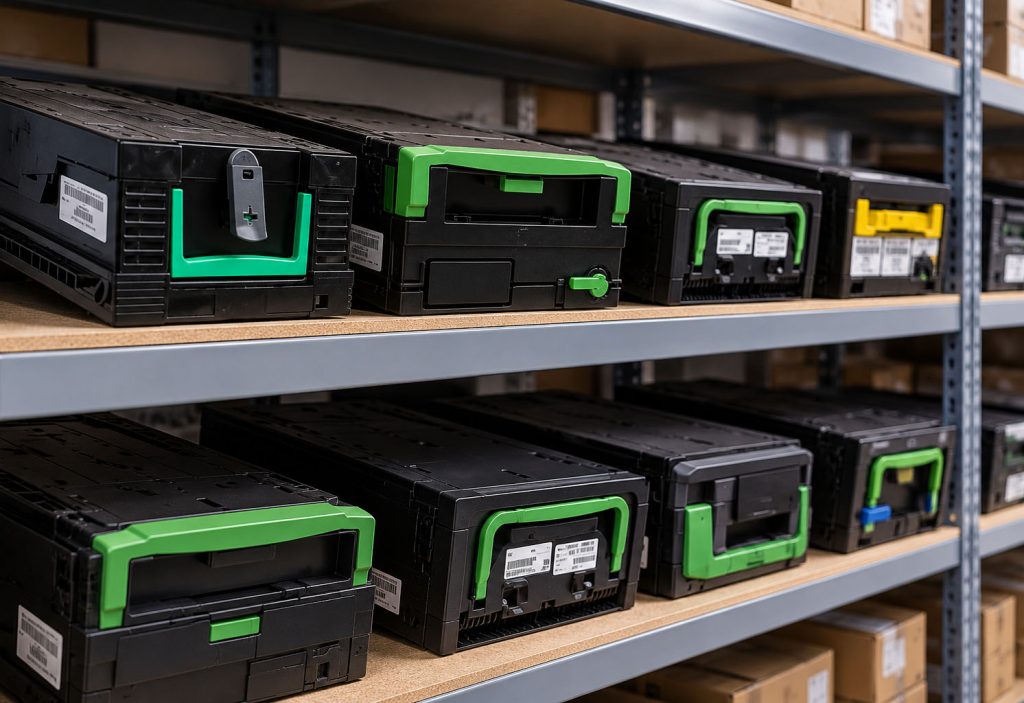
A dispenser is built around outbound cash. It stores notes in cassettes and presents them to the user during a withdrawal or assisted transaction. In branch environments, dispensers often support teller cash automation, while in remote or vestibule deployments they support traditional ATM use cases. Their strength is simplicity. Fewer note paths and fewer validation steps generally mean a less complex device architecture.
A recycler adds deposit intake, note authentication, fitness checking, sorting logic, and recirculation capability. Instead of treating deposits as sealed items for later back-office counting, the machine evaluates deposited notes and routes them for storage or reject. If the note is acceptable, it can be used again for a withdrawal. That changes branch cash flow in a meaningful way.
For operations teams, this is the real dividing line. A dispenser depends on replenishment. A recycler can offset replenishment demand by reusing deposited cash locally. Whether that matters depends on transaction mix, branch design, and how cash is managed across the network.
Where dispensers still make operational sense
There is a tendency in some equipment discussions to treat recyclers as the obvious upgrade path. That view misses the fact that many fleets do not need recirculation to meet service and cost objectives.
A dispenser can be the better fit when withdrawal volume is predictable, deposit volume is low, or deposits are handled through other channels. Remote ATMs, drive-up units with limited deposit demand, and sites with stable CIT support often fall into this category. In those settings, the extra complexity of a recycler may not produce enough operational return to justify higher acquisition and service costs.
Dispenser-based deployments can also be easier to standardize. Training is usually simpler, first-line maintenance can be narrower in scope, and device troubleshooting is often more familiar across field teams. For institutions managing large mixed fleets, that matters. Standardization reduces variation in service outcomes, parts stocking, and technician readiness.
There is also a branch staffing angle. If tellers or branch staff are already set up for back-counter deposit processing, a recycler may duplicate workflows rather than improve them. A machine that dispenses efficiently and stays in service may be more valuable than one with broader functionality that is underused.
Why recyclers change branch cash economics
Recyclers are strongest where cash-in and cash-out volumes are both material and reasonably balanced. In those environments, recirculation can reduce idle cash, lower replenishment frequency, and improve availability between service visits.
That can be especially relevant in modern branch formats where institutions want fewer cash touches and less teller time spent counting, storing, and balancing currency. A recycler supports that model by moving note authentication and inventory handling into the machine. Staff interaction shifts from manual cash handling to exception management and customer support.
The economics improve further when branch deposits generate usable withdrawal inventory. Instead of holding excess notes in the vault while ordering fresh cash for ATM or teller automation, the branch can reuse what it receives. That does not eliminate cash forecasting, but it can make forecasting less dependent on external replenishment cycles.
There is a service model implication as well. With better internal cash circulation, institutions may reduce some CIT visits or adjust service intervals. Those savings are not automatic. They depend on actual deposit quality, denomination mix, customer behavior, and machine utilization. A recycler in a low-deposit environment will not behave like a recycler in a busy retail branch.
Cost is not just acquisition price
The most common mistake in a cash dispenser vs recycler evaluation is comparing unit price without modeling operational variables. Recyclers usually carry a higher initial capital cost. They also introduce more sophisticated sensing, validation, and transport components, which can affect maintenance profile and repair expense.
That said, dispenser economics can look less favorable if the site requires frequent replenishment, high manual cash handling, or repeated balancing effort. In some branches, the ongoing labor and logistics burden outweighs the hardware delta over the equipment life cycle.
A useful comparison includes at least five factors: purchase cost, cash replenishment frequency, branch labor time, service call patterns, and cash holding levels. For larger institutions, add software integration and fleet management overhead. Recyclers may require more planning at the start, but they can support a lower operating cost per transaction in the right environment.
This is why blanket statements rarely hold up. A recycler is not always cheaper over time, and a dispenser is not always the conservative choice. The answer depends on transaction behavior and branch process design, not just equipment category.
Service complexity and uptime trade-offs
From a field operations perspective, recyclers introduce more points where note quality, transport wear, sensor calibration, and deposit exceptions can affect performance. Accepting customer deposits means the device must handle wrinkled notes, mixed quality currency, foreign objects, and user error. That adds real-world complexity that does not exist to the same degree in a dispense-only unit.
Dispenser fleets, by comparison, are often more forgiving because the note stock is controlled before loading. Quality issues can still create jams or misfeeds, but the incoming note path is far more predictable. For service managers, that generally translates to a simpler failure environment.
None of this means recyclers are less reliable by definition. In well-managed deployments, they can perform very well. But reliability depends heavily on note fitness, staff procedures, cassette management, preventive maintenance discipline, and software maturity. A recycler placed into a weak operational process will expose those weaknesses quickly.
The practical question is not which machine is more advanced. It is whether the institution has the support model to maintain the machine it selects. If field coverage is thin, training is inconsistent, or note quality is poor, a simpler dispenser may deliver better real uptime.
Branch format matters more than product category
The strongest deployments usually start with branch role, not machine specification. A high-volume urban branch with active cash deposits, teller line redesign, and pressure to reduce back-office handling has a credible case for recycling. A small suburban office with moderate withdrawals and limited deposit traffic may not.
Universal banker models also influence the decision. If staff are expected to move freely through the branch and rely on self-service assisted devices for cash access, recyclers can support that transition by reducing traditional drawer activity. On the other hand, branches that still operate with conventional cash control processes may gain less from recirculation.
There is also a network strategy issue. Some institutions deploy recyclers selectively in flagship or high-cash branches while keeping dispensers in lower-volume sites. That mixed approach can be sensible, but it creates support complexity. Different parts, different training requirements, and different service patterns need to be managed intentionally.
Questions to ask before choosing
The right evaluation starts with operating data. How much cash enters and leaves the branch each day? What denominations dominate deposits and withdrawals? How often does the site run short or hold excess cash? How expensive are replenishment visits, and how much staff time is spent balancing and handling notes?
It is also worth examining exception rates. If deposit quality is poor or customer misuse is common, recycler benefits may be reduced by increased service intervention. If branch staff already spend significant time validating deposits manually, those same branches may be strong candidates for automation if process discipline can be improved.
Decision-makers should also examine integration requirements. Teller-assisted cash automation, ATM software layers, cash management platforms, and monitoring tools all influence how much value the institution can actually extract from the device. Hardware choice without workflow alignment usually leads to disappointing results.
The better choice is the one that fits the cash model
The cash dispenser vs recycler decision is ultimately a question of local cash circulation. If a site mainly pushes cash out and relies on structured replenishment, a dispenser may be the cleaner and more economical answer. If the site both receives and dispenses substantial cash, and the institution wants to reduce handling touches, a recycler has a stronger case.
Neither device category is inherently better. Each reflects a different operational assumption about how cash moves, who handles it, and where cost sits in the service chain. The institutions getting this right are not buying for features alone. They are matching machine capability to branch behavior, service capacity, and cash strategy. That is usually where the business case becomes clear.