



How to Prevent ATM Card Trapping in the Field


A retained card is rarely just a customer-service event. For an ATM operator, it can indicate a foreign-device attack, a failing card reader, a cassette-related transaction exception, or an avoidable gap between terminal monitoring and field response. Programs designed to prevent ATM card trapping need to address each of those possibilities without creating excessive false alarms or unnecessary truck rolls.
Card trapping remains a practical concern because the techniques are simple, localized, and effective when physical inspection routines are inconsistent. Criminals may fit a thin sleeve, false bezel, adhesive strip, or other retention device over or inside the card-entry area. The customer believes the ATM has retained the card, leaves the location, and the offender retrieves it. In other cases, the card is legitimately captured because the terminal detects a suspected compromise, cannot complete a read cycle, or applies an issuer-defined retention rule.
Those scenarios demand different responses. The operational objective is to identify abnormal retention quickly, protect the cardholder, preserve evidence, and restore the terminal without treating every captured card as a security incident.
Why card trapping is an operational control issue
A card trap attack exploits the boundary between physical security and transaction operations. The device may be visible to a trained technician, but not to a customer making a quick withdrawal. It may also cause no immediate terminal fault. If the ATM continues accepting cards while a trap is installed, monitoring systems may show normal transaction activity until customers begin reporting retained cards.
This is why retained-card data should not sit only in a customer-care queue. Service managers, security teams, ATM operations, and the acquiring organization need a defined way to correlate retention events with terminal status, camera availability, card-reader diagnostics, and recent service history.
A single retained card can result from an ordinary read error. A cluster of card captures at one terminal, particularly over a short period, is different. It should trigger a review of transaction journals, surveillance coverage, physical condition, and the timing of prior maintenance activity. Thresholds should reflect the fleet’s normal behavior. An off-premise retail ATM with high foot traffic may warrant faster escalation than a low-volume branch terminal, but both require a documented decision rule.
Physical controls that prevent ATM card trapping
The first line of defense is a card-entry assembly that makes unauthorized additions easier to detect and harder to install. Anti-skimming bezels, recessed entry designs, tamper-responsive fascia components, and card-reader configurations with effective shutter controls can all reduce exposure. Their value depends on correct installation and continued inspection, not merely their presence in an equipment specification.
Make inspections repeatable
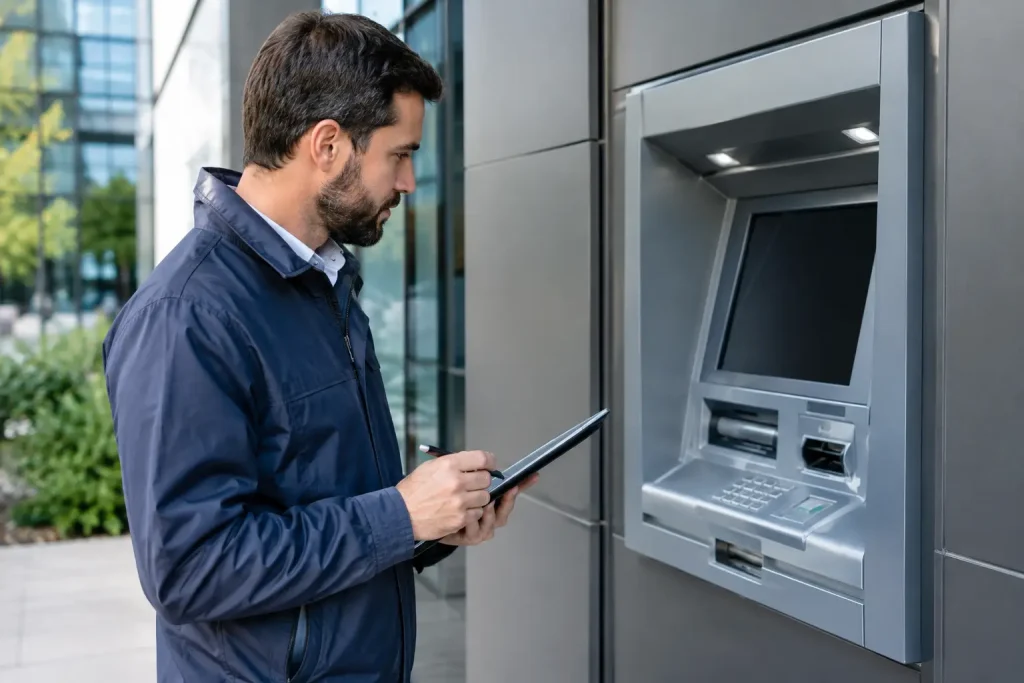
Field inspections should use a consistent sequence rather than relying on general visual awareness. Technicians should examine the card slot’s alignment, color, finish, movement, and fit against the surrounding fascia. They should check for unusual resistance, adhesive residue, overlay seams, scratches around fasteners, or components that appear newer than adjacent surfaces.
The inspection should include a controlled functional test where operational policy permits. A card reader can appear normal externally while a foreign insert obstructs the card path. Conversely, aggressive probing can damage a legitimate shutter or reader assembly. Procedures need to distinguish authorized inspection actions from intrusive work that requires the terminal to be placed out of service.
Photographic baselines are useful for high-risk locations. Images of the correct bezel, fascia, and surrounding lighting condition give technicians a reference during visits and help security teams assess reported changes. They are not a substitute for a physical check, but they improve consistency across outsourced service networks.
Protect the terminal environment
Card trapping is more feasible when an offender can work at the terminal without being noticed. Sightlines, lighting, camera positioning, and enclosure integrity matter. A camera that records the customer but not the card-entry area may support a fraud investigation, yet it offers limited help in determining when a device was installed.
Terminal placement also affects the trade-off. A highly exposed exterior ATM may need more frequent inspection and stronger physical controls than a well-supervised branch lobby unit. At the same time, adding conspicuous hardware to every terminal can complicate service access and create more points of failure. Risk-based deployment is generally more effective than applying identical controls across unlike locations.
Use terminal data as an early warning signal
Most fleets already generate useful evidence through electronic journals, card-reader status messages, transaction-switch logs, and remote monitoring platforms. The challenge is turning those sources into an actionable retained-card signal.
Operations teams should classify card retention events by cause where the terminal can provide that detail. Categories may include suspected counterfeit card retention, card-reader transport failure, customer timeout, host-directed retention, and unknown capture. Unknown should not become a catchall that closes the investigation. It should prompt technicians to record what they found at the terminal and whether a foreign-device inspection was completed.
Correlating data sources can reveal patterns that a single alert cannot. For example, a rise in reversals, card-read retries, customer abandonments, or reader communication faults before reports of captured cards may indicate developing mechanical trouble. A burst of captured cards with otherwise normal reader diagnostics may point more strongly to a physical trap or a transaction-flow issue outside the reader itself.
Remote monitoring can improve response times, but it has limits. A terminal cannot reliably identify every device attached to its fascia. Monitoring should support field verification, not replace it. Likewise, setting retention alerts too aggressively can overwhelm service desks and reduce attention to genuine anomalies. A practical program tests alert thresholds against historical data and adjusts them by terminal type and location risk.
Define the response before the first complaint
When a customer reports a retained card, the immediate priority is cardholder protection. The issuer or cardholder-support process should quickly determine whether the card has been blocked, whether transactions occurred after the reported capture, and whether the customer needs a replacement or fraud review. The ATM operator’s responsibilities should be equally clear, particularly when the terminal is independently deployed or serviced by multiple parties.
The terminal should be placed out of service when there is a reasonable indication of a foreign device, repeated unexplained captures, visible tampering, or a reader condition that cannot be safely assessed remotely. Keeping the ATM available while waiting for a routine service window may preserve transaction volume, but it increases exposure if the card slot has been compromised.
A field visit should preserve useful evidence. Technicians need instructions on who to notify, what to photograph, how to handle a suspected device, and when law enforcement or corporate security takes custody. Removing and discarding an item without documentation can limit a later investigation. On the other hand, field staff should not be expected to conduct forensic examinations beyond their training or authority.
Clear customer messaging also matters. A screen message and nearby instruction panel should tell customers what to do if a card is retained, using the institution’s approved support channel. It should never suggest that customers leave the terminal to seek help from an unfamiliar person nearby. Messaging should be reviewed alongside accessibility requirements and the practical constraints of the terminal user interface.
Maintenance quality determines whether controls hold
Preventive diagnostics and maintenance is not only about cleaning and replacing worn components. It is an opportunity to verify that the reader assembly, fascia, tamper controls, and terminal enclosure remain in their approved configuration. Work orders should capture findings in enough detail to distinguish a routine reader adjustment from suspected interference.
Service organizations should also control the parts and practices that can unintentionally weaken defenses. Incorrect bezel fitment, substitute fascia pieces, incomplete fastener installation, and undocumented reader replacements can create gaps that make tampering harder to recognize later. Configuration discipline is especially important in mixed fleets, where several terminal generations and service partners may be present.
Training should use real examples from the field, including benign mechanical failures that resemble trapping attacks. Technicians who understand the difference are less likely to dismiss a suspicious condition as routine wear, or to escalate every reader issue as fraud. The goal is disciplined judgment supported by evidence.
The most effective retained-card programs treat each event as operational intelligence. Review the location, equipment history, alert performance, field findings, and response time after meaningful incidents. That discipline does more to prevent ATM card trapping than a one-time hardware upgrade, because it keeps controls aligned with how the fleet actually behaves.