ATM Leasing Versus Purchasing Trade-Offs

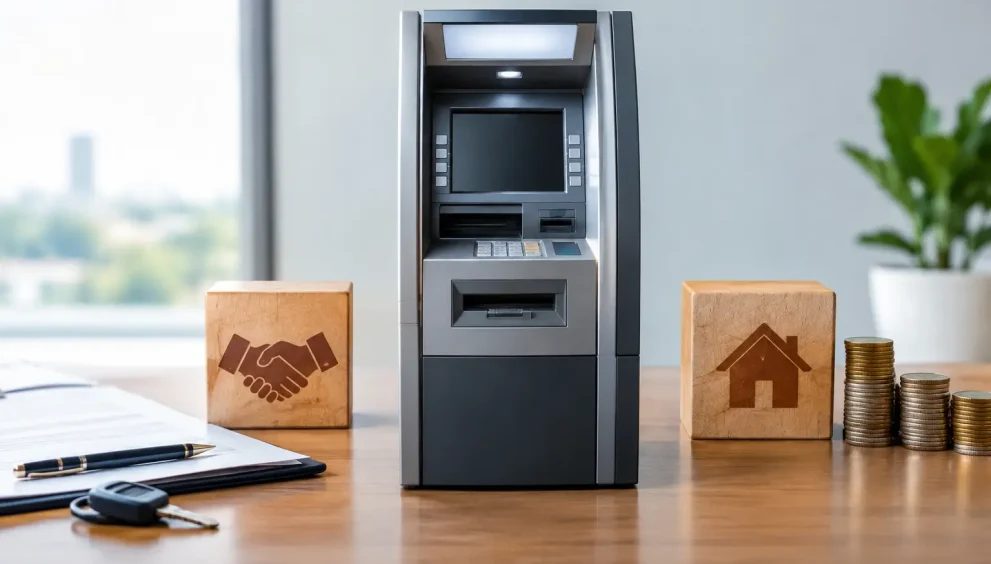
A failed cash dispenser at a high-volume site does not care whether it sits on a balance sheet or under a monthly lease payment. Yet ATM leasing versus purchasing shapes who controls the asset, when hardware can be refreshed, how costs are recognized, and how much operational risk remains with the deployer. The right decision is rarely a simple comparison of monthly payment against purchase price.
For banks, credit unions, independent deployers, and managed-service operators, the equipment decision must fit a broader operating model. That includes expected transaction volumes, site commitments, cash-management arrangements, field-service coverage, software road maps, security requirements, and the useful life of the terminal. A lower entry cost can be valuable, but it does not automatically produce a lower cost of operation.
Start With the Operating Model, Not the Hardware Price
Purchasing an ATM generally provides the clearest form of control. The owner selects the terminal configuration, determines the service provider, decides when to replace components, and can keep a unit in service beyond the original depreciation horizon if parts, software support, and compliance requirements allow it. For organizations with stable site portfolios and established maintenance processes, that control can be meaningful.
Leasing shifts some of the upfront financial burden into scheduled payments. It can preserve capital for branch upgrades, cash infrastructure, network initiatives, or other projects that compete for the same budget. It may also let a deployer standardize a fleet refresh without making a large one-time equipment purchase.
But a lease is not a service strategy by itself. A finance lease, an operating lease, and a bundled equipment-and-services agreement can produce very different responsibilities. One agreement may cover only the terminal. Another may include installation, preventive maintenance, first-line service, software support, replacement terms, or end-of-term options. Procurement teams should avoid treating all lease quotations as comparable before separating those elements.
ATM Leasing Versus Purchasing: The Cost Comparison
The most visible distinction is capital expenditure versus recurring expense. Buying requires more cash at the outset, along with installation, communications setup, site work, initial spare parts, and often software licensing or certification costs. The organization retains an asset with residual value, although that value can diminish quickly when a model loses manufacturer support or a security requirement changes.
Leasing reduces the initial outlay, but total payments over the term can exceed the cash purchase price. That premium is not automatically a disadvantage. It may reflect financing costs, residual-value assumptions, bundled support, or the value of replacing equipment at a planned interval. The question is whether those benefits match the deployer’s actual requirements.
A useful comparison should model the full expected cost over the intended service life, not merely the first year. Include acquisition or lease payments, installation, connectivity, maintenance, parts, software, insurance, site removal, end-of-term charges, and expected refresh costs. For off-premises terminals, the analysis should also account for leasehold duration and the probability that a location will close before the equipment term ends.
Organizations should also confirm how lease obligations are treated under their accounting policies. Under ASC 842, many lease arrangements are recognized on the balance sheet, even though classification and expense recognition can differ by structure. That makes early finance and accounting review more than a documentation exercise. A contract designed to preserve cash may still affect debt metrics, asset reporting, or approval thresholds.
Residual Value Is Often Overestimated
Used ATMs can retain value, particularly when they are from a current platform with strong parts availability and an active service ecosystem. Still, resale assumptions deserve caution. Cosmetic condition, dispenser configuration, operating system support, certifications, encryption requirements, ADA considerations, and the availability of replacement modules all affect secondary-market value.
A purchased fleet can become less economical if the organization delays replacement until reliability declines and parts availability tightens. Conversely, a lease with an inflexible return condition can create avoidable charges if equipment has ordinary field wear or if deinstallation responsibilities were not clearly defined. The residual-value question should be tested at contract signing, not at the end of the term.
Uptime Accountability Can Matter More Than Ownership
The equipment model and the service model are related but separate decisions. A bank that purchases terminals may still outsource second-line maintenance, cash replenishment coordination, monitoring, and dispatch management. A leased terminal may be supported under a different agreement by a separate service organization. Neither ownership route guarantees faster repair.
Service managers should examine the practical details: who owns the incident from alert to restoration, which faults trigger remote remediation, what parts are stocked locally, and what happens when a manufacturer-declared end of service approaches. An agreement that promises broad coverage but excludes high-failure modules, travel, after-hours response, or repeated-call issues may leave the operator exposed during peak periods.
For a distributed fleet, standardization often reduces operational cost more reliably than the financing method. Common terminal families, common software images, shared spare inventories, repeatable technician procedures, and predictable remote-management tools simplify the work of keeping machines available. Leasing can support that discipline if it enables synchronized replacement. Purchasing can support it just as well when a capital plan funds scheduled refreshes rather than ad hoc replacements.
Refresh Cycles and Security Requirements Change the Equation
ATM hardware is often expected to operate for many years, but useful life is constrained by more than mechanical durability. Payment-network mandates, encryption changes, operating-system support, application compatibility, anti-skimming measures, and component obsolescence can force decisions before a terminal physically fails.
Leasing is attractive where management wants a defined refresh cadence, such as replacing a fleet every five to seven years. It can make that timeline easier to budget and may limit exposure to aging equipment if return and replacement provisions are workable. The trade-off is reduced flexibility. A terminal that remains reliable and compliant may need to be returned or bought out, while a location that underperforms may remain tied to payment obligations.
Purchasing favors operators that want to extend the life of well-maintained units or redeploy equipment among sites. That flexibility is valuable in a changing branch network, but it requires a disciplined technology road map. Keeping older equipment in service without confirming patch availability, application support, and parts strategy can turn a capital-saving decision into an availability and security problem.
Contract Details That Deserve Operational Review
Lease agreements are often reviewed primarily by finance and legal teams. Field operations should have a formal role, particularly where the agreement includes maintenance or end-of-term conditions. Several provisions can materially alter the economics:
- Return standards and refurbishment charges, including expectations for damaged fascias, cassettes, locks, and peripheral modules.
- Early termination terms for closed branches, lost retail locations, consolidations, or underperforming sites.
- Service-level definitions, exclusions, parts ownership, escalation procedures, and credits for missed performance targets.
- Upgrade rights for security components, operating systems, application compatibility, and manufacturer support changes.
- Responsibilities for removal, packing, shipping, data sanitization, and restoration of the physical site.
These are not back-office details. A terminal that must be removed quickly from a closed location can generate costs and coordination work that were not apparent in the original monthly payment. Likewise, replacement language that sounds favorable can be less useful if the operator must accept a different configuration or wait through a lengthy approval process.
When Each Model Usually Fits
Purchasing often fits institutions with predictable demand, sufficient capital, a long-term location strategy, and an internal or contracted service operation built around a standardized fleet. It also suits operators that want maximum discretion over redeployment, component replacement, and timing of retirement.
Leasing can fit organizations that need to preserve capital, execute a defined modernization program, or align equipment payments with a managed-service arrangement. It may be especially practical when a fleet has inconsistent age profiles and leadership wants to move toward a common hardware baseline without a large immediate outlay.
The middle ground is common. A financial institution may purchase branch ATMs expected to remain in place for years while leasing equipment for temporary sites, acquired portfolios, pilot programs, or locations with uncertain leases. An independent deployer may own mature, high-performing locations and finance newer placements until transaction patterns are established. The portfolio does not need one answer.
The strongest decision process treats the ATM as part of an operating system rather than a standalone asset. Model the expected life of each location, the availability requirements of each terminal class, the service obligations behind the contract, and the cost of falling behind the technology road map. The preferred structure is the one that leaves the organization able to keep cash access reliable when site conditions, hardware requirements, and fleet priorities inevitably change.