

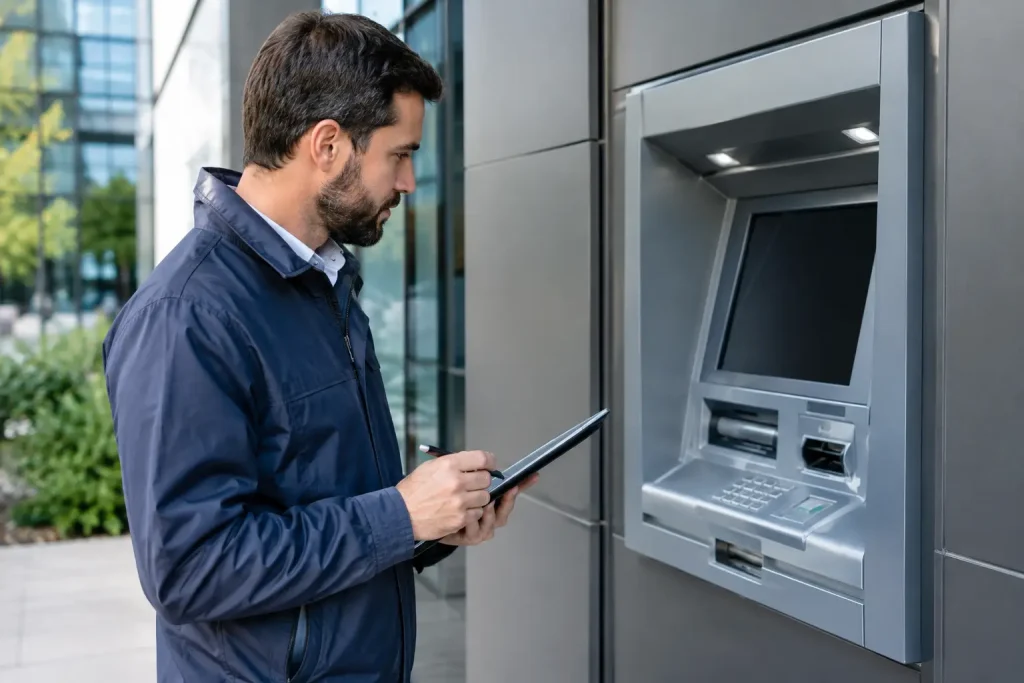
Hyosung ATMs in Fleet Modernization Decisions


Replacing an ATM fleet is rarely a specification-sheet exercise. For banks, deployers, and service organizations assessing Hyosung ATMs, the practical question is whether a platform fits the operating model behind it: transaction mix, cash strategy, software estate, field coverage, and expected device life. A unit that meets the initial capital budget can still create avoidable cost if its configuration complicates maintenance, parts stocking, or application migration.
Hyosung equipment remains a familiar presence across U.S. financial institution and retail ATM deployments. That installed base matters because it creates technician experience, established supply channels, and known service patterns. It does not, however, remove the need for a deployment-specific evaluation. The right configuration for an independently deployed surcharge ATM may be poorly aligned with a bank branch pursuing deposit automation, cash recycling, or a consistent multivendor software strategy.
Why Hyosung ATMs Stay in Fleet Evaluations
Hyosung’s relevance comes partly from breadth. Its portfolio has historically addressed through-the-wall and lobby bank ATMs, branch self-service units, retail devices, and cash-management configurations. For buyers, that can reduce the number of hardware relationships required across different locations. It can also make standardization more achievable when a network includes a mix of branch, off-premise, and managed-site equipment.
Standardization has limits. A common manufacturer does not automatically mean common components, cassettes, security modules, software images, or field procedures. Product generation, dispenser type, deposit capability, and installed options can materially change the service profile. Fleet managers should map these differences before treating a manufacturer decision as a simplification decision.
The platform also needs to be considered in the context of its intended transaction role. A cash-withdrawal-focused retail terminal has different availability risks from a branch machine handling deposits and higher-value cash activity. The latter may justify more sophisticated cash-handling functions and a more demanding preventive-maintenance program. The former may place greater value on quick fault isolation, economical parts replacement, and physical durability in lightly supervised environments.
Hyosung ATMs: Hardware Choices Affect the Service Model
The most consequential hardware choice is often the cash-handling configuration. Standard dispensing equipment can be appropriate where transaction volumes are predictable and cash replenishment is already well organized. Deposit automation or recycling may reduce cash handling inside a branch and improve customer access to funds, but those benefits depend on operational discipline outside the machine.
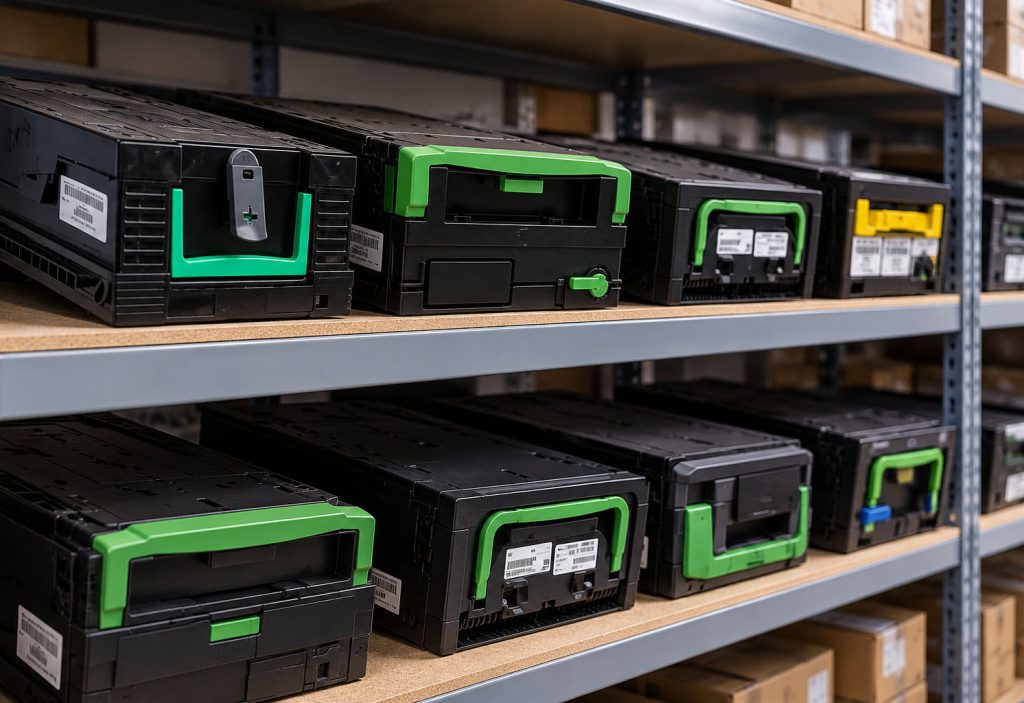
A recycler is not simply a dispenser with extra functionality. It changes cash forecasting, cassette management, exception handling, balancing procedures, and technician skills. If branches cannot consistently manage suspect notes, replenishment thresholds, or reconciliation workflows, the expected efficiency gains can be diluted by operational exceptions. Buyers should model the entire cash process rather than evaluating only the device’s stated capacities.
Physical format deserves the same attention. Through-the-wall equipment can support a durable exterior banking presence, but installation involves construction coordination, weather exposure, access planning, and security hardening. Lobby devices may be easier to deploy and service, yet their availability can be affected by branch access hours and interior security arrangements. For retail and hospitality locations, cabinet footprint, anchoring requirements, sight lines, power quality, and communications resilience frequently shape the actual installation cost.
Peripheral selection should follow transaction needs, not a feature checklist. Receipt printers, contactless readers, cameras, barcode capabilities, and deposit modules all introduce dependencies that must be supported over the device life. A feature that sees limited use still consumes testing time, driver management, spare-parts inventory, and potentially a service call when it fails.
Availability Depends on the Whole Device
ATM availability is often discussed as though it were a property of the dispenser alone. In practice, outages can originate in communications, application software, card-reader behavior, printer status, security controls, power events, or monitoring failures. Hyosung ATM evaluations should therefore define availability by the transactions the customer must complete, not simply by whether a terminal is online.
For example, a device may be able to dispense cash while a receipt printer is unavailable. Whether that counts as an acceptable operating state depends on the institution’s policy, customer experience standards, and regulatory or audit requirements. Setting these rules early helps operations teams prioritize alerts and avoid treating every device warning as equally urgent.
Software and Fleet Integration Need Early Review
Hardware procurement and application modernization are often scheduled as separate projects. That separation can add risk. A new terminal may arrive with an operating environment, middleware version, device drivers, or security baseline that requires work from the bank’s ATM application provider, switch team, managed-services partner, or internal endpoint group.
The key issue is not whether a device can run an application in a lab. It is whether the deployment can be imaged, configured, patched, monitored, and recovered consistently at fleet scale. Organizations should confirm support for their planned software architecture, including standards-based device interfaces where relevant, remote software distribution, electronic journal collection, remote key-loading processes, and monitoring integrations.
A multivendor strategy can reduce concentration risk and preserve negotiating flexibility, but it places more responsibility on the institution or managed service provider to maintain common operating standards. A more homogeneous fleet may simplify training and spares management, although it can make a vendor roadmap change more consequential. Neither approach is universally better. The decision depends on fleet size, internal technical capability, contractual structure, and tolerance for variation at the edge.
Windows lifecycle planning is another practical concern. ATM teams need a defined process for testing operating-system patches, validating device functionality, scheduling deployment windows, and proving successful remediation. Security updates that disrupt a peripheral or an ATM application can create a field incident at scale. Conversely, delayed updates create their own exposure. Hardware selection should be tied to a credible endpoint-management plan from the beginning.
Serviceability Is Often the Deciding Factor
A terminal’s acquisition price is visible. The cost of restoring it at 7:30 a.m. before a busy branch opening is less visible, but usually more important over time. Serviceability should be evaluated through field scenarios: a jammed dispenser, a failed card reader, a printer fault, a communications loss, a cabinet access issue, or an unresolved cash discrepancy.
Teams should examine how easily a technician can diagnose the fault, access the affected module, confirm the repair, and return the terminal to service. This includes physical access, module design, diagnostic tools, error-code clarity, and the quality of remote information available before dispatch. A device that reduces average repair time may carry more value than one with a lower initial price.
Parts strategy also deserves attention. Larger fleets can justify regional stock, repair depots, and standardized technician kits. Smaller operators may rely more heavily on third-party field service and distributor inventory. In either case, buyers should establish which components are expected to be field-replaceable, what repair turnaround is realistic, and how product lifecycle changes will affect availability of critical parts.
Service contracts should be reviewed for more than response-time language. Coverage boundaries matter: first-line maintenance, second-line repair, cash-related incidents, vandalism, software support, after-hours dispatch, and parts logistics may sit with different parties. A contract can appear comprehensive while leaving the operator responsible for the failures that create the greatest downtime.
Security and Compliance Are Operating Requirements
Physical and logical security requirements should shape the configuration before equipment is ordered. The appropriate cabinet, lock strategy, anti-skimming controls, camera placement, alarm connections, and cash-management procedures depend on location risk and the institution’s security policy. A retail site with limited staff oversight requires a different control set from a secure branch vestibule.
On the logical side, institutions need clear ownership for certificate management, encryption controls, access privileges, software patching, remote administration, and incident response. The ATM is not an isolated appliance. It is an endpoint connected to payment infrastructure, operational tooling, and often third-party support processes.
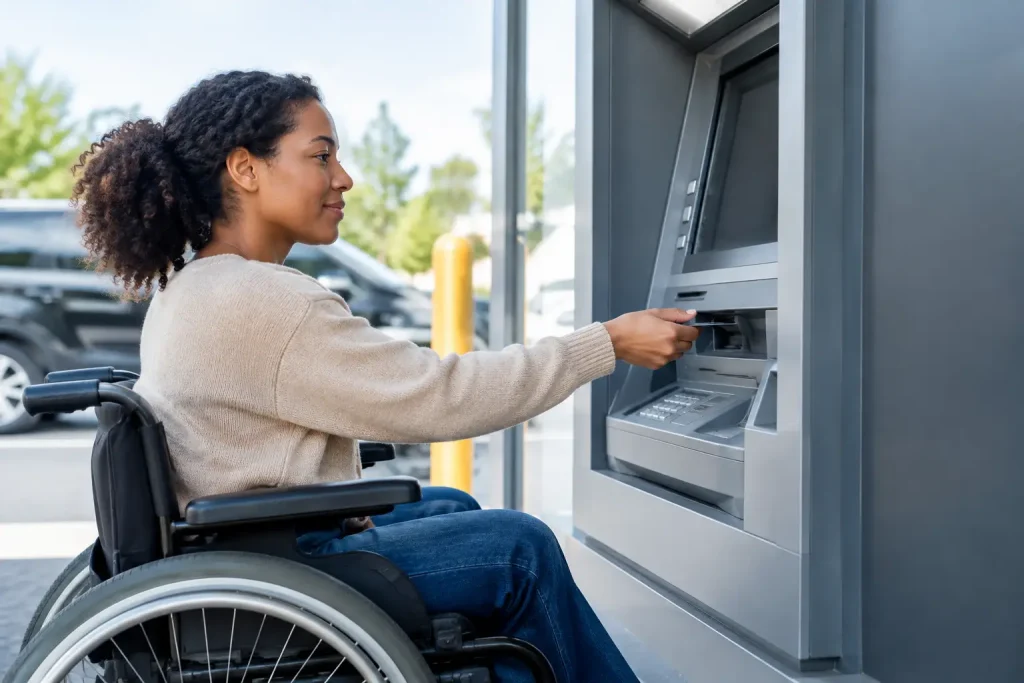
Compliance requirements also change over the life of the fleet. Accessibility expectations, payment-network mandates, operating-system support deadlines, and security standards can affect configuration and replacement timing. Procurement teams should ask not only what the terminal supports at installation, but how upgrades will be handled when requirements change.
Match the Platform to the Deployment Economics
The strongest case for a Hyosung deployment may look different across operating models. A regional bank replacing aging branch equipment may value common imaging, predictable service procedures, deposit functionality, and compatibility with a broader self-service roadmap. An independent deployer may emphasize acquisition cost, dispenser reliability, remote management, and the economics of route-based servicing. A credit union may prioritize a manageable feature set and external service coverage over extensive configuration flexibility.
Before committing to a model or fleet standard, decision-makers should require clear answers to several operational questions:
- Which transaction types must remain available during partial device failures?
- What cash workflow, including exceptions and balancing, will the configuration create?
- Can the current monitoring and software-management tools support the planned device image?
- Who owns each stage of incident resolution, from alert triage through repair verification?
- What is the expected parts and software support position through the planned service life?
These questions often reveal whether a lower-cost configuration is truly economical or merely shifts cost into branch operations, truck rolls, support queues, and customer disruption.
The useful procurement outcome is not simply a new ATM standard. It is a fleet design that field teams can service predictably, security teams can govern confidently, and operations leaders can sustain when the first exception arrives after deployment.