



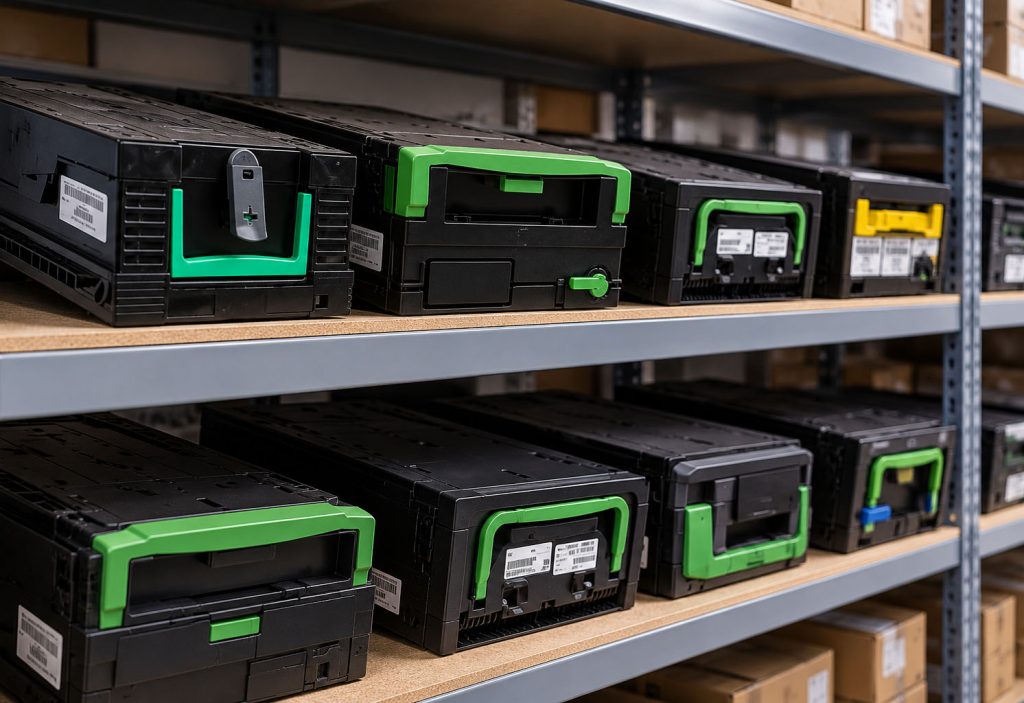


Remote ATM Monitoring Setup That Works

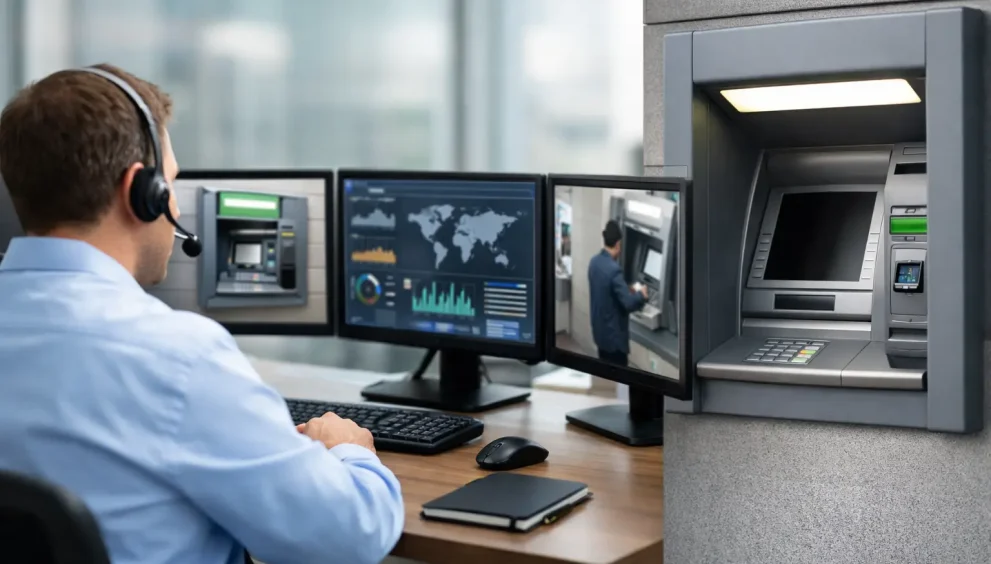
A remote ATM monitoring setup usually gets tested first on a bad day, not during procurement. A cash dispenser goes unavailable after business hours, a comms fault starts flapping across a regional fleet, or a paper-low event sits unnoticed until the first customer complaint. The question is rarely whether monitoring exists. It is whether the setup is organized well enough to produce useful action.
That distinction matters more as ATM estates become more mixed. Banks and deployers are managing legacy terminals, newer self-service platforms, outsourced field service, multiple processors, and varying telecom paths across branches and off-premise locations. In that environment, remote monitoring is not just a dashboard function. It is part of the operating model.
What a remote ATM monitoring setup needs to do
At a basic level, monitoring should answer three operational questions quickly: Is the terminal up, what is failing, and who needs to act? If the system cannot separate a dispenser fault from a carrier outage or a cash-low condition from a host response issue, it adds noise instead of control.
A useful remote ATM monitoring setup pulls in status from the device, the application layer, the communications path, and where possible the surrounding service ecosystem. That can include cash levels, printer status, card reader conditions, encrypting PIN pad health, environmental alarms, transaction errors, and network reachability. The setup should also account for what the ATM cannot directly explain. A terminal may appear online while still delivering poor customer service because a specific peripheral is degraded or the host connection is timing out intermittently.
This is where many deployments become fragmented. Different vendors expose different data points. Older devices may report in limited ways. Managed service providers may own one part of event handling while the bank or deployer owns another. The monitoring design has to reflect those boundaries rather than assume a single pane of glass will resolve them.
Start with service outcomes, not screens
One of the most common mistakes is treating monitoring as a software implementation rather than an operational control layer. The better starting point is service intent. If the objective is to reduce downtime, then the setup should prioritize fault classes that materially affect availability and customer use. If the objective is to lower truck rolls, then event correlation and remote triage matter more than the number of visible alerts.
That changes how thresholds and workflows get built. For example, cash-low alerts are useful, but only if they are tied to replenishment schedules, terminal withdrawal patterns, and site importance. A warning that triggers too early drives unnecessary service activity. One that triggers too late creates avoidable outages. The right threshold depends on whether the machine is a high-volume branch lobby terminal, a retail off-premise unit, or a low-usage location with limited replenishment windows.
The same applies to communications monitoring. A brief disconnect on a cellular backup path may not justify escalation. Repeated drops over a four-hour period may point to a carrier issue that should be routed differently from a hardware fault. Good setups reflect those distinctions.
Remote ATM monitoring setup architecture
For most operators, the architecture falls into three layers. The first is device-level telemetry from the ATM and its peripherals. The second is transport and network visibility across primary and backup communications. The third is service management, where alerts are classified, routed, and tracked through resolution.
The device layer is often the most uneven. Newer terminals and software stacks can expose detailed event data, while older platforms may only provide basic fault indicators. That does not mean legacy devices should be excluded. It means expectations should be calibrated. Some fleets need a tiered monitoring model where high-value terminals receive deeper instrumentation and low-volume legacy units remain on simpler availability checks.
The communications layer deserves more attention than it often receives. Many apparent ATM failures are network problems first. MPLS, broadband, LTE, VPN overlays, and processor connectivity all create potential fault points. A remote ATM monitoring setup should identify whether the terminal is unreachable, whether the local site is down, or whether the path to a host or service platform is impaired. Without that distinction, incidents bounce between operations teams and vendors while the outage clock runs.
The service management layer is where value is either captured or lost. Alerts need ownership. Escalation rules need time logic. Duplicate events need suppression. If one printer fault produces six tickets across two systems, monitoring has become part of the problem.
Alerting logic should reflect field reality
A clean event feed is more valuable than a large one. Field teams do not need every warning surfaced with the same urgency. They need prioritization that reflects customer impact, service contract commitments, and the actual likelihood that a truck roll will fix the issue.
That usually means grouping alerts into a few practical categories: customer-impacting outages, service-degrading conditions, replenishment and consumable events, security and enclosure alarms, and infrastructure exceptions. Within those groups, the escalation path should match the likely responder. A cash-out event belongs with cash operations. A repeated dispenser error may belong with a hardware maintainer. A site offline event may need telecom verification before dispatch.
It also helps to build time-based logic into the setup. Some faults clear automatically after a reboot or network recovery. Others worsen with delay. If every event generates an immediate callout, service costs rise quickly. If everything waits for human review, avoidable outages stretch longer than they should. The right balance depends on fleet size, labor model, and service-level commitments.
Security monitoring is part of availability
Remote monitoring is often framed around uptime, but security telemetry matters for operations as well. Cabinet access alarms, safe door events, unexpected reboots, sensor faults, and communications anomalies can all affect service continuity. They also create coordination issues between physical security teams, ATM operations, and service providers.
Here, the trade-off is between sensitivity and fatigue. Overly aggressive alarm settings can flood teams with low-value events, especially in fleets with known sensor reliability issues. Under-tuned settings can miss early indicators of tampering or environmental problems. The setup should reflect the threat profile of the site, the quality of installed sensors, and the operator’s ability to respond.
For US operators, this also intersects with broader security governance. Monitoring data may sit across multiple vendors and platforms. Access control, event retention, and incident auditability should be treated as design requirements, not cleanup work after deployment.
Vendor coordination is often the hard part
The technical side of remote monitoring is usually solvable. Coordination is harder. A bank may rely on one provider for software, another for telecommunications, another for cash management, and a separate field service organization for first-line maintenance. Each party may have its own ticketing process, operating hours, and event definitions.
A practical setup defines handoffs early. Who confirms a terminal is actually down? Who owns host-side verification? When does a telecom issue become dispatchable? Which events can be resolved remotely, and which require on-site intervention? Without clear ownership, monitoring becomes a relay race with no one responsible for the baton.
This is one reason standardized event taxonomy matters. Even if systems remain separate, teams need shared definitions for unavailable, degraded, cash-out, hard fault, intermittent comms, and security exception. Ambiguous language slows triage and distorts reporting.
Measuring whether the setup is working
The easiest mistake after launch is to measure volume instead of effectiveness. More alerts do not mean better visibility. More tickets do not mean better control. A remote ATM monitoring setup should be evaluated by operational outcomes.
Useful indicators include mean time to detect, mean time to acknowledge, repeat incident rates, truck rolls avoided through remote diagnosis, and the percentage of outages correctly classified on first review. It is also worth measuring alert quality. If a high percentage of events are closed as duplicates, false positives, or no fault found, the monitoring rules likely need adjustment.
Fleet segmentation is important here. Performance can look acceptable in aggregate while weak in the locations that matter most. A regional branch fleet with reliable broadband may mask poor results in off-premise deployments running over variable cellular links. Reporting should separate those conditions.
Where setups usually break down
Most failures are not dramatic. They are cumulative. Thresholds remain at default values. Legacy devices are added without proper mapping. Vendor contact trees go stale. Field teams stop trusting alerts because too many arrive without context. Over time, the monitoring platform remains active, but the operation around it loses discipline.
The fix is rarely a full replacement. More often, it is periodic tuning. Review the noisiest events. Check which faults lead to dispatches that do not resolve the problem. Compare terminal downtime against alert timing. Validate that every critical event still reaches the right team after staffing or vendor changes. Monitoring is not a set-and-forget function in a distributed ATM environment.
The strongest setups are usually the least theatrical. They give operations teams fewer surprises, clearer fault isolation, and better timing on intervention. That is what matters when terminals are spread across mixed networks, varied service models, and increasingly narrow service windows. If the setup helps the right team act earlier and with better information, it is doing its job.