





How to Optimize Cash Replenishment


A cash-out at a high-volume ATM is not just a service event. It is a visible failure in availability, a trigger for avoidable dispatch activity, and in many cases a symptom of weak forecasting discipline upstream. For operators asking how to optimize cash replenishment, the real issue is rarely cash loading alone. It is the quality of the operating model behind it.
Cash replenishment sits at the intersection of demand forecasting, armored carrier scheduling, cassette configuration, site segmentation, and service-level expectations. When one of those inputs is off, costs rise quickly. Excess cash sits idle in the network, emergency fills increase, and locations with predictable usage patterns still manage to run short.
The most effective replenishment programs do not rely on a single software layer or a one-time process change. They are built on a clearer understanding of transaction behavior and a willingness to manage trade-offs between availability, working capital, and field efficiency.
How to optimize cash replenishment starts with demand quality
Forecasting quality determines almost everything that follows. If projected withdrawals are too low, sites cash out and require unscheduled intervention. If they are too high, institutions carry unnecessary idle cash across the fleet. Neither outcome is operationally neutral.
The first step is to separate average volume from usable forecasting signals. A site that dispenses $40,000 per week can still be difficult to replenish if its withdrawals are clustered around payroll cycles, local events, tourism patterns, or benefit disbursement dates. Historical averages help, but they often mask volatility that matters at the cassette level.
Stronger forecasting models account for day-of-week patterns, holiday effects, recurring local demand spikes, and seasonality. They also account for changes in customer behavior after branch closures, surcharge changes, nearby competitor outages, or cardless transaction rollouts. In mature fleets, the question is less whether data exists and more whether it is being translated into replenishment decisions at the right level of granularity.
That granularity matters. Forecasting at the terminal level is useful, but forecasting at the denomination and cassette level is where many replenishment problems actually emerge. A machine may still hold cash overall while the most-used denomination is already depleted. From the customer perspective, that can still be a service failure.
Site segmentation matters more than fleetwide averages
Many replenishment strategies break down because they are designed around fleet averages instead of site classes. A suburban branch ATM, a transit-site machine, and a retail off-premise terminal may all belong to the same network, but they should not be managed with the same thresholds.
A more disciplined approach is to segment terminals by demand stability, access constraints, service window flexibility, and business criticality. Stable low-volume sites can usually tolerate wider replenishment windows. High-variability locations need tighter monitoring and more conservative safety stock. Sites with difficult access or narrow armored service windows may require a different replenishment logic altogether.
Criticality also needs a business definition. Not every cash-out carries the same operational or reputational cost. A terminal serving as the primary cash point for a branch-light market deserves different treatment than a secondary machine in an area with overlapping access. Once operators define criticality clearly, service priorities become easier to defend and budget decisions become less arbitrary.
Cassette strategy is often an overlooked constraint
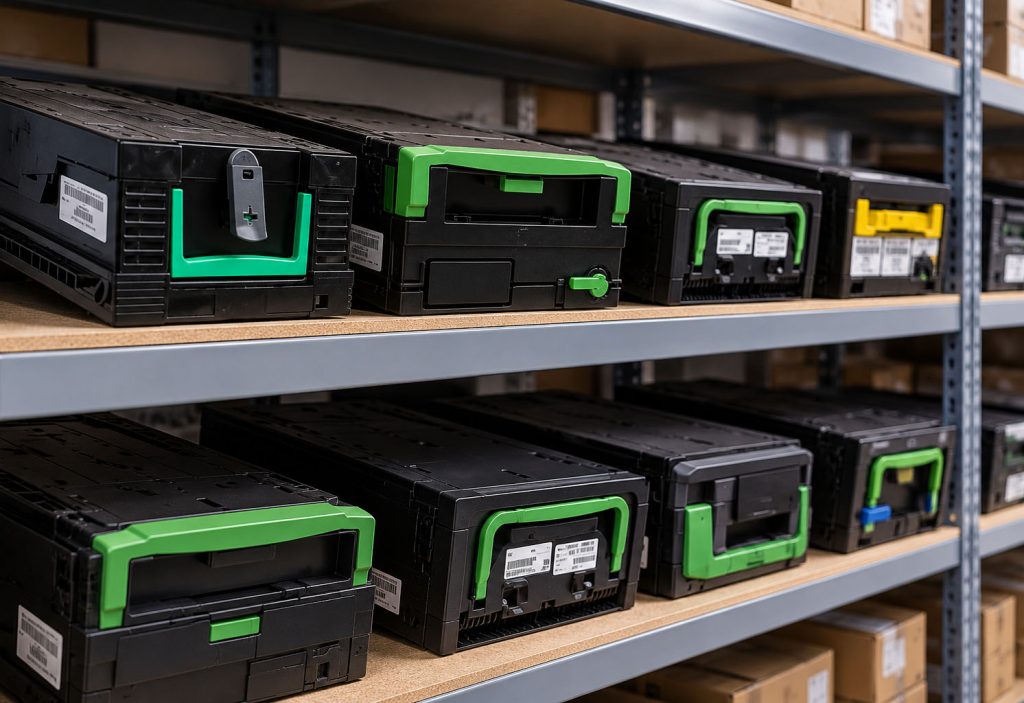
Teams looking at how to optimize cash replenishment often focus on route frequency first. That helps, but cassette design can be just as important. Denomination mix, cassette capacity, and loading rules all affect how long a terminal can remain serviceable between visits.
A common issue is a denomination profile that no longer reflects actual customer behavior. If one denomination consistently turns faster than expected while another moves slowly, the replenishment cycle becomes distorted. The result is partial depletion, unnecessary visits, or excess residual cash trapped in underused cassettes.
This is where field data should drive policy. If customers at a given site overwhelmingly withdraw in patterns that favor certain denominations, cassette allocations should reflect that reality rather than a networkwide default. The right setup is not always uniform. Standardization reduces complexity, but too much standardization can reduce cash efficiency.
There is also a trade-off between optimizing for fill efficiency and maintaining operational simplicity. Highly customized cassette strategies can improve performance at specific sites, but they also complicate logistics, forecasting, and vault preparation. The better answer usually lies in selective customization for exception sites, not complete fleet-level variation.
Route planning should be tied to service economics
Replenishment frequency is often treated as a simple availability question, but it is equally a route economics question. Every visit has a cost, whether performed by an armored carrier, an in-house team, or a hybrid model. If route design is weak, even accurate forecasting will not produce efficient outcomes.
The aim is to reduce emergency visits while avoiding over-servicing terminals that can safely wait. That requires operators to look at route density, stop sequencing, service windows, and the relationship between replenishment and first-line maintenance tasks. Combining work where practical can lower total field cost, but only if visit duration and security procedures remain manageable.
Geography changes the equation. Dense urban networks may benefit from tighter replenishment cycles and dynamic route adjustments. Rural and low-density markets often need a more conservative cash posture because dispatch alternatives are limited and travel cost is higher. There is no single ideal cadence across all market types.
A useful discipline is to evaluate cost per available terminal day rather than cost per visit alone. Fewer visits can look efficient on paper while increasing outages and emergency dispatches. More frequent visits can improve uptime but tie up working capital and field resources. The right balance depends on how expensive downtime is at each site.
How to optimize cash replenishment with better exception handling
Most replenishment programs are not undermined by normal demand. They are undermined by exceptions that the operating model handles poorly. These include sudden volume spikes, missed carrier visits, delayed vault preparation, cassette faults, communication failures, and inaccurate inventory reporting.
Exception handling should be formalized, not improvised. That means clear escalation rules for forecast breaches, automated alerts tied to meaningful thresholds, and service workflows that distinguish between cash risk and hardware risk. A terminal projected to run out within hours needs different treatment than one showing a sensor discrepancy with adequate remaining cash.
This is also where data quality becomes non-negotiable. If cash level reporting is inconsistent, replenishment teams compensate with extra safety stock or more frequent visits. Both raise cost. Improving telemetry reliability, reconciliation discipline, and event classification often produces better replenishment outcomes than simply adjusting thresholds.
Another practical issue is organizational separation. In some environments, forecasting, carrier management, ATM operations, and branch cash teams work from different assumptions and different data sets. When that happens, avoidable exceptions increase. Replenishment works best when ownership is cross-functional, even if accountability remains clearly assigned.
Technology helps, but only if the process is mature
Forecasting engines, route optimization platforms, and cash management software can improve replenishment performance. They can identify patterns faster than manual review and support more dynamic decisions. But software rarely fixes weak operating discipline by itself.
If service windows are poorly managed, cassette policies are outdated, and data reconciliation is inconsistent, adding another optimization layer may simply automate bad assumptions. Institutions tend to get better results when they first define service targets, site tiers, alert logic, and exception workflows, then apply tools against that operating framework.
It also helps to be realistic about model limits. Predictive systems perform best where transaction behavior is relatively stable and data integrity is high. They are less reliable in volatile demand environments, after sudden site changes, or where external factors shift quickly. Human review still matters, especially for outlier locations and recent network changes.
Measure the right outcomes
A replenishment program cannot improve if it is judged only by whether cash-outs declined. That is an important metric, but not a sufficient one. Operators should also track idle cash levels, emergency fill rates, residual cash by site type, forecast accuracy, carrier adherence, and the operational cost of exceptions.
The more useful view is comparative rather than absolute. Which locations repeatedly require intervention despite normal transaction levels? Which routes show high residual cash after each visit? Which denomination configurations produce early depletion? Those patterns reveal process flaws more clearly than monthly fleet averages.
There is value in reviewing replenishment alongside broader ATM performance indicators. Terminals with frequent hardware faults, communication instability, or receipt media issues may distort replenishment performance because service teams are already visiting for unrelated reasons. Looking at cash optimization in isolation can lead to the wrong corrective action.
Optimizing cash replenishment is less about chasing a perfect algorithm and more about reducing avoidable mismatch between demand, cash position, and field activity. The strongest programs treat replenishment as an operational control system, not a recurring delivery task. When forecasting, cassette strategy, route economics, and exception handling are aligned, availability improves without forcing excess cash into the network.