


Remote ATM Diagnostics Benefits in Fleet Service


A dispenser fault at 2:10 a.m. rarely stays a dispenser fault for long. By the time the first calls move through the help desk, an out-of-service terminal can already be affecting surcharge revenue, customer access, cash forecasting, and the morning dispatch queue. That is where remote ATM diagnostics benefits become operationally visible. For banks, independent deployers, and service organizations, the value is not abstract. It shows up in better triage, fewer unnecessary site visits, and a clearer view of what is actually happening across a fleet.
Remote diagnostics is often discussed as a support feature, but in practice it is a service model decision. The ability to interrogate ATM status, review component health, pull logs, confirm software state, and in some cases run corrective actions from a central location changes how incidents are classified and how field resources are used. It does not eliminate dispatch. It improves the odds that dispatch is justified, correctly prioritized, and equipped with the right parts and instructions.
Why remote ATM diagnostics benefits matter now
The case for remote diagnostics has grown stronger as ATM environments have become more mixed. Many fleets now include multiple OEMs, different operating system baselines, aging terminals still in service, and newer software layers introduced for security, monitoring, and transaction orchestration. At the same time, service expectations have tightened. Financial institutions want stronger uptime performance without carrying unnecessary field cost, and managed service providers are under pressure to hit response targets across wider territories.
In that context, remote visibility is less a convenience than a control point. Without it, service teams are often making decisions from incomplete alerts or customer complaints. A simple device timeout may point to a true hardware issue, a communications interruption, an application hang, or a temporary peripheral reset. Those are different problems with different remedies, but they can look similar when all the service desk sees is that the terminal is unavailable.
Remote diagnostics narrows that ambiguity. It lets operations teams distinguish between incidents that need immediate hands-on intervention and those that can be cleared, deferred, or reassigned. That distinction matters because the cost of a wrong dispatch is not limited to labor. It also affects first-time fix rates, technician productivity, cash access, and SLA performance.
Faster triage is usually the first measurable gain
One of the clearest remote ATM diagnostics benefits is the speed of initial assessment. Instead of opening a ticket with a vague fault code and waiting for a technician to inspect the machine, support teams can often validate component status in minutes. They may confirm whether the issue involves the cash dispenser, card reader, receipt printer, encrypting PIN pad, communications stack, or host connectivity. They can also determine whether the terminal is partially operational or fully down.
That sounds basic, but it changes incident handling in meaningful ways. A terminal with a failed receipt printer may not require the same urgency as a machine that cannot dispense cash or has lost host communications. A terminal that appears down from the monitoring layer may still be reachable remotely and recoverable through a controlled reset. A suspected cash handling issue may turn out to be a sensor state problem or an error condition triggered by a specific cassette.
The operational benefit is better ticket quality at the moment work is assigned. Field teams arrive with a narrower fault hypothesis, and dispatchers have more confidence in prioritization. For large fleets, that can improve technician utilization even if the total incident volume stays the same.
Better triage also improves parts planning
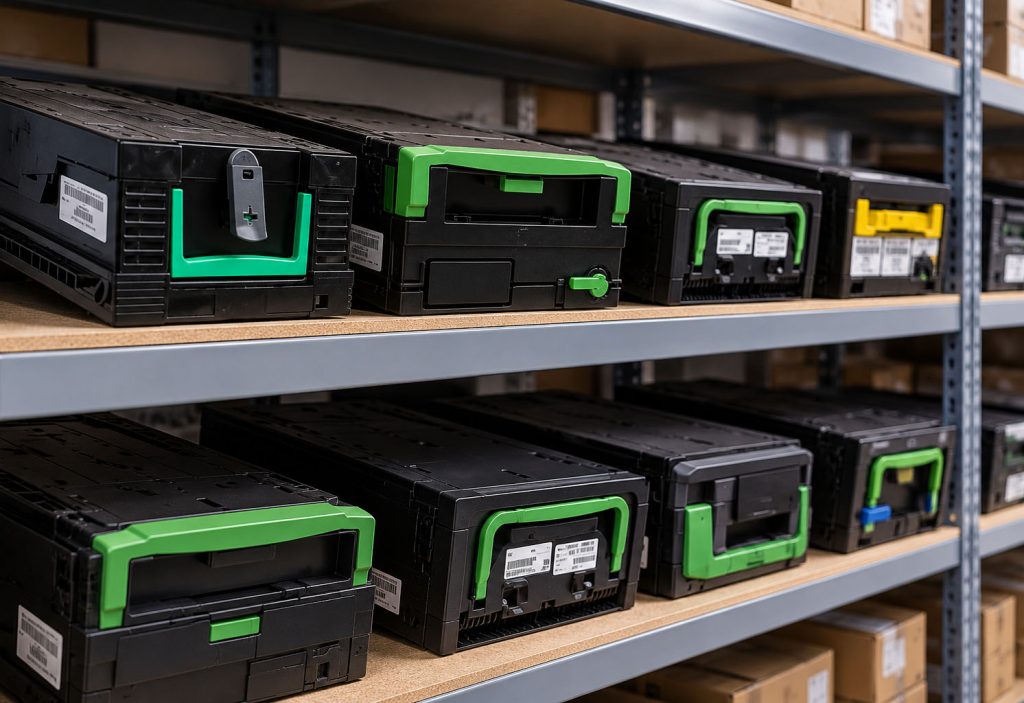
When a technician is sent without reliable diagnostic context, the service call often becomes an identification visit rather than a repair visit. That is inefficient for any fleet, but especially costly in rural markets or distributed networks with long drive times. Remote diagnostics can reduce those visits by identifying likely failed modules before dispatch. Even when the diagnosis is not final, it can improve the odds that the technician carries the right spare parts, firmware package, or service procedure.
This is one of the less publicized remote ATM diagnostics benefits, but it matters at scale. Parts inventory is expensive, van stock is limited, and poor forecasting leads to repeat visits. Better pre-dispatch data supports both service execution and inventory discipline.
Fewer truck rolls, but not fewer field teams
Remote support is sometimes framed as a way to reduce dependence on field service. That is only partly true. In most real deployments, remote diagnostics reduces avoidable truck rolls rather than reducing the need for skilled technicians. ATMs still require physical maintenance, replenishment coordination, device swaps, cleaning, and break-fix work that cannot be performed over the network.
What changes is the mix of incidents that reach the field. Problems that can be resolved through log review, remote restart, application recovery, configuration correction, or validation of a false alarm can be handled centrally. That leaves field teams more time for jobs that genuinely require on-site work.
For service managers, that can translate into lower dispatch volume, but the larger benefit is often better allocation of scarce technical labor. Experienced ATM technicians are not easy to replace, and many organizations are managing coverage constraints. If remote diagnostics removes low-value visits from the queue, it can help preserve response capacity for priority incidents.
There is also a quality angle here. A technician dispatched only when there is a clear reason to go tends to arrive better informed. That supports higher first-time fix rates and reduces the operational drag of revisits.
Remote ATM diagnostics benefits for uptime and service consistency
Uptime is the metric most often associated with remote diagnostics, and for good reason. Faster assessment and remote recovery options can reduce outage duration. But the more interesting impact is consistency. In many fleets, uptime problems are not just caused by severe failures. They are caused by uneven service decisions, delayed escalation, incomplete fault information, and different interpretations across teams.
Remote diagnostics helps standardize those decisions. A centralized support function can apply the same diagnostic workflow across geographies, terminal types, and service partners. That does not remove local variation entirely, especially in multi-vendor fleets, but it creates a more uniform operating picture.
Consistency matters because ATM outages are cumulative. A network does not lose performance only from major incidents. It loses performance from recurring low-grade faults that bounce between open and closed status without a full root cause review. Better remote visibility makes those patterns easier to identify. A terminal with repeated communications drops, recurring card reader errors, or intermittent dispenser faults can be flagged for deeper intervention before it becomes a chronic availability problem.
Data quality improves service management
Another operational gain is cleaner service data. Remote diagnostics generates more than immediate troubleshooting insight. It creates a record of device states, repeat alarms, error sequences, reset attempts, and recovery outcomes. Over time, that supports better root cause analysis and more accurate vendor performance discussions.
This is particularly useful in fleets where multiple parties share responsibility for service delivery. If the bank, managed service provider, monitor vendor, and armored carrier all touch the same incident chain, having clearer machine-level evidence reduces ambiguity. It becomes easier to establish whether a problem was caused by hardware failure, software behavior, environmental conditions, or handling at the site.
The trade-offs are real
Remote diagnostics is not automatically a gain in every environment. It depends on the quality of the tools, the reliability of network access, and the maturity of the operating model around them. A weak remote diagnostics setup can create noise instead of clarity, especially if alarm thresholds are poorly tuned or device telemetry is inconsistent across a mixed fleet.
Security and access control are also central concerns. Any system that allows remote interrogation or action on an ATM has to be governed carefully. Role-based permissions, session controls, logging, and segmentation matter. The more powerful the remote capabilities, the more important the operational discipline around them.
There is also an integration challenge. Many ATM estates are not uniform. Some legacy terminals support only limited remote visibility, while newer systems expose richer diagnostic data. That means organizations may get uneven benefits unless they invest in standardization or at least define service workflows that account for those differences.
For that reason, remote diagnostics should be evaluated as part of a broader service architecture, not as a standalone feature. The question is not simply whether a platform offers remote diagnostic tools. The better question is whether those tools fit the fleet, the security model, the dispatch process, and the reporting structure already in place.
Where the operational value is strongest
The organizations that tend to see the strongest returns are those managing dispersed fleets, strict uptime targets, or a multi-layer service environment where handoffs create delay. In those cases, faster triage and clearer fault isolation produce immediate operational value. Fleets with long travel distances also benefit because each avoided dispatch has a meaningful cost impact.
By contrast, a smaller and more centralized ATM footprint may still benefit, but the savings profile can be different. The justification may rest less on reducing truck rolls and more on improving issue visibility, documentation, and service consistency. That distinction matters when building the business case.
Remote diagnostics is best understood as a force multiplier for existing service operations. It does not replace field expertise, disciplined maintenance, or sound monitoring thresholds. It gives those functions better information and, in many cases, a faster path to action.
For ATM operators under pressure to improve availability without adding unnecessary service cost, that is the practical case. The most useful technology in fleet service is rarely the most visible. It is the technology that helps teams make better decisions before a technician ever turns the key at the site.

