


Financial Kiosk Deployment Trends in Banking

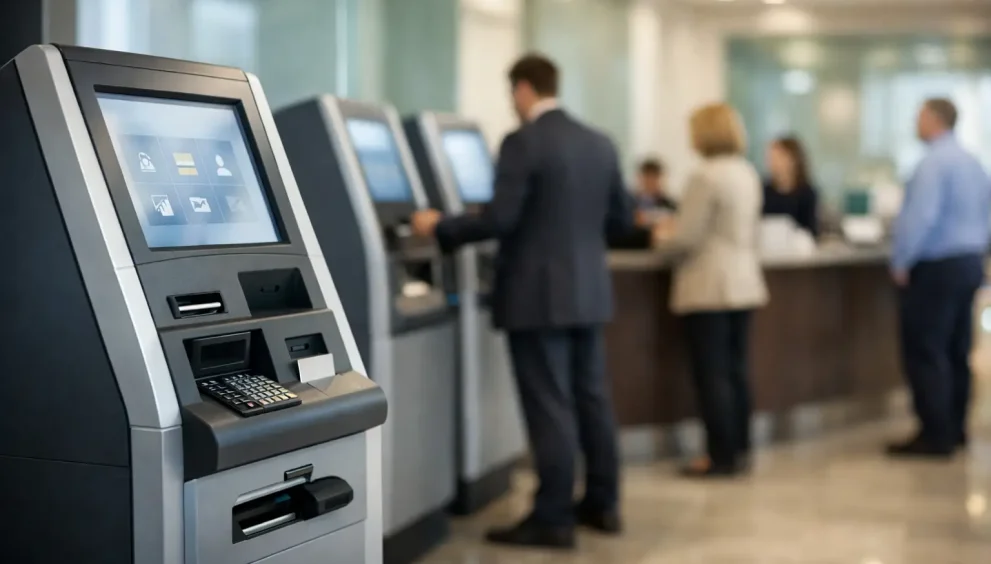
A financial kiosk rollout rarely fails because of the screen, the enclosure, or the software demo. It usually fails at the handoff between strategy and field execution – site readiness is incomplete, network assumptions do not hold, cash workflows are poorly defined, or service coverage is too thin for the intended footprint. That is why financial kiosk deployment trends now deserve closer attention from banking technology teams and service organizations.
The term covers a broad set of devices, from account opening and video banking terminals to cash recyclers, bill payment units, teller assist systems, and branch self-service kiosks. What is changing is not just the equipment mix. Deployment logic is shifting as financial institutions reassess branch formats, labor models, servicing structures, and customer migration between assisted and unassisted channels.
Financial kiosk deployment trends are becoming more site-specific
One of the clearest changes in the market is the move away from one-size-fits-all deployment planning. Financial institutions are no longer treating kiosks as a uniform branch modernization item. Instead, they are segmenting by location type, transaction demand, staffing model, and customer profile.
A high-volume urban branch may justify a different kiosk configuration than a suburban advisory branch or an off-premise retail banking location. In one setting, cash acceptance and recycling may be central. In another, the higher priority may be ID capture, card issuance, or remote staff access. The result is a more modular deployment model, but also a more demanding one operationally.
This has implications for procurement and support. Mixed fleets can improve fit, yet they also introduce parts complexity, software variation, and training requirements for field service teams. Standardization still matters. The trend is not toward uncontrolled device diversity. It is toward tighter alignment between machine capability and site economics.
Branch transformation is driving financial kiosk deployment trends
Much of the current deployment activity is tied to branch redesign rather than stand-alone kiosk expansion. As institutions reduce traditional teller lines and reconfigure floor space, self-service equipment is being positioned as part of a broader operating model, not as an isolated convenience feature.
That distinction matters. When a kiosk takes over simple transactions that previously required staff involvement, the project should be evaluated against labor allocation, queue management, transaction migration, and exception handling. If the branch still needs an employee to intervene regularly because workflows are unclear or interfaces are poorly localized, the business case weakens quickly.
This is why many current programs focus on assisted self-service rather than full channel substitution. Banks want equipment that extends service capacity while preserving staff flexibility. In practice, that often means integrating kiosks into branch traffic patterns, remote support workflows, and customer onboarding processes rather than expecting the hardware alone to change behavior.
Cash automation remains a primary use case
Despite ongoing digital migration, cash handling remains one of the strongest drivers of kiosk deployment in US banking. Deposit automation, bill payment, denomination management, and cash recycling continue to offer measurable operational value when volumes justify the investment.
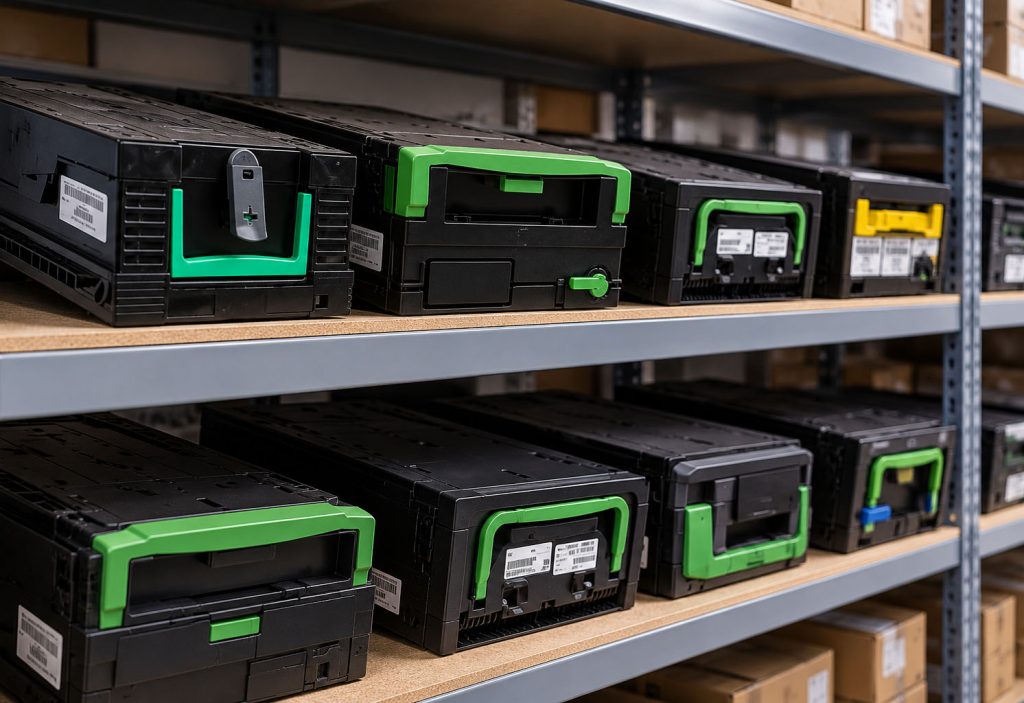
The trade-off is straightforward. Cash-capable kiosks can reduce teller burden and improve transaction availability, but they also raise maintenance demands, forecasting requirements, and component sensitivity. A deployment strategy that works for an informational kiosk or account service terminal will not automatically translate to a cash automation device. Consumables, jam rates, cassette access, armored service coordination, and first-line maintenance all become more important.
For that reason, institutions are placing greater emphasis on matching service models to transaction types. Where cash automation is central, deployment plans increasingly include replenishment logic, remote monitoring thresholds, and clear ownership of branch versus third-party support tasks before devices go live.
Software integration is now as important as hardware placement
A well-positioned kiosk with poor integration creates more operational friction than value. One of the more notable shifts in financial kiosk deployment trends is the attention being paid to middleware, transaction orchestration, identity verification, and channel consistency.
This is particularly relevant as banks try to connect self-service devices with appointment systems, CRM platforms, teller systems, card management, and digital onboarding workflows. The device is no longer a standalone endpoint. It is part of a transaction ecosystem, and deployment teams are being pushed to think beyond install dates and acceptance testing.
There is also a growing recognition that software maturity varies widely across kiosk functions. Cash withdrawal and deposit workflows may be well understood, while account servicing, remote advisory, or document-heavy onboarding can expose integration gaps quickly. The more complex the use case, the more deployment timelines depend on upstream system readiness rather than hardware availability.
Remote management is moving from nice-to-have to baseline
Fleet operators are putting more weight on remote visibility during planning and vendor evaluation. Device health data, software distribution, peripheral status, and predictive maintenance signals are increasingly seen as deployment requirements, not optional enhancements.
This is partly a scale issue. As institutions spread kiosks across smaller branches, retail sites, or lightly staffed environments, truck rolls become harder to justify for avoidable faults. Remote diagnostics do not eliminate field service, but they can reduce unnecessary dispatches and improve triage.
The caveat is that remote tools only help if alert quality is high and operational processes are mature. Too many alarms, inconsistent event mapping, or weak escalation rules can overwhelm support teams. Better remote management matters, but only when paired with disciplined incident handling.
Security and compliance are shaping deployment decisions earlier
Security used to be addressed late in some kiosk projects, often after physical design and business requirements were largely set. That approach is becoming less viable. Financial institutions now tend to involve security, network, and compliance teams earlier because kiosk deployments intersect with authentication, data privacy, video, remote access, and endpoint hardening.
This is especially true when kiosks support account servicing, document capture, or customer identification. The risk profile differs from a conventional ATM or a simple informational terminal. Camera placement, session privacy, malware controls, patching windows, and local physical exposure all need to be considered at the design stage.
There is also a practical field dimension. Devices deployed in branch vestibules, retail locations, or extended-hours environments face different tamper risks and service constraints than equipment inside fully staffed branches. Security architecture has to reflect those operating conditions, not just policy templates.
Deployment speed is being balanced against service sustainability
Another notable trend is a more cautious approach to rollout velocity. Institutions still want faster deployment, especially when branch programs are tied to modernization targets, but many are more aware of the operational costs of scaling too quickly.
A pilot can perform well under close oversight and still break down at fleet scale. Installation quality may vary by region. Local telecom providers may not meet assumptions. Technician coverage may be uneven. Spare parts staging may lag behind deployment geography. These are familiar issues in ATM channels, and they are now more visible in kiosk programs as well.
As a result, phased deployment remains common, but the stronger programs are using phases for operational validation rather than just budget control. They are measuring user adoption, fault patterns, service response times, and exception volumes before widening the footprint.
Vendor selection is increasingly service-led
Hardware capability still matters, but vendor evaluation is shifting toward long-term supportability. Financial institutions want to know how devices will be installed, monitored, patched, repaired, and refreshed over time. For many buyers, the field service model now carries as much weight as feature specifications.
That is a sensible correction. A kiosk platform may look strong in a showroom and still create avoidable cost if service documentation is weak, parts logistics are slow, or software support is fragmented across multiple providers. The operational burden often appears after deployment, not before.
This is also where interoperability matters. Institutions with existing ATM, branch automation, or self-service infrastructure generally prefer platforms that fit current support frameworks rather than introducing isolated service processes. The closer a kiosk program aligns with established monitoring, security, and maintenance disciplines, the easier it is to sustain.
The next phase of kiosk deployment in banking will likely be less about novelty and more about disciplined integration into branch and self-service networks. That may not produce the most dramatic headlines, but it is where durable value usually shows up – in uptime, service consistency, lower exception handling, and equipment that fits the operating model it was bought to support.