
Hyosung ATM Market Position in U.S. Banking

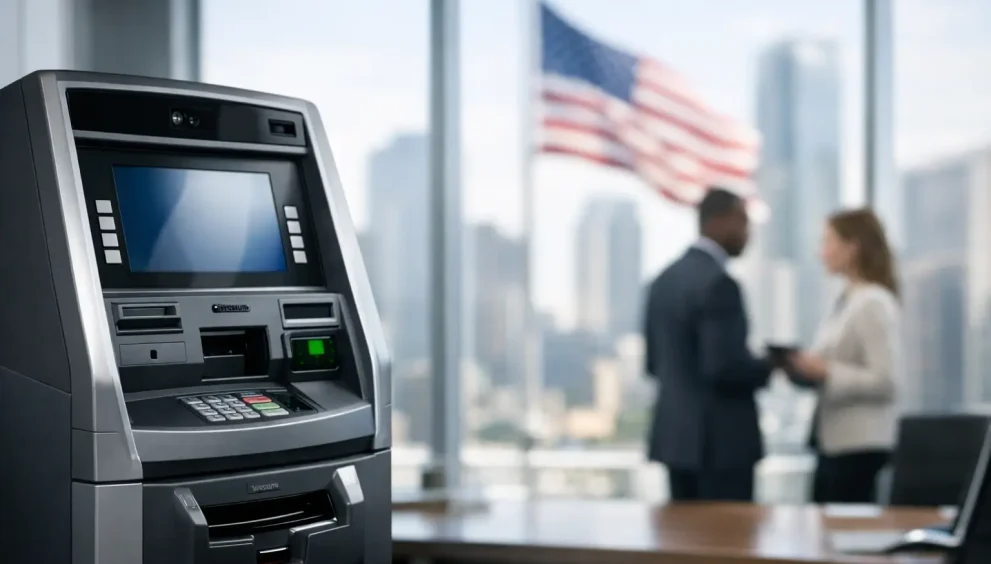
Hyosung ATM market position is strongest where operators need a broad physical ATM footprint, flexible configurations, and competitive equipment economics. In the U.S., the company is a consequential supplier across retail ATM deployment and has an increasingly visible role in financial-institution self-service projects. That position, however, is not defined by unit volume alone. It depends on the operator’s service model, software architecture, cash strategy, compliance requirements, and tolerance for a mixed-vendor fleet.
Hyosung ATM Market Position: A Two-Market Story
Hyosung operates in a market that is often discussed as one category but behaves as two distinct businesses: retail ATM deployment and financial-institution self-service. The buying criteria overlap, yet the operating environments differ substantially.
In the retail segment, independent deployers, ISOs, and merchant programs tend to prioritize acquisition cost, availability, deployability, transaction capability, and the practical speed of repairs. Hyosung has long been a familiar name in this channel, where high deployment volumes and a wide installer and service-provider base matter. A machine that can be standardized across convenience stores, hospitality sites, dispensaries, and other cash-access locations has a different value proposition than a branch-lobby terminal with deep integration into a bank’s technology environment.
For banks and credit unions, the discussion is more complex. Hardware selection is tied to branch formats, accessibility, security controls, application compatibility, cash forecasting, monitoring, customer experience, and lifecycle planning. Hyosung competes for this work against established incumbents, including NCR Atleos and Diebold Nixdorf, as well as against the operational inertia of existing fleets. Replacing a deployed platform is rarely a simple equipment decision. It can trigger work across applications, host interfaces, signage, physical site design, technician training, and spare-parts inventory.
This creates an important distinction: Hyosung can be well positioned in a procurement conversation without being the automatic choice for a fleet refresh. A financial institution with a standardized incumbent estate may see lower risk in extending that standardization. Another institution, especially one seeking better commercial terms, different form factors, or a revised service model, may see a new vendor as a practical route to diversification.
Retail Strength Remains Central
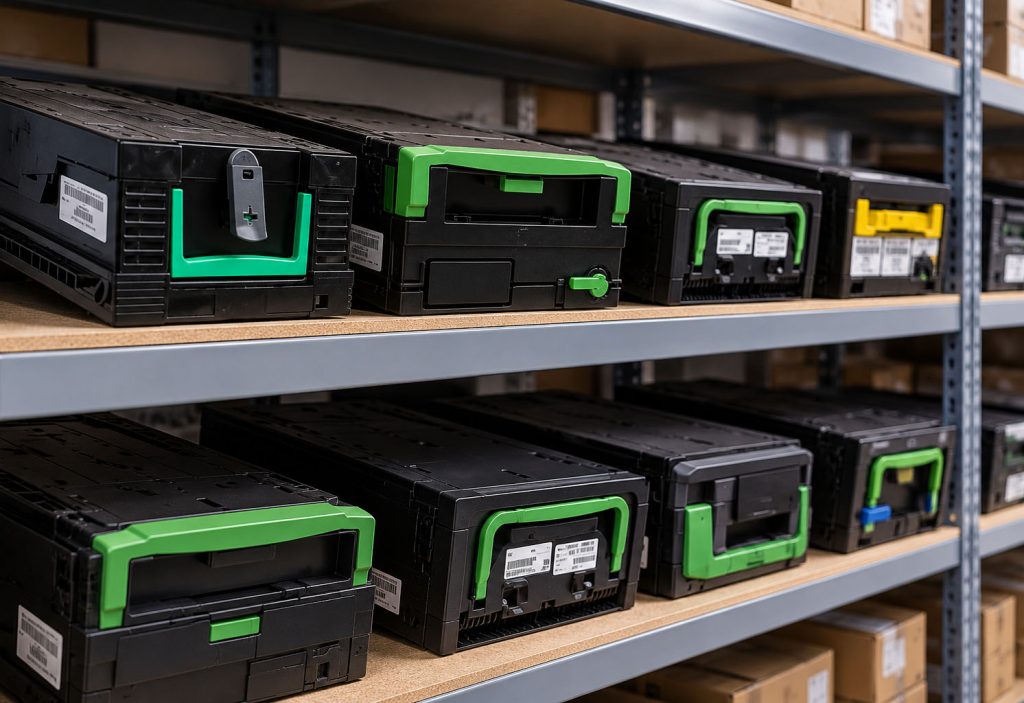
Hyosung’s retail presence is a major part of its market identity in the United States. The retail ATM channel rewards vendors that can support a large number of geographically dispersed sites, many of them with limited physical security, variable foot traffic, and no on-site technical staff. Field reliability matters, but so do practical details such as cabinet access, cassette handling, parts availability, and the familiarity of local service organizations with the platform.
That installed-base effect should not be understated. Equipment that is already understood by deployers, distributors, and technicians has an operational advantage. It reduces the friction involved in stocking parts, dispatching technicians, documenting common failures, and training new field staff. This does not mean any individual model will be the right fit for every site. High-volume retail locations may require different cash capacity, secure architecture, or transaction performance than lower-volume convenience deployments.
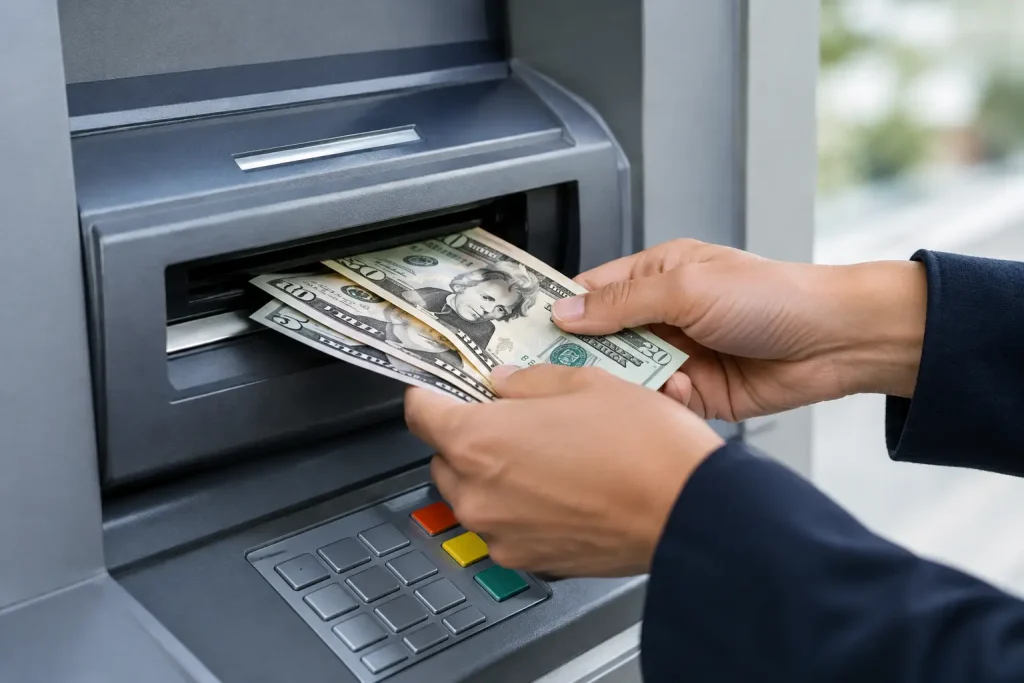
Retail demand also remains exposed to factors outside the equipment vendor’s control. Surcharge economics, interchange arrangements, cash replenishment costs, store closures, crime risk, and changing consumer payment behavior all affect deployment decisions. In this environment, a vendor’s market position is partly a function of how well its equipment fits operators’ economics, not simply how many units it can ship.
Bank and Credit Union Opportunity Depends on Integration
Hyosung’s opportunity in financial institutions is linked to the continued need for physical cash access and self-service, even as branch networks change. Many banks are reducing traditional teller footprints, adding assisted self-service, or redesigning locations around fewer but more capable service points. ATMs and cash recyclers can support those models, but only if the technology works within the institution’s broader operating framework.
For a bank, hardware is one layer of the decision. The larger questions concern the application environment, host connectivity, transaction routing, remote monitoring, incident management, journal retrieval, cybersecurity controls, and vendor accountability. A feature set may appear comparable on a specification sheet, while the operational effort required to deploy and maintain it differs considerably.
Hyosung is therefore most likely to gain ground where buyers are willing to evaluate the full solution stack rather than treating their current vendor standard as fixed. This can occur during major branch transformation programs, end-of-support planning, merger-related fleet rationalization, or a shift from a fully outsourced model to a more controlled service arrangement.
It can also occur when an institution wants to avoid concentration risk. A second ATM supplier can create commercial leverage and provide a contingency path, but it also introduces added complexity. Mixed fleets require clear standards for monitoring, software release management, technician certification, spares, and performance reporting. Diversification is useful only when the organization has the operational discipline to manage it.
Product Breadth Is Useful, but Lifecycle Support Decides the Outcome
A broad hardware portfolio helps Hyosung address different deployment types, from through-the-wall and drive-up installations to branch-lobby and retail configurations. Cash recycling capability is particularly relevant for institutions looking to reduce teller cash handling or support more flexible branch operations. Yet product breadth by itself does not secure long-term market share.
Fleet owners judge suppliers over years of operation. They look at fault patterns, module durability, repair turnaround, parts pricing, software support, security patch processes, documentation quality, and escalation performance. An equipment platform may be attractive at purchase and still create problems if service arrangements are unclear or if local coverage is inconsistent.
This is why the service model requires as much scrutiny as the device. Some operators rely on OEM-directed service, while others use regional providers or manage elements of maintenance internally. Each approach involves trade-offs. A national service structure may offer standard processes and reporting, while an independent provider may deliver stronger local responsiveness or lower cost. The relevant question is not which model is best in general, but whether responsibilities are unambiguous when a terminal is out of service.
Procurement teams should also separate warranty assumptions from lifecycle commitments. A five- or seven-year ownership plan needs realistic expectations for component availability, software support, upgrade paths, and the labor required to maintain older units. These considerations can materially change total cost of ownership.
Software, Interoperability, and Security Shape Competitive Standing
The ATM market is moving away from purely hardware-led evaluations. Financial institutions increasingly want flexibility in applications, middleware, monitoring, and transaction services. Standards-based approaches such as API-oriented architectures can reduce dependence on a single hardware vendor, but actual portability still depends on the software stack, integration quality, and the functions required at the endpoint.
Hyosung’s competitive position is stronger when buyers can establish a clean boundary between device hardware and higher-level applications. It is weaker when a replacement would require extensive redevelopment or where a legacy host and application environment remains tightly coupled to another supplier’s platform. This is a common challenge across the industry, not a Hyosung-specific issue.
Security is equally central. ATM owners need a documented approach to operating-system currency, patch distribution, application controls, logical attack protection, physical hardening, anti-skimming measures, and incident response. The exact priorities differ between an outdoor retail terminal and a bank drive-up fleet, but neither environment can treat security as an add-on. Procurement reviews should seek evidence of ongoing support practices rather than rely on broad security claims.
What Buyers Should Test Before Selecting Hyosung
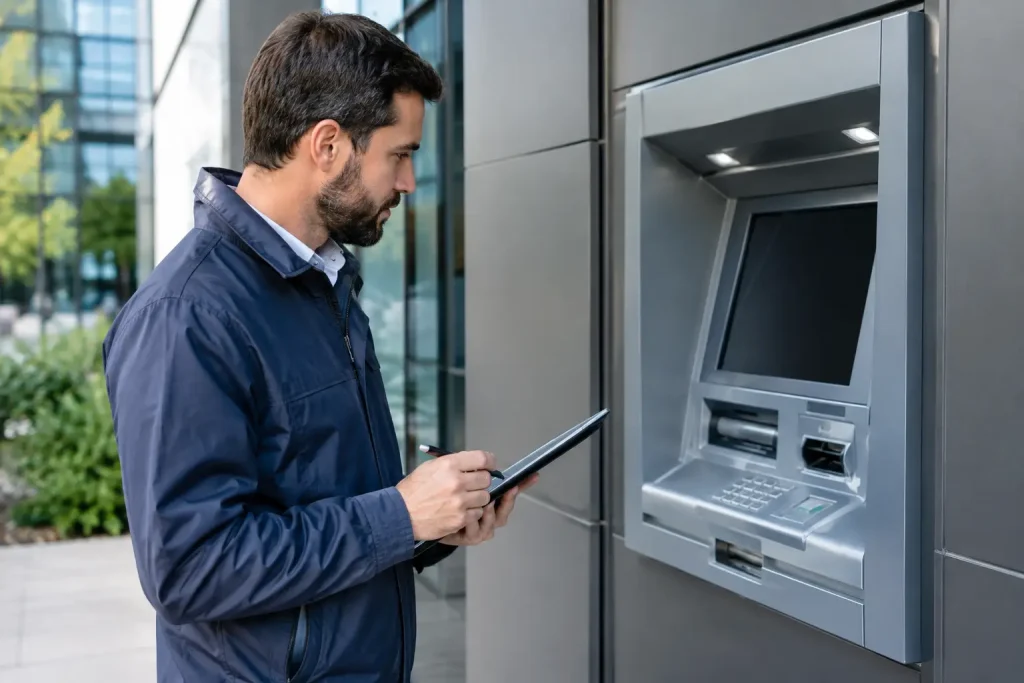
A serious evaluation should move beyond a demonstration unit and a pricing schedule. Operations leaders should test the proposed configuration against the conditions their fleet actually faces: transaction volumes, cash usage patterns, carrier access, environmental exposure, network reliability, and technician availability.
The most useful due diligence combines reference checks with field-level questions. How are recurring faults diagnosed? Which components are commonly stocked locally? Who owns software troubleshooting when the issue crosses hardware, application, and network boundaries? What are the escalation paths after a repeated failure? How quickly can replacement units or major modules be supplied during a regional disruption?
Banks should also validate integration and compliance work early. Accessibility requirements, branding controls, settlement processes, EMV parameters, receipt and journal retention, and remote-management functions should be tested in the intended operating environment. A pilot is valuable when it is designed to expose these dependencies, not merely to prove that transactions can be completed.
A Position Built on Execution
Hyosung holds a credible position in the U.S. ATM market because it participates across high-volume retail deployment and the more demanding financial-institution segment. Its ability to expand that position will depend less on broad claims about ATM demand and more on execution in serviceability, software compatibility, security maintenance, and lifecycle support.
For fleet operators, the useful question is not whether Hyosung is a major vendor. It is whether its platform, support model, and integration approach fit the operating reality of the specific estate under review. The best equipment decision is usually the one that leaves fewer unresolved issues for the field team six months after deployment.