
Top Cash Automation Technologies for ATM Fleets

Cash remains a physical supply chain, even when customers experience it through a digital transaction. The top cash automation technologies are therefore less about adding features to an ATM and more about controlling the cycle of notes: acceptance, authentication, storage, dispensing, replenishment, reconciliation, and exception handling.
For financial institutions and independent deployers, the operating case is usually straightforward. Fewer cash-outs, fewer unnecessary cash-in-transit visits, better note quality, and faster resolution of discrepancies can reduce cost while protecting availability. The harder question is which technologies fit a particular fleet, transaction mix, service model, and branch strategy.
Top cash automation technologies and where they fit
The most consequential technologies fall into several connected layers. Hardware determines what the terminal can accept and dispense. Sensors and software turn device activity into operational data. Cash-management systems then use that data to plan funding and service work. A weak layer can limit the value of the rest.
Cash recycling modules
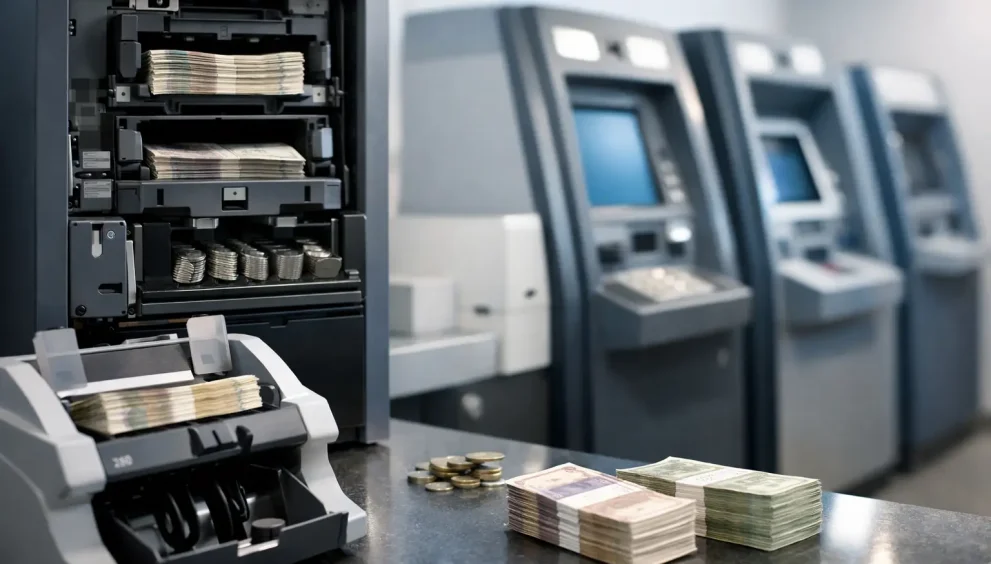
Cash recycling is still the central technology discussion for many ATM estates. A recycler accepts deposited notes, validates and sorts them, then returns eligible notes to the dispensing inventory. This reduces the need to remove deposited cash and replenish the terminal with fresh currency on every service cycle.
The benefit is strongest at machines with meaningful deposit activity, such as branch ATMs, retail locations with business deposits, and high-volume self-service sites. In those settings, recycling can lower cash-in-transit exposure and keep usable notes closer to the point of demand. It can also support longer intervals between armored-car visits when forecasting is accurate.
The trade-off is operational complexity. Recycling modules have more note paths, sensors, reject areas, and configuration dependencies than a basic dispenser. Note fitness settings must reflect the issuer’s policy and the local condition of circulating currency. Service organizations need technicians trained to isolate transport faults, contamination, and cassette-related errors without simply swapping expensive assemblies.
A recycler is not automatically the right answer for a low-volume cash-out-only location. Where deposits are limited, the savings may not offset higher capital cost, service requirements, and the need to carry appropriate spare parts. Fleet segmentation matters more than a blanket hardware standard.
Intelligent cash cassettes and cash tracking
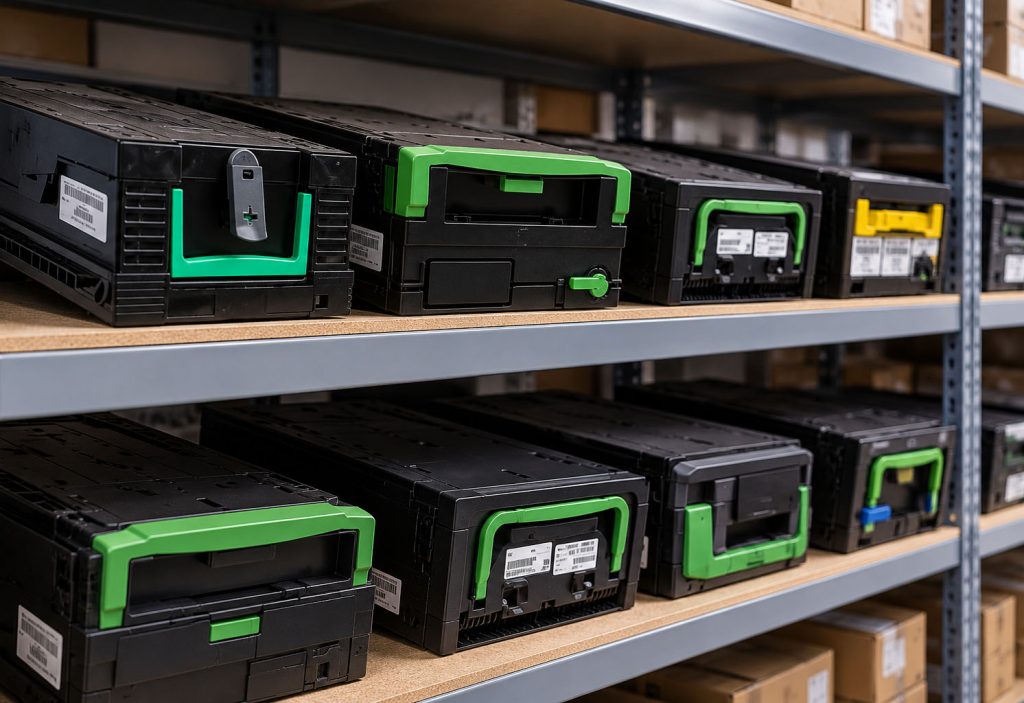
Intelligent cassettes add identification and transaction-level accountability to the cash container itself. Depending on the implementation, cassette data can record denomination, loaded value, terminal assignment, movement history, and count information. Combined with electronic seals or custody workflows, this provides a more complete record from the cash room to the device and back.
This technology addresses a persistent weak point in cash operations: the gap between what a system says should be in a terminal and what actually happened during loading, collection, or a disputed transaction. Better cassette traceability can shorten investigations and strengthen dual-control processes. It also improves the quality of data supplied to cash forecasting tools.
The practical limitation is that intelligent cassettes require disciplined procedures. A tagged cassette does not resolve exceptions if technicians bypass scans, cash-room staff use inconsistent loading workflows, or systems do not exchange data reliably. Institutions should test the full chain of custody, including failed loads, partial removals, emergency cassette replacements, and offline terminal behavior.
Advanced note validation and fitness sorting
Modern cash automation depends on the quality of the note-validation stack. Sensors assess denomination, orientation, authenticity, and physical condition. In recycling environments, fitness logic determines whether accepted notes can re-enter the dispense pool or should be diverted to a reject or deposit cassette.
Better validation has clear fraud and availability implications. Counterfeit detection protects the deposit channel, while accurate denomination recognition prevents balancing errors. Fitness sorting can reduce the chance that badly worn, folded, taped, or otherwise unsuitable notes are dispensed to customers.
Yet the operational objective is not to reject the maximum number of notes. Overly aggressive fitness thresholds can fill reject areas, create customer deposit exceptions, and increase service calls. Thresholds should be assessed against actual note quality, transaction patterns, issuer policy, and the device’s reject capacity. A setting that works in a newly installed branch fleet may perform poorly in an older, high-circulation market.
Cash forecasting and optimization software
Forecasting software converts transaction history, calendar effects, denomination mix, local events, and terminal capacity into recommended cash levels and service schedules. The goal is to reduce both stock-outs and excess cash sitting idle in devices.
This is one of the more mature forms of cash automation, but performance depends on input quality. Models need current terminal configuration data, reliable transaction feeds, accurate cash-order records, and a way to account for outages and unusual events. A terminal that was down for two days should not be interpreted as a sudden collapse in customer demand.
For operators managing hundreds or thousands of endpoints, even modest forecast improvements can have material impact on working capital and route efficiency. For smaller fleets, the value may lie less in sophisticated modeling and more in establishing consistent replenishment rules and visibility across disparate equipment.
Forecasting should also account for recycling behavior. A recycled deposit is not equivalent to an armored-car delivery, because the usable amount depends on note fitness, denomination composition, reject rates, and the recycler’s actual inventory state. Treating all deposited currency as immediately available can create false confidence in projected dispense capacity.
Remote monitoring and predictive service analytics
Remote monitoring has moved beyond basic up-or-down status. Current device telemetry can report cassette counts, reject activity, sensor conditions, dispenser errors, shutter events, communications quality, and software state. When connected to service-management processes, this data allows teams to prioritize faults based on customer impact and likely repair requirements.
Predictive analytics is most useful when it remains grounded in service reality. A rising pattern of transport retries or note jams may justify a planned visit before a terminal becomes unavailable. But false alerts create their own cost if technicians are dispatched without the right parts, access approval, or diagnostic evidence.
The strongest programs combine device telemetry with field data. Technician findings, replaced components, environmental conditions, and repeat-call history help distinguish a one-off jam from a recurring mechanical or configuration issue. This feedback loop also helps operations leaders identify models, locations, or cash types that drive disproportionate service expense.
Cash management orchestration and integration
Cash automation produces value when the data flows between systems that often operate separately: ATM middleware, transaction switching, monitoring platforms, cash-order tools, vault systems, armored-car providers, and service dispatch applications. Integration is therefore a technology category in its own right.
The priority is not a single large platform for every operator. It is dependable data exchange, clear ownership of records, and consistent definitions. If a service provider, cash-in-transit partner, and bank use different views of an ATM’s cash position, reconciliation becomes manual and dispute resolution slows down.
Standards-based interfaces can reduce dependence on proprietary workflows, particularly in mixed-vendor estates. They do not eliminate integration work. Data fields, timing, retry logic, security controls, and exception states still need validation. A carefully scoped pilot involving a representative set of terminals and service routes usually exposes issues that a lab test will miss.
Security cannot be separated from cash automation
Every added sensor, remote command, and software connection expands the system that must be secured. Cash automation programs should assess physical and logical controls together. That includes authentication for remote access, encryption in transit, software integrity controls, network segmentation, audit logs, and tightly managed roles for cash-room and field personnel.
Physical threats remain equally relevant. Cassette handling processes, safe access rules, anti-skimming measures, alarms, and incident response procedures must align with the new operational model. For example, extending service intervals through recycling may reduce route frequency but increase the cash value retained at some endpoints. That can change risk assumptions for a location.
How to evaluate the right technology mix
A useful evaluation starts with operational evidence rather than a hardware catalog. Examine cash-out rates, deposit volumes, reject rates, service-call categories, replenishment costs, cash balances, and the age of the installed base. Then separate sites by role: high-volume branch machines, retail cash-out endpoints, deposit-heavy locations, drive-up units, and low-volume convenience locations do not need the same configuration.
Procurement teams should ask vendors and service partners for measurable assumptions. What deposit volume is required for a recycler to improve the business case? How are rejected notes counted and reconciled? Which faults can be diagnosed remotely? What training, spare inventory, and software dependencies are required? How does the solution behave when communications are unavailable?
The most durable deployments are designed around exception handling, not only normal transactions. Cash automation earns its value when a mismatched cassette, a full reject bin, an incomplete replenishment, or a degraded sensor can be detected quickly and resolved with a clear owner. Start with the operational bottleneck that produces the most avoidable cost, then choose technology that improves that specific point in the cash cycle.