
How Self Service Biometrics Changes ATM Operations

A card retained after a suspected fraud event, a forgotten PIN, or a disputed cash withdrawal can turn a routine ATM interaction into an expensive service and customer-support issue. Self service biometrics changes that equation by adding a way to verify the person at the terminal, rather than relying only on something they possess or know. For ATM operators, however, the technology is not simply another customer feature. It affects hardware selection, transaction routing, privacy governance, uptime planning, and the exception processes that determine whether a deployment works in the field.
Where self service biometrics fits at the ATM
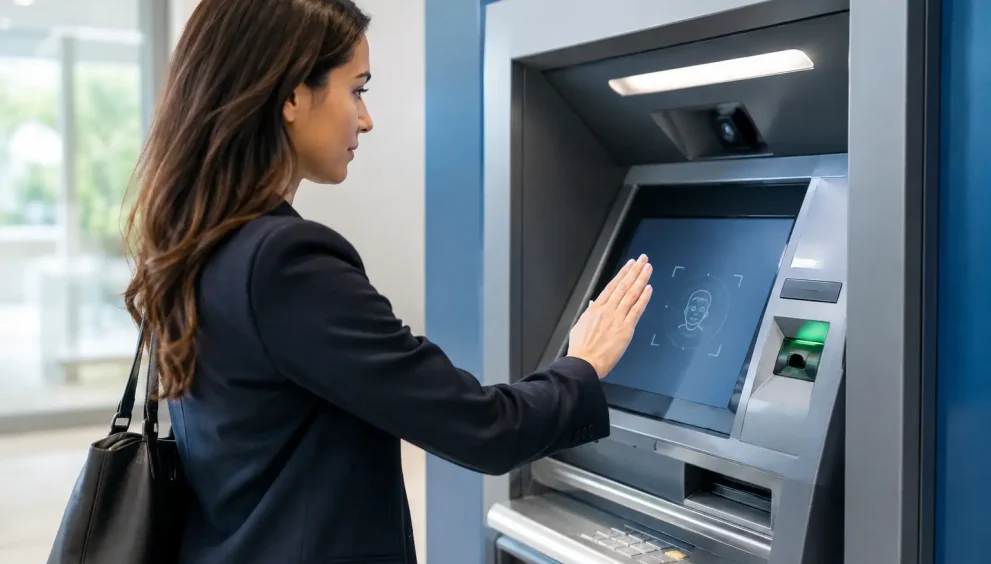
Biometric authentication at an ATM can take several forms. Facial recognition is the most visible option because cameras are already common on many terminals for security and fraud investigation. Fingerprint readers remain relevant where a controlled, close-range interaction is acceptable. Palm-vein and iris recognition are also used in some markets, usually in more tightly managed environments or where a financial institution has made a broader identity-platform investment.
The operational question is not which modality appears most advanced. It is which modality supports a defined transaction and produces acceptable results under real conditions. A fingerprint reader may be effective for enrollment-based access at a branch-adjacent terminal, but its surface can be affected by wear, contamination, and customer behavior. Facial systems avoid a contact sensor but must account for lighting, camera position, masks, hats, glare from eyeglasses, and differences in height and mobility.
Most ATM use cases fall into three categories: adding a biometric factor to card-and-PIN authentication, enabling cardless cash access through a mobile or bank identity credential, and verifying customers for higher-risk actions such as PIN changes, account servicing, or unusually large withdrawals. Each has a different risk profile and a different tolerance for friction.
For ordinary cash withdrawals, a bank may decide that biometric verification should be risk-based rather than required for every customer. A transaction with a familiar card, normal withdrawal amount, known device pattern, and low fraud score may not need an additional step. A transaction with unusual behavior could trigger biometric confirmation or direct the customer to another authentication path. This approach can reduce unnecessary failure points, but it requires dependable real-time risk and identity decisioning.
Authentication is only part of the architecture
A biometric reader or camera is the visible component. The larger implementation challenge sits behind the screen. The ATM application must capture a usable sample, evaluate quality, transmit or compare a biometric template, receive an authorization decision, and continue the transaction within an acceptable response time.
Where the template is matched matters. On-device matching can reduce network dependence and limit transmission of sensitive data, but it requires secure local storage, key management, update controls, and a hardware platform with sufficient processing capacity. Central matching simplifies some management tasks and can support consistency across channels, yet introduces latency, WAN availability, and dependencies on identity services outside the ATM estate.
Neither model removes the need for strong cryptographic controls. Raw biometric images should not become a routine data stream moving through ATM networks. Implementations should use protected biometric templates and clearly define where templates are generated, stored, matched, retained, and deleted. Security teams also need visibility into software versions, certificates, device identities, and attempted tampering at the terminal.
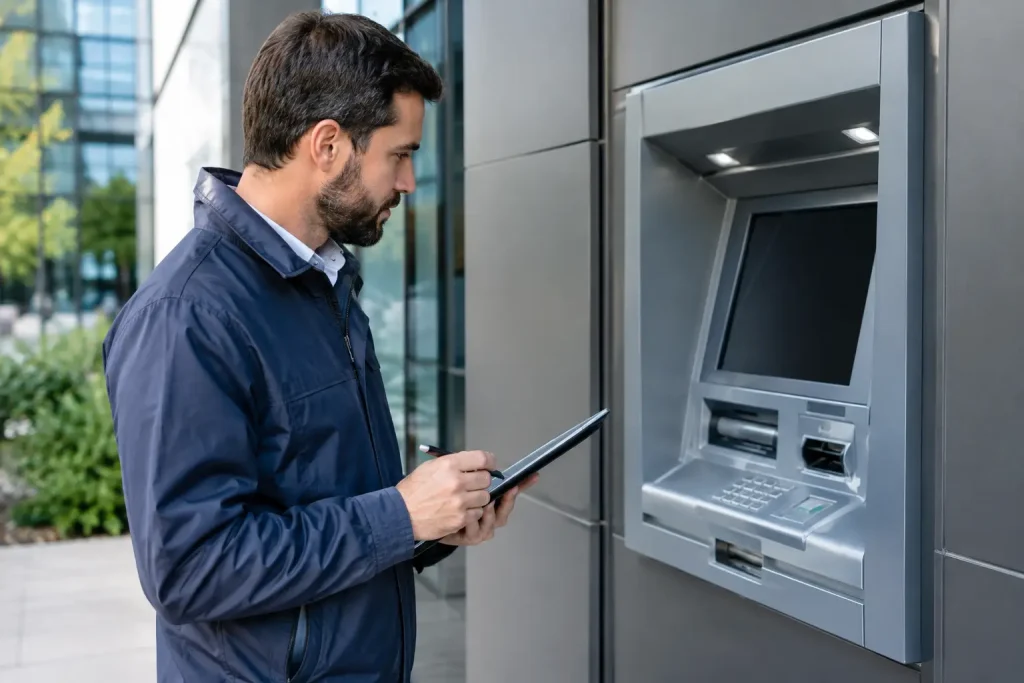
This is particularly relevant in mixed fleets. Older ATMs may lack suitable camera placement, processing headroom, modern operating systems, or practical upgrade paths. Retrofitting can be possible, but the cost is not limited to adding a peripheral. Operators must validate driver compatibility, application behavior, enclosure modifications, power requirements, accessibility, and the impact on service procedures.
The field conditions that shape performance
Biometrics are often evaluated in controlled demonstrations. ATM deployments operate in parking lots, vestibules, transit settings, retail locations, and branch exteriors. Those environments expose the difference between a successful proof of concept and a supportable production service.
For facial recognition, low light and direct sun can reduce image quality. A camera placed too high or too low creates repeated alignment failures. Dirt on a lens, condensation, vandalism, or an obstructed field of view can degrade performance without producing an obvious terminal fault. Service organizations need diagnostic signals that distinguish a customer mismatch from a camera health issue.
Fingerprint deployments have their own maintenance profile. Reader surfaces require inspection and cleaning, while physical damage may not be evident from a standard transaction log. False rejects can rise during cold or dry conditions, and some customer populations may have fingerprints that are difficult to capture consistently. The appropriate performance measure is not only false acceptance rate. It is the combined rate of successful completion, customer abandonment, fallback use, and avoidable dispatches.
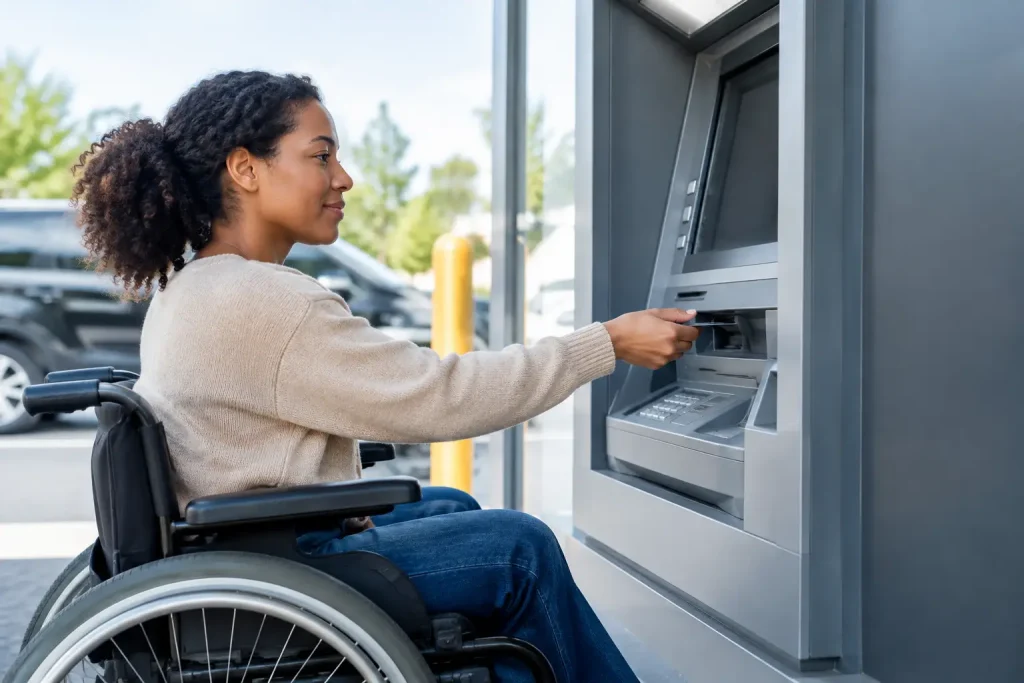
Accessibility also belongs in the deployment plan, not the compliance review after installation. A system that assumes a customer can stand at a fixed distance, position their face unaided, or place a hand precisely on a sensor may exclude users with disabilities or create long transaction times. User interface instructions must be brief, clear, and available at the point where the customer needs them. Audio guidance and a non-biometric route may be necessary in many installations.
Fallback design is a core control
No biometric system should become a single point of failure for customer access. A camera can fail, a network connection can drop, an enrolled template may not match, or the customer may decline biometric use. In each case, the terminal needs an approved alternative that preserves both access and security.
That alternative might be card and PIN, a mobile-authenticated one-time code, assisted verification through a contact center, or a different channel altogether. The choice depends on the transaction, risk level, and institution policy. What matters is that the fallback is designed before rollout and tested under realistic fault conditions.
Fallback paths can create their own fraud exposure. If a criminal can deliberately obstruct a camera and force a weaker authentication method, the biometric control adds less value than expected. Risk rules should recognize repeated failures, sensor-health anomalies, and unusual attempts to invoke an alternative path. Monitoring should separate genuine customer usability problems from patterns that suggest bypass attempts.
Privacy and consent will determine adoption
Biometric data carries a different level of sensitivity from a card number or device identifier. Customers may accept a biometric step when it is clearly tied to fraud reduction or convenient account access, but they will reasonably question vague collection practices or indefinite retention.
Financial institutions need a specific policy for consent, disclosure, retention, sharing, and deletion. Requirements vary by jurisdiction, and legal reviews should address state biometric privacy laws as well as applicable banking, consumer-protection, and data-security obligations. A vendor contract alone does not resolve these responsibilities. The institution operating the customer channel still needs to understand the data flow and decision rights.
Clear choice matters operationally as well as legally. A customer who opts out should not be stranded at the terminal. Institutions should explain whether the biometric is stored by the bank, held in a device-bound mobile credential, or used only for a one-time verification. Broad claims that biometric data is “never stored” are often inaccurate once logs, templates, or third-party identity services are considered.
Measuring value beyond fraud reduction
The business case for self service biometrics should include more than a projected reduction in unauthorized withdrawals. Operators should measure transaction duration, completion rate, abandonment, false rejects, help-desk contacts, truck rolls, peripheral replacement rates, and the percentage of customers using the preferred authentication path.
Fraud outcomes also need careful interpretation. A lower loss figure may reflect changing criminal tactics, transaction limits, or broader account controls rather than the biometric layer alone. Baseline measurements, controlled pilots, and location-level comparisons provide a more useful view than a single estate-wide number.
For many institutions, the strongest near-term use case may be targeted deployment. High-risk transactions, cardless withdrawal programs, and locations with persistent card-skimming exposure can provide clearer operational rationale than universal biometric authentication. A limited rollout also gives field teams time to establish cleaning schedules, replacement procedures, remote monitoring thresholds, and training material before the technology reaches a larger fleet.
The practical test is straightforward: biometric authentication should reduce risk or customer effort without creating a new maintenance burden that erodes availability. The best deployments will treat the biometric device as part of the ATM service ecosystem, with defined ownership, measured performance, and a credible path for the moments when the technology does not recognize the person standing at the terminal.