


How to Reduce ATM Cashout Incidents in Your Fleet


A cashout event is rarely the result of one failed control. It is usually the point at which an exposed ATM endpoint, a preventable field-process gap, and delayed detection meet. For operators managing dispersed fleets, the practical task is to reduce ATM cashout incidents by treating the terminal, its network connection, its cash-handling components, and the service workflow as one operating environment.
The term itself needs precision. In the ATM sector, cashout commonly refers to jackpotting or other attacks that cause an ATM to dispense cash without a valid customer transaction. The method may involve malware, unauthorized commands sent to a vulnerable application stack, or physical access to internal components. It should not be confused with ordinary cash disputes, dispense errors, or customer fraud claims, although weaknesses in reconciliation and incident handling can make all of those losses harder to resolve.
Why ATM cashout incidents persist
Cashout attacks benefit from uneven fleet conditions. A bank may have a current security standard, but its installed base can include different terminal generations, operating systems, middleware versions, communications paths, and service histories. A control that works well at a newly deployed drive-up unit may be absent, misconfigured, or operationally impractical at an older off-premises machine.
Attackers look for those variations. Their objective is not necessarily to defeat the strongest terminal in the fleet. It is to find a device with a known software exposure, an accessible cabinet, weak network segmentation, or an unattended state that provides enough time to act. This is why fleet averages can be misleading. A high overall patch-compliance figure does not offset a small group of machines that have fallen outside the managed baseline.
There is also an operational constraint. ATMs must remain available, cash must be replenished, and field teams need access to diagnose faults. Excessively restrictive controls can increase service times or create workarounds. The most effective programs build security requirements into routine maintenance rather than treating them as a separate set of instructions that technicians must remember under pressure.
Reduce ATM cashout incidents with layered controls
No single security product can provide a complete answer. A useful control model separates prevention, detection, containment, and recovery, then assigns an accountable owner to each area. That approach makes gaps visible before an incident tests them.
Establish a defendable terminal baseline
Every terminal should have a documented and enforced configuration baseline. At minimum, that baseline should define the approved operating system build, ATM application and middleware versions, device drivers, endpoint protection settings, permitted services, local account policies, and approved communications configuration. The objective is not paperwork. It is the ability to determine quickly whether a terminal is operating as intended.
Application allowlisting is particularly relevant on ATM endpoints because the expected software set is narrow. A terminal should run the authorized ATM software and approved support tools, not arbitrary executables introduced through removable media, a service interface, or a compromised administration path. Hardening should also remove or disable unused ports, services, and default accounts.
Patch management requires more than a monthly target. Operators need a risk-based exception process for terminals that cannot be patched immediately due to compatibility testing, end-of-life dependencies, or scheduled availability constraints. Each exception should have a compensating control, a defined owner, and an expiration date. Permanent exceptions are usually unmanaged risk described with a different label.
Protect the route to the ATM
A well-hardened terminal can still be exposed through its communications path. ATM networks should be segmented from general corporate traffic and from vendor support environments. The terminal should communicate only with required hosts and services, using explicit rules rather than broad network access.
Remote administration deserves close attention. Shared credentials, unrestricted remote desktop access, and persistent vendor connections make investigations difficult and expand the attack surface. Stronger practice uses named accounts, multifactor authentication where the architecture supports it, limited privileges, session logging, and access granted only for a defined support window.
Encryption protects data in transit, but it does not replace access control. Operators should validate certificates, key rotation procedures, and the configuration of any remote-management channel. They should also know which third parties can reach the fleet, what systems those parties use, and how access is withdrawn when staff or contracts change.
Secure the physical service path
Cashout risk is not exclusively a network problem. Attackers may attempt to access the cabinet, connect to internal ports, manipulate the dispenser, or replace components. The exact exposure depends on the terminal design, deployment location, cabinet condition, and the time an attacker can work without interruption.
Physical controls need to align with field reality. That includes restricted key and combination management, auditable access records, tamper detection where supported, inspection of internal cables and ports, and verification that cabinet locks, fascia, and security seals remain intact. A technician arriving to clear a jam should be able to recognize when a terminal differs from its approved physical configuration.
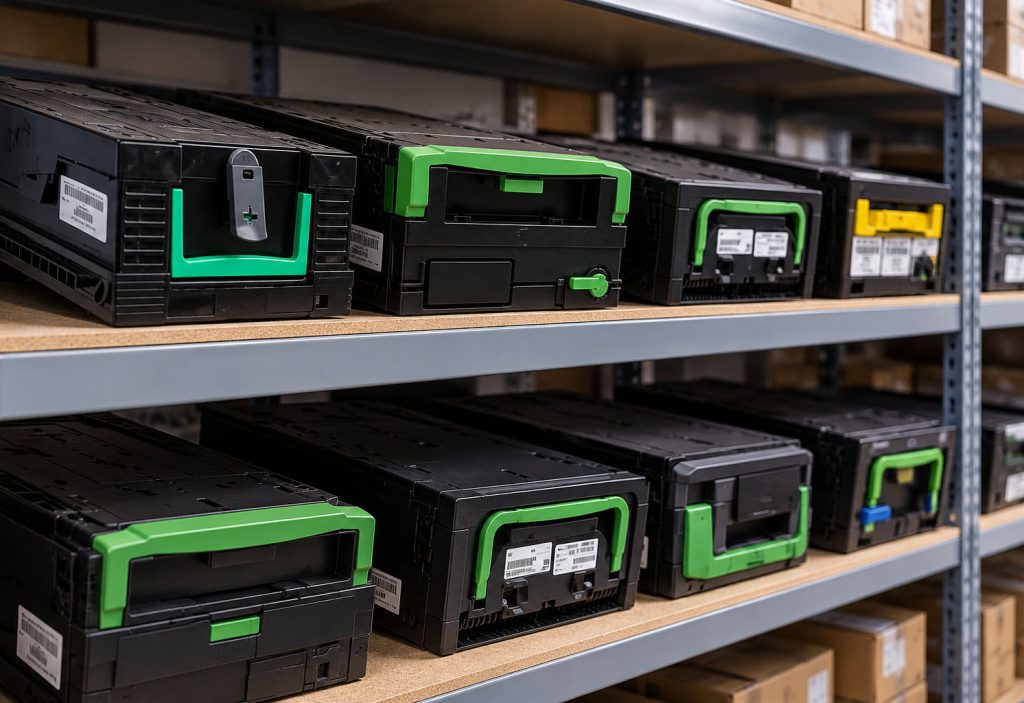
Service organizations and financial institutions should be explicit about chain of custody for keys, removable media, replacement parts, and cash cassettes. A control is weak if a service visit can be completed with no reliable record of who accessed the terminal, what work was performed, and whether the terminal passed security checks before being returned to service.
Detection must focus on cash behavior, not only malware
Endpoint alerts matter, but cashout attacks can develop faster than a conventional security review cycle. Monitoring should combine endpoint telemetry with transaction, dispenser, and cash-management signals. A terminal dispensing repeated maximum-value notes, producing an unusual concentration of declines and dispenses, or reporting cassette movement inconsistent with transactions should generate a review path that reaches operations quickly.
The useful threshold varies by deployment. A busy airport ATM has a different transaction pattern from a rural branch machine. Static rules alone can create false positives, while overly broad thresholds miss meaningful changes. Operators should establish normal behavior by terminal type and location, then tune alerts using actual incident and service data.
The response workflow matters as much as the alert. Monitoring teams need clear authority to place a terminal out of service, restrict remote access, or escalate to the cash operations team. If an alert waits for several manual approvals while a machine continues dispensing, the detection investment has limited value.
Reconcile faster after suspicious activity
Cash reconciliation is often treated as a back-office control, but it is also an incident-detection mechanism. Differences between electronic journals, host authorization records, dispenser counters, cassette balances, and physical cash counts should be investigated according to risk and elapsed time. A discrepancy that remains unresolved until the next scheduled cash visit can obscure the scale and timing of a cashout event.
This does not mean dispatching armored service for every variance. It means defining thresholds that account for terminal risk, cash levels, transaction volume, and security alerts. High-risk exceptions should trigger a timely review of journals, camera coverage where available, terminal logs, and recent service activity.
Make field operations part of the security program
The field technician is often the person most likely to notice altered hardware, a damaged lock, an unfamiliar device, or unexpected software behavior. Yet technicians cannot act effectively if inspection procedures are vague or if raising a security concern slows the job without clear support from operations.
A practical service checklist should include security observations alongside conventional fault-repair tasks. It should require technicians to confirm cabinet integrity, inspect relevant internal connections, account for removable media, verify the terminal returns to its approved state, and document anomalies with enough detail for a security team to assess them. The process should distinguish normal wear from signs of interference so that every cosmetic defect does not become a major escalation.
Training must also address social engineering. Attackers may present themselves as contractors, request access during busy periods, or exploit uncertainty over local procedures. Staff need a simple verification route and permission to pause work when identity, authorization, or terminal condition is in doubt.
Test the response before a cashout occurs
A written incident plan is useful only if the teams responsible for security operations, ATM management, cash logistics, field service, network support, legal, and law enforcement liaison can execute it under time pressure. Tabletop exercises should walk through realistic scenarios: a terminal produces abnormal dispense patterns, a technician finds an unauthorized device, or multiple ATMs show signs of coordinated compromise.
The exercise should answer practical questions. Who can disable a terminal? How is cash exposure estimated? What evidence is preserved before power is removed or a component is replaced? Which parties receive notification, and who approves external communications? These details often reveal dependencies that were not apparent in a policy document.
Post-incident review should examine more than the immediate technical cause. It should identify why the terminal remained exposed, whether monitoring created an actionable alert, how long containment took, and what procedure allowed or failed to prevent the event. The most valuable corrective actions are specific: retire a vulnerable image, change a remote-access workflow, improve a service inspection, or tighten the time allowed for resolving a high-risk cash variance.
Cashout prevention is ultimately a discipline of reducing opportunity and shortening response time. Fleets with current baselines, controlled service access, meaningful cash monitoring, and practiced escalation procedures give attackers fewer weak terminals to target and operations teams a better chance to stop losses before they compound.