

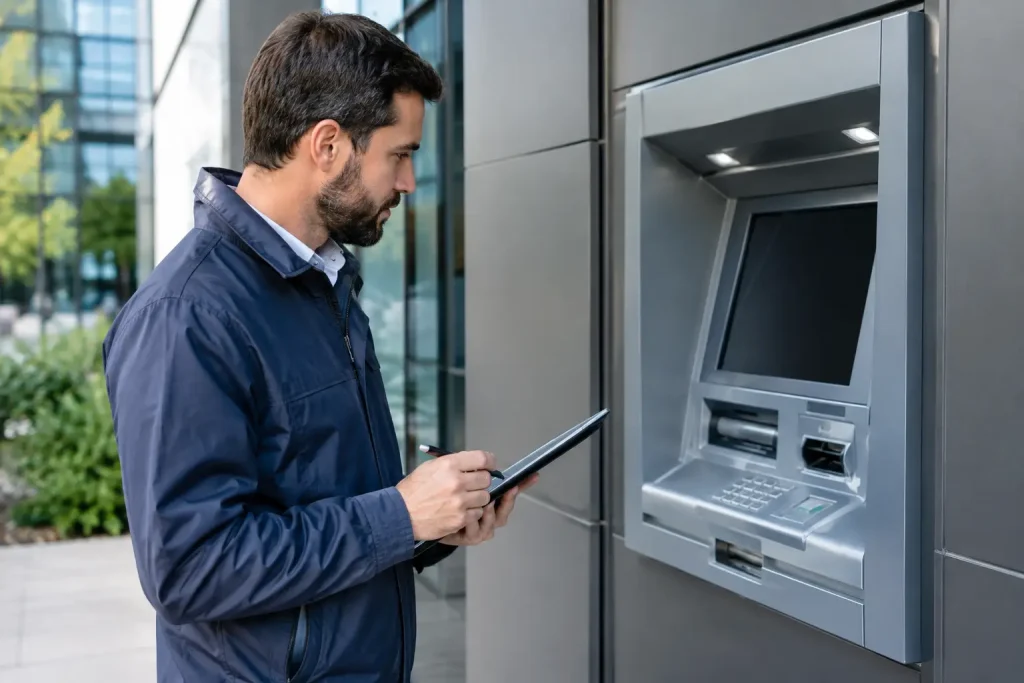
How to Improve Branch Self-Service


A branch can spend heavily on new self-service hardware and still see lines at the teller line, low kiosk adoption, and repeated customer handoffs to staff. In most cases, the problem is not whether self-service belongs in the branch. The problem is how to improve branch self-service in a way that matches traffic patterns, transaction demand, staffing realities, and service expectations.
For banks and credit unions, branch self-service now sits at the intersection of channel strategy and day-to-day operations. It is no longer just about adding an advanced ATM or placing a tablet stand in the lobby. Performance depends on whether the devices are easy to find, easy to trust, easy to complete, and consistently available when customers need them.
What usually goes wrong in branch self-service
Many branch programs underperform for reasons that are operational rather than strategic. A machine may support cash recycling, account servicing, card issuance, or assisted video sessions, yet usage remains low because customers are unsure what the device actually does. In other cases, the user interface may be technically capable but poorly sequenced, with too many screens, inconsistent prompts, or transaction flows that break customer confidence.
Placement is another common issue. Institutions sometimes position self-service equipment where it fits the floorplan rather than where it fits customer behavior. A kiosk placed out of sight, too close to a staffed desk, or in a location with limited privacy tends to attract less use. Customers often decide within seconds whether they will approach a device or head to a person.
Uptime is equally decisive. A self-service channel that is unavailable, cash-out, receipt-out, or intermittently slow trains customers not to rely on it. Once that trust is lost, adoption becomes much harder to rebuild. From an operations perspective, self-service is judged less by feature set than by consistency.
How to improve branch self-service without adding friction
The most effective starting point is to define what the branch wants self-service to absorb. That sounds obvious, but many deployments still treat self-service as a general-purpose convenience layer rather than an operational workload tool. If the goal is to shift simple cash withdrawals, then the design criteria are different than if the goal is to handle mixed transactions such as deposits, transfers, bill payments, statement printing, or account servicing.
This matters because transaction mix drives everything else – hardware selection, software flow, staffing support, cash forecasting, and service-level expectations. A branch with high deposit volume may benefit from automation that reduces teller handling and back-office balancing time. A branch focused on routine transactions and after-hours access may get more value from extended vestibule or exterior access with strong remote monitoring. There is no single model that fits every network.
Once the transaction priorities are clear, the next step is to remove avoidable complexity. Good branch self-service does not ask customers to learn a new system from scratch. It mirrors familiar banking actions, uses plain prompts, and keeps decisions to a minimum. If a deposit flow requires too many confirmations, or if a user cannot tell early in the process whether a check, cash, or mixed deposit is supported, abandonment rates go up.
That is one reason interface testing matters more than many institutions expect. Not testing only for software defects, but for hesitation points. Where do users pause? Where do they call for help? Which screens trigger uncertainty? Those details often reveal more than raw transaction counts.
Device placement is part of the service model
A self-service device is not just a machine. In branch terms, it is also a service point. That means location should be planned with the same care as a teller pod or concierge desk.
High-performing branches usually make self-service visible from the entrance and legible at a distance. Customers should be able to tell what the device is for before they reach it. Clear signage helps, but physical layout matters more. If the path is awkward, if privacy feels limited, or if first-time users feel exposed while struggling through a transaction, they will default to staff.
There is also a staffing dimension. Self-service adoption often improves when employees can greet customers and redirect suitable transactions during the early phase of deployment. That does not mean stationing an employee at the machine indefinitely. It means using staff intentionally to build familiarity and confidence. Over time, that support can taper as repeat users become comfortable.
Branches that skip this transition period sometimes conclude that customers simply prefer tellers. In reality, many customers prefer the fastest trusted option. Trust has to be built.
Uptime and cash availability are the real adoption drivers
Any discussion of how to improve branch self-service eventually returns to reliability. A branch may promote self-service heavily, but if the device is down, short on cash, unable to accept deposits, or waiting on a service call, customers revert to the counter immediately.
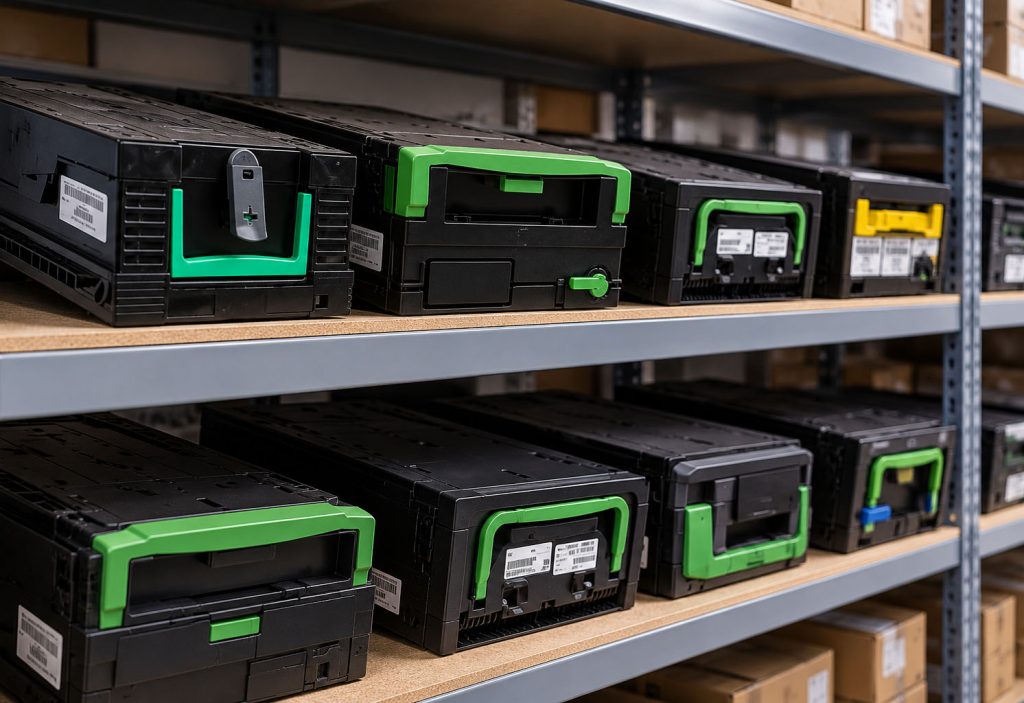
This is where branch self-service overlaps directly with ATM fleet management discipline. Monitoring, first-line maintenance, cash forecasting, software patching, and parts strategy all shape the branch experience. Institutions that separate branch channel planning from device operations often create avoidable failures. The customer sees one service point, even if different teams manage the hardware, software, network, and branch staff.
Cash recyclers bring a good example of this trade-off. They can improve efficiency and reduce manual cash handling when transaction patterns are suitable and replenishment strategy is well managed. But recyclers are not self-optimizing. Poor note mix planning, inconsistent branch usage, or weak service support can erode the benefits quickly. In some branches, a simpler cash-dispense and deposit model may prove more reliable.
The same principle applies to multifunction kiosks. More features can create more value, but they can also introduce more failure points, longer transaction times, and heavier support requirements. The better decision is not always the most feature-rich endpoint. It is the one the branch can operate consistently.
Software design should reflect branch reality
Branch self-service software is often evaluated on capability lists, but branch teams live with transaction completion rates. That gap matters. A long feature inventory has limited value if customers cannot navigate the flow quickly or if staff have to intervene repeatedly.
The strongest implementations usually focus on three things: clear transaction paths, consistent error handling, and continuity across channels. A customer who uses mobile banking, online banking, and branch self-service should encounter similar terms, familiar prompts, and predictable next steps. When channels feel disconnected, branch self-service starts to feel like a special system rather than part of the bank.
There is also a practical case for reducing optionality on the front end. Too many choices at the opening screen can slow experienced users and confuse occasional users. Branch transactions are often routine. The software should respect that.
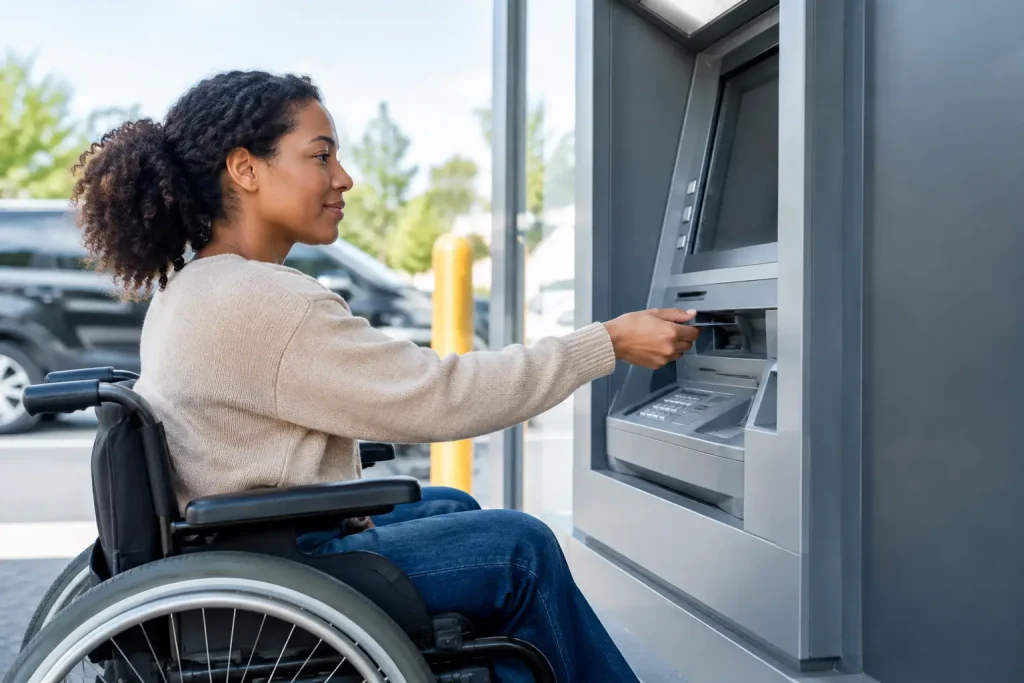
Accessibility deserves the same operational attention. Screen readability, input timing, voice guidance, physical reach, and card handling all affect whether the device serves the full branch population. Accessibility problems are not edge cases. They are adoption barriers.
Measure branch self-service with the right metrics
A common mistake is to judge success by deployment count or total transactions alone. Those numbers matter, but they can hide weak performance. A branch may post respectable transaction volume while still generating high staff assist rates, repeated abandonment, or low use of targeted functions.
More useful metrics include assisted versus unassisted completion, repeat usage by transaction type, device uptime during peak hours, average time to restore service, and migration of routine teller work. Looking at branch-specific patterns is especially important. One location may need better signage and staff coaching, while another has a service reliability issue or a mismatch between device capabilities and local transaction demand.
It also helps to review self-service data alongside labor and operational data. If teller queues remain unchanged after a major self-service deployment, the issue may not be customer resistance. It may be that the device mix does not match the branch workload, or that staff are not consistently steering the right transactions to the right channel.
Improvement is usually iterative, not dramatic
The most durable gains in branch self-service rarely come from one major intervention. They come from a series of smaller corrections: refining transaction menus, improving signage, adjusting cash strategy, changing machine placement, retraining staff, tightening service response, or removing a troublesome feature that adds more complexity than value.
That is especially true in mixed branch networks. Urban commuter branches, suburban advisory branches, in-store formats, and lightly staffed locations do not carry the same transaction profile. Standardization still matters, but standardization should not mean forcing identical self-service models into very different operating environments.
For banks, credit unions, and service providers, the practical question is not whether self-service belongs in the branch. It is whether the branch has been designed around the actual work self-service is expected to do. When the answer is yes, adoption tends to follow. When the answer is no, even good equipment can look ineffective.
The branches getting the most from self-service are not necessarily the ones with the most technology on the floor. They are the ones where channel design, device management, software flow, and staff behavior point in the same direction.