
ATM Terminal Driving Software and Fleet Control

An ATM can be mechanically sound, connected to the network, and running a current application, yet still fail a transaction because the software layer between the application and its devices is not behaving as expected. ATM terminal driving software sits in that layer. It determines how the application communicates with the dispenser, card reader, PIN pad, receipt printer, deposit unit, sensors, and other terminal hardware.
For operations teams, this software is not a background component to be considered only during an installation. It affects first-line resolution, application upgrade risk, hardware replacement options, security controls, and the amount of vendor-specific knowledge required to support a fleet.
What terminal driving software actually does
ATM terminal driving software is commonly described as middleware or a device-services layer. Its basic role is to translate application requests into commands the physical devices can execute, then return device status, transaction results, and exceptions to the application.
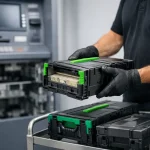
When an ATM application requests a cash withdrawal, for example, it does not usually communicate directly with motors and sensors in the cash dispenser. It sends a structured request through a standard or proprietary interface. The driver then instructs the dispenser to present the requested notes, monitors the outcome, reports conditions such as a reject-bin event or partial dispense, and makes relevant status information available to the application and service tools.
The same pattern applies across the terminal. A card reader driver reports card capture, read errors, shutter status, and media retained events. A printer driver handles receipt presentation and paper-state reporting. A PIN pad integration enables the application to invoke secure functions without exposing sensitive cryptographic operations to the broader software stack.
This boundary matters because an ATM is not a single device. It is a collection of devices with different failure modes, firmware dependencies, security requirements, and replacement cycles.
Standards help, but do not eliminate variation
In much of the installed ATM base, device access has been built around the CEN/XFS framework, often referred to simply as XFS. It gives applications a common model for requesting services from components such as cash dispensers, card readers, printers, and PIN pads. The goal is to reduce the need for an application to be rewritten for every terminal configuration.
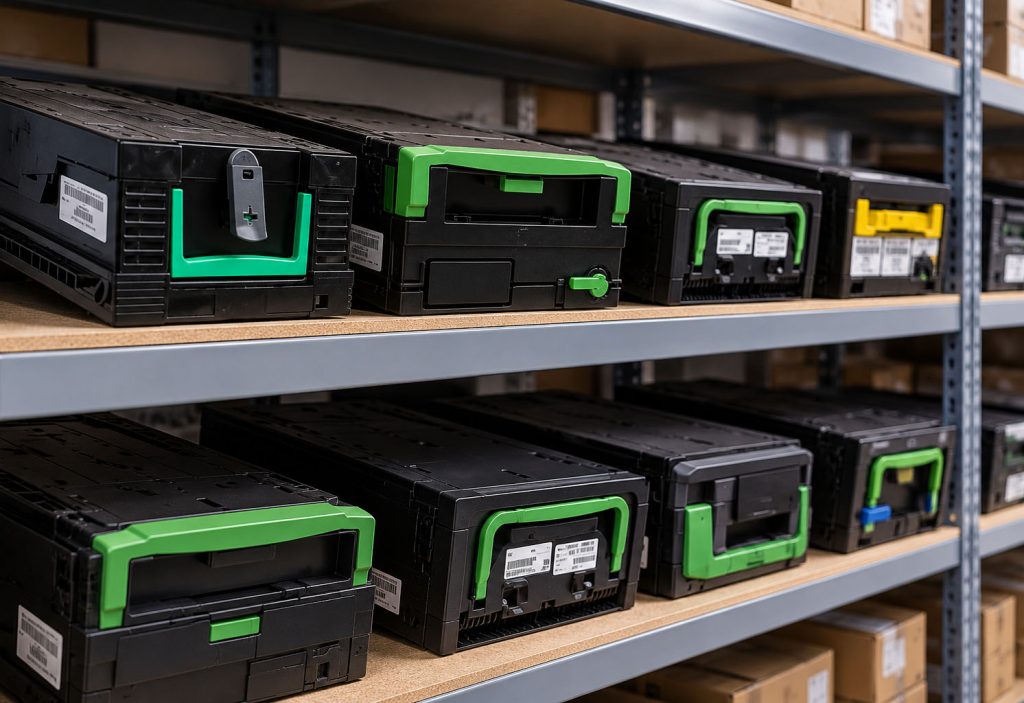
That goal has limits. XFS standardizes many functions, but manufacturers can expose proprietary capabilities and extensions. Two dispensers may both support a standard dispense command while differing substantially in cassette configuration, cash-present behavior, currency handling, diagnostics, or the status detail returned after an error. A generic application interface does not make the underlying hardware identical.
This is why teams evaluating terminal software should distinguish between nominal compatibility and operational compatibility. A terminal may launch, process a basic withdrawal, and meet a formal interface requirement. That does not prove that advanced functions, error handling, journaling, deposit workflows, or remote diagnostics behave consistently across the fleet.
Newer architectures, including XFS4IoT, are intended to support more modern, service-oriented device communication and better fit web-based software environments. The direction is significant, especially for institutions planning longer-term software modernization. But adoption depends on the application provider, terminal manufacturer, device support, certification requirements, and the operational cost of running mixed generations of software. For most fleets, this is an evolution rather than a quick replacement project.
Why the driver layer shapes field operations
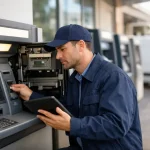
Field teams experience terminal driving software through symptoms rather than architecture diagrams. A cash dispenser may report an error that is too broad to guide a technician. A replacement printer may require a different service configuration. A software update may change how a terminal reports an open door, a low-paper condition, or a card-reader fault to the monitoring platform.
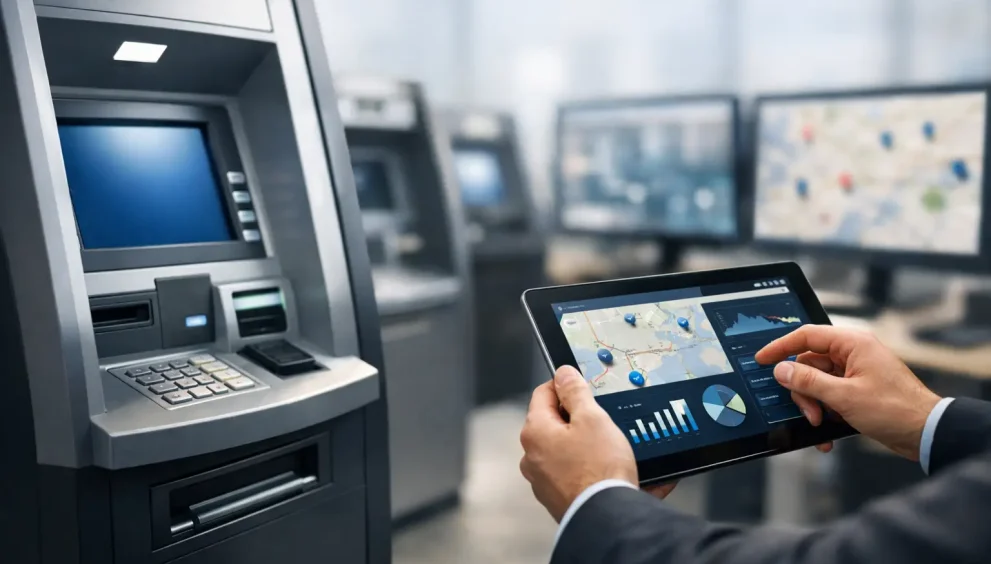
The quality and consistency of device status reporting can materially affect dispatch decisions. If a monitoring system receives a precise fault code and useful device state, a service provider can send a technician with the appropriate part and instructions. If it receives only an out-of-service state, diagnosis begins at the terminal. That increases visit time, repeat dispatches, and avoidable downtime.
Journaling is another practical example. Electronic journals are valuable during dispute research, cash balancing, and failure analysis only when hardware events are clearly recorded and correlated with transaction activity. The driving layer often supplies much of that device-level evidence. Differences in event timing, terminology, and detail can complicate centralized investigation in a multivendor environment.
A mature support model therefore needs more than a list of driver versions. It needs documented mappings between device events, application messages, monitoring alerts, and field-service actions. Those mappings should be validated after significant application, driver, firmware, or hardware changes.
Security responsibilities are shared
Terminal driving software plays a role in security, but it is not a complete security control by itself. The driver layer can support secure PIN entry device functions, card reader controls, device authentication methods, and status reporting relevant to tamper or fraud conditions. It also influences how terminal applications access security-sensitive hardware.
At the same time, security depends on the wider environment: operating system hardening, application controls, network segmentation, cryptographic key-management processes, software signing, patch governance, physical controls, and monitoring. Treating the device driver as the security boundary creates blind spots.
Change management deserves particular attention. A driver update can be required to address a defect, improve compatibility, or support a new device firmware level. It can also introduce an unexpected regression in a transaction flow that was stable for years. Banks and deployers should assess updates against representative terminal configurations, not merely a clean test unit with standard hardware.
The difficult cases tend to involve exceptions: retained cards, cash-present timeouts, diverted notes, device resets during a transaction, network recovery, printer shortages, and service-mode transitions. These scenarios are where software layers reveal whether they provide reliable recovery behavior and usable evidence for operators.
Assessing ATM terminal driving software in a modernization project
A modernization decision should start with the current fleet, not with a generic claim of standards compliance. Inventory the device mix, operating systems, application versions, firmware levels, terminal age, and peripheral options. The objective is to identify where a new driver strategy reduces complexity and where it creates a new compatibility burden.
The following questions are especially useful during technical and operational review:
- Which devices and functions are supported through standard interfaces, and which rely on proprietary extensions?
- What event detail is available to the application, electronic journal, and remote-monitoring platform?
- How are driver, firmware, and application versions qualified together before deployment?
- Can technicians access meaningful diagnostics without using multiple vendor-specific tools?
- What happens when a device is replaced with a newer model or an equivalent component from another supported platform?
- Which transaction exceptions have been tested under realistic network, cash, and customer-interaction conditions?
These questions expose a common trade-off. A highly standardized interface can simplify application portability, but it may not expose every diagnostic or performance feature available from a specific device. Deeper vendor integration can provide richer control and fault detail, but it can also increase switching costs and narrow the range of compatible hardware. Neither approach is automatically preferable. The appropriate choice depends on fleet scale, hardware diversity, service model, and the institution’s tolerance for platform dependency.
Treat qualification as an operating discipline
Software qualification is often framed as a project gate before deployment. In ATM operations, it should be a continuing discipline. Peripheral firmware changes, operating system patches, application releases, changes to encryption-related components, and replacement hardware can all alter behavior at the device-services layer.
A useful qualification program maintains a test matrix that reflects the production fleet, including older terminals that remain operationally important. It also defines acceptance criteria beyond successful transactions: device recovery, journal accuracy, alert quality, remote command behavior, settlement evidence, and technician diagnostic access.
The result is not necessarily fewer software versions. Large fleets may need controlled variation for a period of time. The value comes from knowing which combinations are approved, why they are approved, and what operational limits apply to each one.
Terminal driving software rarely receives attention when everything works. It becomes highly visible when a routine hardware change turns into a transaction exception, a monitoring alert lacks context, or a software release behaves differently across terminal models. Organizations that treat this layer as a managed part of their infrastructure are better positioned to make hardware and software changes without transferring avoidable complexity to the field.