




ATM Cassette Swap Procedures That Protect Uptime

A cassette swap can take only a few minutes at the terminal, yet ATM cassette swap procedures affect far more than a service visit. They determine whether the machine returns to service with the right denominations, whether cash accountability remains intact, and whether a small loading error becomes a balancing exception, customer dispute, or avoidable truck roll.
For operators managing mixed fleets, the objective is not simply to exchange cassettes quickly. It is to execute a controlled handoff between cash operations, field service, the ATM application, and the host or monitoring environment. The details vary by manufacturer, deployer policy, cassette type, and cash-in-transit model. The core operational discipline does not.
Start with custody, not the cabinet
A reliable swap begins before a technician or cash handler opens the ATM. The work order should identify the terminal, service reason, expected cassette configuration, assigned cassette identifiers, and any known terminal conditions. That baseline matters because a cassette is not just a physical container. It is a controlled cash asset with a denomination assignment, inventory record, and, in many deployments, a lifecycle history.
Dual control requirements, route procedures, key or electronic-lock permissions, and chain-of-custody rules should govern access to the vault. Organizations should avoid treating a low-cash replenishment, a full cassette exchange, and a suspected dispense fault as identical events. Each may require a different level of documentation, inspection, and post-service testing.
The field team also needs clarity on who owns the terminal state during service. If the ATM remains logically available while its cassettes are being changed, host monitoring may interpret normal service activity as a fault or a cash-out condition. Taking the terminal out of service through the approved channel creates a clean operating boundary and prevents customer transactions from colliding with the work.
Verify the cassette plan before installation
The most expensive cassette errors are often basic configuration mistakes: a $20 cassette placed in a position configured for $50 notes, an incorrect currency cassette installed after a route change, or a cassette from another terminal introduced without proper records. Mechanical compatibility does not prove operational compatibility.
Before the cabinet is opened, personnel should compare the planned cassette assignment with the terminal’s configured logical cassette mapping. This includes denomination, cassette position, currency where relevant, capacity assumptions, and any recycle or reject-cassette role. On recycler-equipped terminals, the distinction between dispense-only, deposit, recycle, and escrow functions can make the configuration more complex than on a conventional cash dispenser.
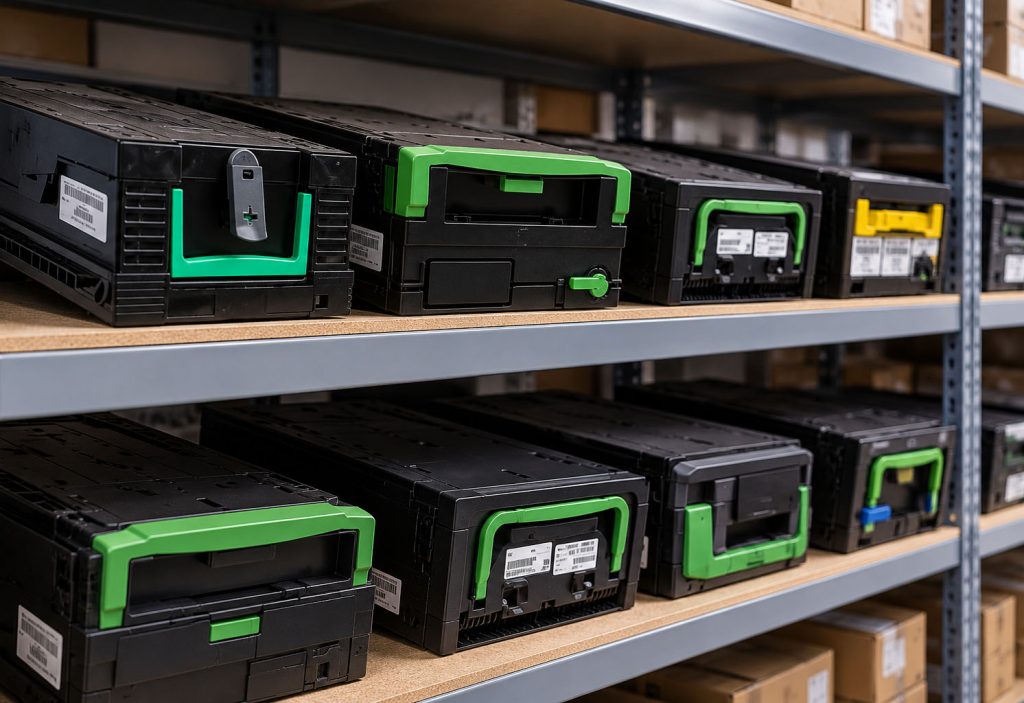
Cassette labels and barcodes are useful controls, but they are not a substitute for verification. Labels can be damaged, duplicated, or associated with outdated route records. The strongest process uses at least two independent checks: the cash operation’s cassette record and the terminal or fleet-management configuration.
This is also the point to inspect the physical condition of incoming cassettes. A cracked housing, worn shutter, damaged latch, loose pressure plate, or visibly contaminated note path can create repeat jams after an otherwise correct swap. A cassette that has been dropped or forced into a vault should be removed from service for inspection rather than sent back into the route cycle.
Execute the swap in a controlled sequence
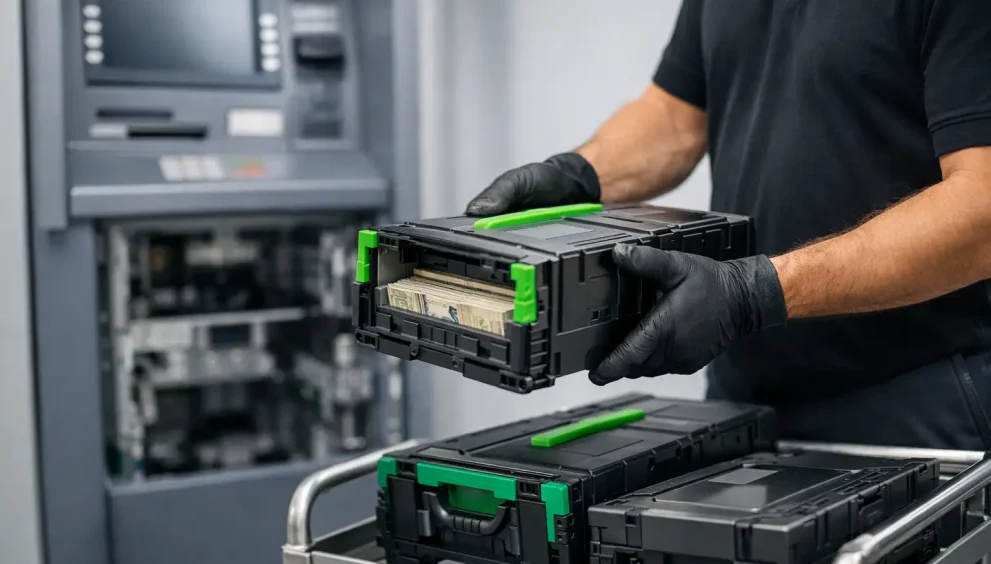
Once authorized access is established, the terminal should be placed in the approved service state and the vault opened according to the institution’s security procedures. The outgoing cassette must be positively identified as it is removed. Its position, identifier, reported count, and reason for removal should align with the work order and cash records.
The incoming cassette should be installed only in its designated position. Personnel should confirm that it seats fully, latches correctly, and does not encounter unusual resistance. Forcing a cassette can damage guides, connectors, sensors, or the cassette itself. That may not appear immediately in a basic test, but it can lead to intermittent faults during the next customer transaction cycle.
Where the terminal design permits it, inspect the note path and cassette bay for loose notes, debris, shutter damage, and signs of prior misfeeds. This is particularly relevant after repeated partial-dispense claims, cash-present errors, or a reported cassette transport fault. A swap may restore service temporarily while leaving the underlying mechanical condition unresolved.
For conventional dispensers, cassette replacement is relatively linear. For recyclers, the process may require greater care around remaining notes, recycling compartments, deposit notes, and the terminal’s cash-unit status. An organization should not impose a single generic procedure across both device classes if the controls needed for each differ materially.
Confirm the terminal recognizes what was installed
Closing the vault is not the end of the procedure. The ATM must recognize the new cassette state correctly. Depending on the platform and service model, this can involve a cash-unit initialization, electronic journal entry, local diagnostic check, host update, or a combination of these activities.
The key question is whether the terminal’s recorded cassette identity, denomination, and count assumptions match the physical cassette now in the machine. A discrepancy should be resolved before the ATM is returned to customer service. Continuing with a mismatch can produce incorrect settlement data even if the machine appears operational.
A controlled test dispense is often the most useful functional check, but it should follow the operator’s approved test method and reconciliation rules. The test needs to confirm more than note delivery. It should demonstrate that the correct denomination is selected, notes are presented and retracted correctly if uncollected, and transaction records reach the host as expected.
A single successful dispense does not always clear a terminal with a history of transport errors. If the fault pattern involved double notes, short dispenses, skewed notes, or repeated reject activity, service teams may need to review device diagnostics and recent journal data before declaring the incident closed. The appropriate response depends on the failure mode, terminal age, and whether a known cassette defect has been isolated.
Reconciliation is the control that closes the loop
Cash accountability should be completed as part of the service event, not deferred until the end of a route or shift. The outgoing cassette count, incoming cassette value, residual cash where applicable, test-dispense activity, and terminal counters must feed the organization’s reconciliation process.
This requirement becomes more significant in outsourced service models. A financial institution, cash-in-transit provider, managed service provider, and field technician may each hold part of the operational record. If identifiers and timestamps do not align across those records, investigating a variance becomes slow and expensive.
Electronic journals, transaction logs, cassette scan records, and remote-monitoring events can help establish sequence and accountability. However, data quality is only as good as the field process that generated it. A technician selecting the wrong service reason or a cash handler bypassing a required scan can weaken the audit trail even when the physical cash is correct.
Standardization should allow for exceptions
Fleet operators benefit from a documented, repeatable cassette-swap workflow, especially when multiple service partners work across different ATM makes and generations. Standardization reduces training variability and makes exceptions visible. It should define required verification points, service-state controls, escalation thresholds, and evidence capture.
But standardization should not mean ignoring terminal-specific instructions. OEM guidance, banking security policy, insurance requirements, and local operating rules may impose different steps for a front-load retail terminal, a branch-through-the-wall unit, or a high-volume recycler. Procedures should specify the common control framework while directing personnel to device-specific instructions where needed.
The best measure of a swap process is not average completion time alone. It is the rate of post-service cash exceptions, repeat faults, incorrect-denomination events, and avoidable revisits. A faster route that produces more balancing work or customer-impacting errors is not an efficient route.
A disciplined cassette swap is routine work performed with high consequences in mind. When physical handling, configuration verification, functional testing, and reconciliation remain connected, operators protect both availability and trust in the cash channel.