




Why ATM Deposits Fail Across ATM Fleets

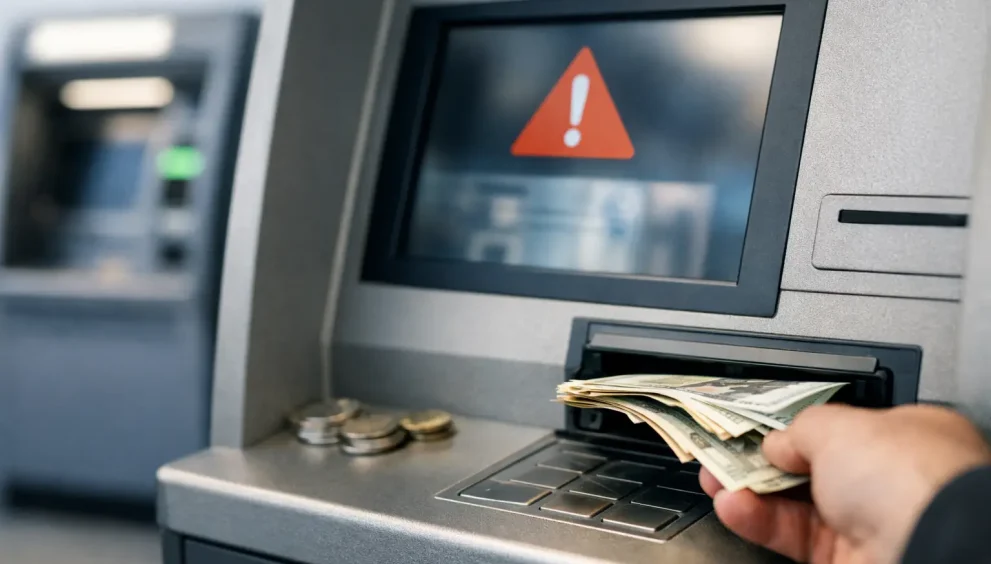
A deposit outage can begin with a single rejected note, but the customer-facing message rarely identifies the real cause. Understanding why ATM deposits fail requires tracing the full transaction path: the acceptor, imaging or validation process, ATM application, network, host authorization, and back-office reconciliation. A fault at any point can reject a deposit, reverse it, place it in an exception queue, or create an imbalance that requires manual investigation.
For fleet operators, the operational priority is not simply restoring deposit availability. It is determining whether the event is isolated, repeatable, device-specific, software-related, or tied to a broader host or network condition.
Why ATM Deposits Fail at the Device Level
Most deposit problems begin in the cash or check handling module. Modern intelligent deposit automation systems perform multiple tasks in a short sequence: they accept media, separate items, validate notes, capture images where applicable, route items to escrow or storage cassettes, and report transaction results to the ATM controller. Each stage introduces a possible failure point.
A common issue is media condition. Folded, wet, torn, heavily worn, or taped currency can fail validation or jam within the transport path. Mixed bundles, foreign objects, receipts, deposit slips, and notes inserted beyond the supported stack size can also stop the acceptance cycle. The same applies to checks that are curled, damaged, incorrectly oriented, or fed in quantities that exceed the unit’s practical handling tolerance.
These are not always customer-use problems. High reject rates may indicate degraded belts, contaminated sensors, worn rollers, poor stacker alignment, or a cassette that is nearing capacity. A device may remain nominally in service while producing intermittent rejects that field teams only see after complaint volume rises.
Transport jams and escrow faults
A transport jam does not necessarily mean the unit is fully out of service. Some systems can clear a partial fault, return media to the customer, and resume operation. Others will place the module out of service until a technician removes trapped items and completes a diagnostic cycle.
Escrow-related errors require closer attention. If media is accepted but cannot be reliably counted, imaged, validated, or routed, the terminal must decide whether to return it, retain it, or suspend the transaction. The correct outcome depends on the device design and the point at which the fault occurs. That is why transaction journals, electronic journal records, reject-bin counts, image records, and physical media reconciliation must be reviewed together.
A recurring transport fault can point to a maintenance issue, but it can also expose a mismatch between equipment capability and the deposit volumes or note quality at a particular location. High-volume retail environments, for example, may generate more worn notes and mixed cash deposits than a branch lobby unit was configured to handle.
Software, Firmware, and Configuration Issues
Hardware can be functioning correctly while the deposit transaction still fails in software. ATM applications depend on configuration data that defines accepted media, denomination handling, deposit limits, account eligibility, image requirements, timeout values, and host message formats. A configuration error can produce a failure that looks like a mechanical reject to the person using the terminal.
Firmware compatibility is a persistent operational concern. An ATM software release, security update, or middleware change may alter how the controller communicates with a cash-in module. If device firmware, XFS components, application logic, and vendor service packs are not validated as a set, the result can be intermittent initialization errors, status-reporting gaps, or failed deposit workflows.
This is especially relevant in mixed fleets. Institutions often operate several ATM generations, different deposit modules, and applications that have been modified over time for specific transaction flows. A change tested successfully on one hardware platform may behave differently on another because of driver versions, peripheral capabilities, or legacy message handling.
Timing matters more than it appears
Deposit transactions involve several time-sensitive handoffs. The ATM waits for a response from the acceptor, sends deposit details to the host, and may need a confirmation before it commits the transaction and stores the media. A timeout at any point can trigger a reversal or an uncertain transaction state.
Aggressive timeout settings can reduce apparent transaction duration but create avoidable failures during periods of network latency or high host utilization. Excessively long settings can leave customers waiting at the ATM and increase the chance that they abandon the transaction. There is no universal setting. The appropriate threshold depends on the device, network design, transaction flow, and the institution’s exception-handling model.
Network and Host Failures Can Interrupt a Valid Deposit
A deposit can be physically accepted and still fail to post because the terminal cannot complete host communication. Network interruptions, switch congestion, DNS problems, certificate issues, host timeouts, and message-format errors can all break the transaction after the customer has already handed media to the machine.
The most difficult cases are uncertain outcomes. The ATM may have accepted cash or a check, but it may not receive a definitive host acknowledgment before a timeout. Depending on application logic, it could retain the media and create an exception, return the media, or record a reversal while the host later receives or processes part of the transaction data.
These events require disciplined investigation. A terminal journal alone may show a communication failure, while host logs may show a late-arriving request or a response that never reached the terminal. Network monitoring may reveal packet loss or a temporary path failure. Without correlating timestamps across systems, teams risk classifying a network issue as a device failure or dispatching a technician to a terminal with no mechanical defect.
Deposit Rules and Fraud Controls Also Cause Failures
Not every failed deposit reflects a malfunction. Institutions apply controls that can intentionally reject or restrict transactions. These include daily deposit limits, account-status rules, card and account relationship checks, item-count limits, suspected counterfeit detection, duplicate check detection, and restrictions on deposits to certain account types.
Fraud and risk policies create a necessary trade-off. Tighter controls can reduce exposure to counterfeit currency, altered checks, mule activity, and deposit fraud, but they can also increase false declines and customer confusion. The field impact is significant when a terminal presents only a generic error message and the customer cannot distinguish between a technical fault and a policy-driven decline.
Clear status coding is valuable here. Operations teams should be able to separate media rejects, transaction declines, host failures, suspected fraud events, and device faults in their reporting. Combining them into a single “deposit failed” category conceals the real operational pattern.
Reconciliation Failures Often Surface After the Transaction
Some deposit failures are not visible at the ATM at all. The transaction appears successful, but an issue emerges during balancing, image review, cash processing, or settlement. A count discrepancy, unreadable check image, missing endorsement data, duplicate item, or mismatch between retained cash and recorded transaction totals can turn a completed deposit into an exception.
For cash-accepting ATMs, physical cash accountability is central. The reported value from the acceptor must reconcile with cassette contents, rejected items, retracts, and any media recovered during service. For check deposits, image quality, CAR/LAR results, endorsement capture, and item transmission status can all affect downstream processing.
A growing exception backlog is often an early warning sign. It may reflect poor media quality at certain sites, incomplete device calibration, a software defect, inconsistent service procedures, or a host integration issue that does not cause obvious terminal outages.
A Better Way to Investigate Deposit Failures
The fastest repair is not always the fastest resolution. Rebooting an ATM may restore service, but it can erase useful evidence or leave an unresolved reconciliation issue. Teams need a repeatable triage process that preserves transaction context before corrective action begins.
Start by classifying the failure. Was media rejected before acceptance? Did the unit retain media and fail before host confirmation? Did the host decline the transaction? Did the transaction post but later enter an exception process? This distinction narrows the investigation immediately.
Then compare the event against device health and fleet patterns. Review peripheral status, error codes, journal sequences, sensor and transport alerts, cassette conditions, firmware versions, network latency, host response codes, and recent changes. A single-site fault after a heavy deposit period suggests a different response than identical failures occurring across multiple terminals after an application release.
Service providers also benefit from defining escalation thresholds. Repeated rejects may justify preventive maintenance before a terminal becomes unavailable. A retained-media event should trigger reconciliation controls as well as a technical response. A broad rise in host timeouts should move quickly to network and application teams rather than generating a wave of unnecessary field dispatches.
The useful measure is not just deposit availability. It is the rate of deposits completed correctly, posted reliably, and reconciled without manual intervention. When teams track that full outcome, they can see where equipment condition, transaction software, network dependencies, and operating procedures are creating avoidable friction.