


When Should Banks Replace ATMs? Key Signals

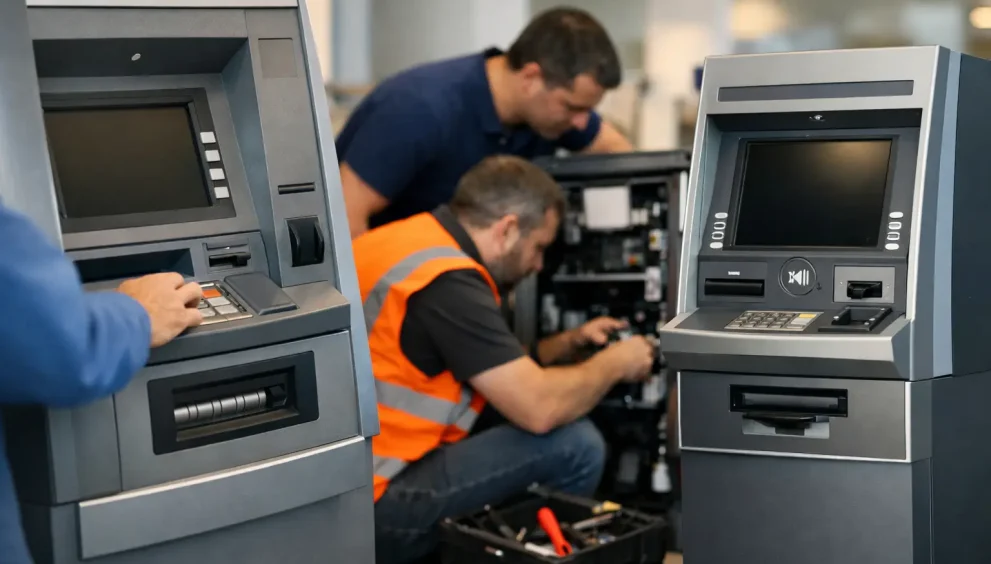
A dispenser that fails twice in a quarter may be a service issue. A dispenser failure pattern across a specific hardware generation, paired with rising parts lead times and declining transaction availability, is a lifecycle decision. That distinction sits at the center of when should banks replace ATMs. The answer is rarely a calendar date or a vendor end-of-sale notice alone. It is a judgment based on operational evidence, risk exposure, and the role each terminal still plays in the network.
For banks with mixed fleets, replacement decisions are particularly difficult. A terminal can be old but dependable, while a newer unit may create disproportionate trouble because of configuration inconsistency, environmental conditions, or an immature software image. Replacing equipment too early wastes usable capital. Waiting too long can turn a manageable maintenance program into an availability, security, and customer-service problem.
When Should Banks Replace ATMs? Start With Fleet Evidence
Age is a useful screening metric, not a replacement trigger. An ATM approaching the end of its expected service life deserves closer review, but chronological age says little about actual condition. A high-volume drive-up unit in an extreme climate may be operationally spent well before a lightly used lobby terminal of the same model. Conversely, a well-maintained machine with stable software and accessible parts may remain economical to operate.
The more reliable approach is to assess equipment by model, configuration, location type, and transaction profile. Service managers should look for deterioration in first-time fix rates, repeat calls, mean time between failures, cash-out incidents, card-reader faults, receipt-printer failures, and out-of-service duration. These measures should be reviewed as trends over several quarters, not as isolated monthly spikes.
A rising number of technician visits is not automatically a replacement case. It may point to training gaps, poor remote diagnostics, a weak spare-parts process, or a recurring communications issue. Replacement becomes more credible when the fault pattern is tied to hardware wear, obsolete components, or a platform that can no longer be economically restored to a reliable baseline.
Failure cost matters more than repair cost alone
The invoice for a replacement part is only one element of the cost. A terminal that requires repeated dispatches also creates lost transactions, potential surcharge revenue loss, cash-management exceptions, branch staff intervention, and customer frustration. In off-premise locations, extended downtime can also put a site relationship at risk.
Banks should calculate the fully loaded cost of keeping a troubled terminal in service. That includes parts, labor, travel, vault access, cash handling, remote support, downtime, and the internal effort required to manage recurring exceptions. A machine may appear inexpensive to maintain if costs are viewed one work order at a time, yet become costly when its operational burden is measured over a year.
Software Support and Security Can Force the Timeline
Hardware condition is only part of the decision. Software support often creates the sharper deadline. An ATM platform that cannot run a supported operating system, current middleware, or required security controls may need replacement even if the cabinet and core modules remain mechanically sound.
Support status should be evaluated across the full stack: operating system, ATM application, middleware, encryption components, remote-management tools, communications hardware, and device firmware. A terminal can be technically functional while dependent on an unsupported component that complicates patching, incident response, or audit requirements.
Security exposure also changes the economics of extending an asset’s life. Aging card readers, PIN entry devices, locks, cameras, anti-skimming measures, and network interfaces may no longer meet the institution’s current control standard. Some deficiencies can be addressed through upgrades. Others are constrained by the terminal architecture, available power, cabinet layout, or vendor support model.
The key question is not whether an older ATM has experienced a security incident. It is whether the bank can continue to manage its risk with documented, supportable controls. Where the answer is no, replacement is an infrastructure requirement rather than a discretionary refresh.
Transaction Demand Should Shape the Replacement Specification
Replacing an ATM with a similar machine simply because the existing unit has aged out can repeat old mistakes. The replacement decision should begin with what the location needs to do over the next five to seven years.
A busy branch drive-up may need higher note capacity, more dependable deposit automation, improved cash recycling, or better accessibility features. A low-volume lobby location may need a simpler configuration, especially if its transaction mix has shifted toward withdrawals and balance inquiries. Retail and convenience-store deployments may place greater emphasis on uptime, remote recovery, compact footprint, and physical protection.
Transaction data can also show where an ATM should not be replaced at all. Declining volume, overlapping service areas, a nearby branch closure, changing tenant traffic, or a growing concentration of transactions at another terminal may justify relocation or retirement. Fleet renewal is an opportunity to rationalize placement, not merely exchange old assets for new ones.
Cash demand deserves the same scrutiny. A location with frequent cash-outs, high cash replenishment cost, or recurring denomination issues may benefit from a different cash-handling configuration. But more capacity is not always the answer. Excess capacity can add capital cost and servicing complexity where demand is variable or where armored-car schedules already provide adequate coverage.
Standardization Reduces the Hidden Cost of a Mixed Fleet
Most long-lived ATM fleets accumulate variations: different terminal models, software builds, communication modules, encryption configurations, and peripheral options. Each variation increases the burden on help desks, field technicians, inventory managers, and security teams.
A replacement program can reduce that complexity by moving toward a smaller number of approved configurations. Standardization improves image management, simplifies testing, reduces spare-parts inventory, and makes training more repeatable. It also makes fleet data more meaningful because performance can be compared across like-for-like equipment.
There are trade-offs. A single standardized platform may not fit every environment, particularly where through-the-wall, drive-up, branch lobby, and retail locations have distinct physical and transaction requirements. The goal is not one terminal for every site. It is a disciplined set of configurations with controlled exceptions.
Build the Business Case by Cohort, Not Terminal by Terminal
A terminal-by-terminal approach can lead to reactive spending and uneven fleet quality. A better method is to group machines into cohorts based on model, deployment year, software status, service history, transaction volume, and site criticality. That allows leaders to identify which group carries the greatest operational risk and which can remain in service with targeted maintenance.
Each cohort should be scored against a practical set of criteria:
- Availability and repeat-failure trends
- Parts availability and vendor support status
- Operating system, application, and security compliance
- Fully loaded maintenance and downtime cost
- Transaction volume, cash demand, and site importance
- Ability to support planned services and peripherals
The score does not replace judgment, but it creates consistency. It also helps finance, operations, information security, and branch leadership work from the same assumptions. A low-volume machine with high maintenance cost may still be retained if it serves a critical community or strategic location. A high-volume machine with modest service expense may still require replacement if its software support is ending.
Plan Replacement as an Operational Program
The field work around a replacement is often more consequential than the purchase order. Site surveys must confirm power, communications, anchoring, access routes, ADA requirements, lighting, camera coverage, and any construction needs. For through-the-wall and drive-up locations, fascia condition, weather sealing, and vehicle access add further complexity.
Banks should also account for cutover testing, key management, encryption certification, host configuration, monitoring enrollment, cash-loading procedures, and contingency plans for failed installation windows. A replacement terminal that arrives with an inconsistent software image or incomplete host setup can produce avoidable downtime on day one.
Phased deployment usually provides the best balance of risk and speed. Start with a representative pilot across relevant site types, validate the software image and service procedures, then expand in waves. This approach gives operations teams time to identify recurring installation issues, refine spare-parts planning, and verify that monitoring data is reliable before hundreds of units are deployed.
Replacement timing should also avoid creating concentrated risk. Deferring too many terminals until a support deadline can overload installation crews, cash operations, help desks, and certification teams. Staggered renewal creates a more manageable capital profile and prevents the fleet from aging in one large block again.
The practical closing thought is straightforward: replace an ATM when the cost and risk of preserving dependable service exceed the value of extending its life. The strongest programs make that decision from measured fleet evidence, then use the replacement cycle to improve standardization, site fit, and operational control.