



Diebold Nixdorf Introduces DN Series 300 & 350

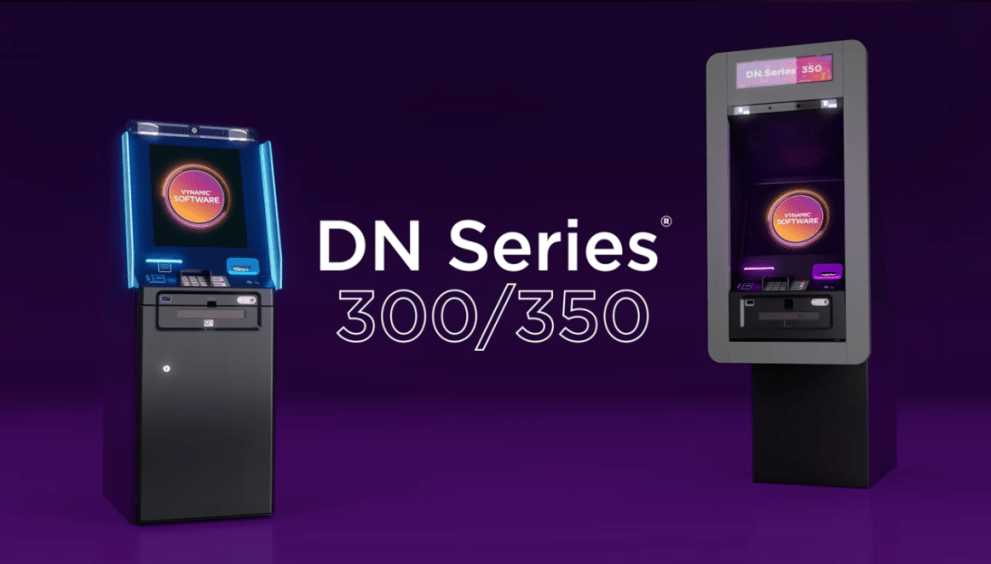
Diebold Nixdorf has announced the launch of its new DN Series® 300 and 350 cash dispensers, expanding its portfolio of self-service solutions with a focus on compact design, modular architecture, and improved operational efficiency.
The new models are built around the company’s latest dispensing technology and are positioned to support a wide range of deployment scenarios—from high-traffic urban environments to more cost-sensitive locations where space and infrastructure may be limited.
A Shift Toward Compact, Flexible Deployments
One of the defining characteristics of the new DN Series 300 and 350 is their compact form factor. As financial institutions continue to rethink branch formats and off-site ATM placements, smaller and more adaptable machines are becoming increasingly relevant.
Compact devices allow for greater flexibility in installation, particularly in environments where space constraints or deployment costs have traditionally limited ATM availability. This aligns with a broader industry trend toward optimizing physical footprints while maintaining service accessibility.
Modular Design and Unified Platform
The new series continues the industry’s move toward modular system design. By standardizing components and enabling easier access to internal modules, manufacturers aim to simplify both deployment and ongoing maintenance.
In addition, Diebold Nixdorf emphasizes the use of a unified platform that integrates ATM and teller-assisted systems. This approach reflects a growing interest in reducing fragmentation across self-service and assisted channels, potentially enabling more consistent functionality and streamlined management.
For service organizations, such standardization can help reduce the complexity of supporting mixed device fleets, although real-world impact will depend on how these systems are adopted across different environments.
Focus on Serviceability and Operational Efficiency
Serviceability remains a key factor in the design of modern ATM systems. According to the manufacturer, the DN Series 300 and 350 incorporate improvements aimed at reducing service interventions and simplifying maintenance procedures.
Features such as improved component accessibility and more structured internal layouts are intended to make routine servicing more efficient. In practice, these changes are part of an ongoing industry effort to reduce downtime and improve the predictability of maintenance operations.
However, as with any new platform, the effectiveness of these improvements will become clearer over time as devices are deployed in real-world conditions.
Balancing Performance and Cost
The positioning of the DN Series 300 and 350 suggests a focus on balancing performance with cost efficiency. By combining advanced dispensing technology with a compact and modular design, the new models aim to provide a lower total cost of ownership across a variety of use cases.
This is particularly relevant for operators managing large ATM networks, where even small gains in efficiency or reliability can have a significant cumulative impact.
At the same time, cost-sensitive deployments—such as rural or lower-volume locations—may benefit from systems that offer sufficient performance without the overhead associated with larger or more complex machines.
Industry Context
The introduction of the DN Series 300 and 350 reflects several broader trends shaping the ATM industry:
- continued demand for flexible and space-efficient deployments
- increasing emphasis on modular and standardized system design
- ongoing efforts to reduce service complexity and operational costs
- convergence between self-service and assisted banking platforms
These trends are not unique to a single manufacturer, but rather part of a wider shift toward more adaptable and integrated self-service ecosystems.
Summary
As new ATM platforms are introduced, their long-term impact depends not only on design and specifications, but also on how they perform in diverse field environments.
For financial institutions and service providers, the key considerations remain consistent: reliability, ease of servicing, and overall operational efficiency. The DN Series 300 and 350 aim to address these areas, and their adoption will provide further insight into how the next generation of ATM systems performs in practice.