





Cash Circulation Trends Reshaping ATM Operations


An ATM can meet its availability target and still represent a weak cash operation. A terminal that remains online but carries excess notes, suffers recurring denomination mismatches, or requires avoidable emergency replenishment adds cost across the network. Cash circulation trends are therefore becoming a more useful operating measure than broad assumptions about whether cash is rising or declining.
For banks, independent deployers, cash-in-transit providers, and service organizations, the issue is not simply the aggregate amount of currency in circulation. It is how cash moves through specific markets, locations, denominations, and devices. That movement determines forecasting accuracy, vault requirements, route design, cash ordering, and the customer experience at the terminal.
Cash circulation trends are becoming more localized
National cash data can provide context, but it is a poor substitute for market-level operating intelligence. Demand patterns vary sharply between a suburban branch ATM, an off-premise retail terminal, a casino deployment, a transit location, and a high-volume financial center. A network may experience falling transaction counts in one segment while another sees heavier withdrawal values or more concentrated peak demand.
This distinction matters because cash forecasting models can fail when they treat the fleet as a single population. Lower transaction volume does not always mean lower cash requirements. If customers make fewer but larger withdrawals, a device may still deplete quickly. Likewise, a site with stable withdrawal volume can require a different cassette mix when customer preferences shift toward particular denominations.
Location behavior also changes over time. Payroll cycles, tourism, university calendars, local events, benefit-payment timing, severe weather, and retail seasonality can all alter cash demand. These are not edge cases for operations teams. They are recurring variables that determine whether replenishment plans are efficient or reactive.
The practical response is to segment forecasts by site type and demand behavior, rather than relying only on regional averages. A useful model incorporates transaction count, average withdrawal value, denomination selection, day-of-week patterns, and the time between service windows. The model does not need to be perfect to reduce excess cash and preventable stockouts. It does need to be recalibrated when actual behavior changes.
Denomination mix is now a network planning issue
The distribution of notes inside an ATM has always affected availability. What has changed is the need to treat denomination mix as a dynamic planning decision rather than a static configuration established at deployment.
A common example is a terminal with enough total cash value but insufficient notes in the denomination most often requested by customers. The device may have substantial value remaining in other cassettes while being unable to fulfill common withdrawal amounts efficiently. That creates a form of functional cash-out that is easy to overlook in headline availability reporting.
Mixed-denomination dispensing can help, particularly where customer withdrawal behavior varies widely. But it also introduces operating considerations. Forecasts must account for the consumption rate of each cassette, not merely the terminal’s total balance. Cash replenishment personnel need reliable loading instructions, and software rules must avoid dispensing combinations that accelerate depletion in one cassette unnecessarily.
Denomination strategy also depends on the site. High-value withdrawal locations may justify a different mix than convenience retail or branch-adjacent machines. There is no universally correct cassette configuration. The objective is to match note inventory to observed demand while preserving operational flexibility when patterns shift.
Cash recycling changes the circulation model
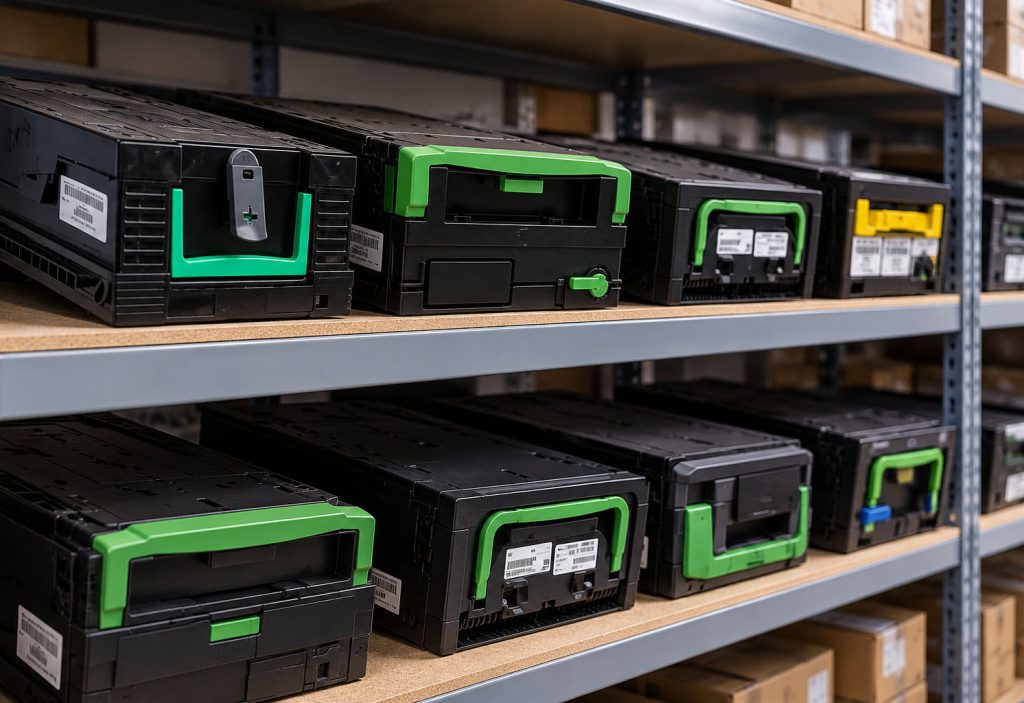
Cash recycling equipment adds another layer to cash circulation management. When a terminal accepts deposits and reissues validated notes, the cash supply at that location is no longer determined solely by armored-car deliveries. Deposit behavior, note fitness, reject rates, storage capacity, and cash acceptance rules all influence the available inventory.
That can reduce cash handling and replenishment activity where deposit and withdrawal flows are reasonably balanced. It can also create misleading expectations if operators assume all deposited cash is available for recirculation. Notes may be rejected because of condition, suspect status, denomination limits, capacity constraints, or configured fitness thresholds. Some locations generate deposits in patterns that do not offset withdrawal demand at the relevant times.
Recycling performance should therefore be measured through net cash movement, not simply deposit volume. Operations teams need visibility into how much deposited currency is accepted, retained, rejected, dispensed, and removed at each service event. Those figures reveal whether the device is truly reducing external cash requirements or merely shifting work into exception handling.
The trade-off is clear. Recycling can improve cash efficiency, but it makes device condition, configuration discipline, and data quality more consequential. A poorly tuned recycler may create more service complexity than it removes.
Forecasting must connect to field execution
Forecasting is often discussed as an analytics problem, but its value is realized in the field. A forecast that recommends the right cash amount too late, cannot be translated into a route plan, or ignores service capacity has limited operational value.
Cash forecasts should feed practical decisions: how much to order, where to stage it, which locations to visit, what cassette loads to prepare, and when exceptions require intervention. Those decisions must account for route constraints, vault cutoffs, contractual service windows, device access restrictions, and the availability of trained personnel.
This is particularly relevant for dispersed fleets. A route optimized only for transportation efficiency may leave high-risk terminals understocked. A route built solely around minimizing stockouts may carry excessive cash and increase stops. The appropriate balance depends on the network’s service commitments, local risk profile, cash holding costs, and the operational consequences of an outage.
Field data should also move back into the forecasting process. A technician’s record of a cassette fault, a recurring note-feed issue, or a site-access delay can explain apparent demand anomalies. Without that feedback, a model may interpret a mechanical or operational failure as a change in customer withdrawal behavior.
Availability metrics need more context
Fleet availability remains essential, but it can hide cash-performance problems when reported without detail. A terminal might be technically available while offering limited denominations, rejecting a high share of transactions, or carrying a balance that creates unnecessary capital exposure.
More useful reporting distinguishes between hardware-related downtime, communications incidents, cash-out events, denomination-related restrictions, and cash acceptance or recycler exceptions. It should also examine the duration and recurrence of those events. A brief cash-out at a low-volume site has a different impact than repeated partial-dispense conditions at a major retail location.
Service managers should watch for recurring gaps between predicted and actual cash consumption. Those gaps may indicate a shift in customer behavior, a poor denomination configuration, incomplete transaction data, or device-level issues affecting dispensing. The goal is not to eliminate every variance. It is to identify which variance is normal and which requires a change in operating policy.
The security and resilience implications
Cash circulation is also a resilience issue. More concentrated inventories, fewer replenishment windows, or heavier reliance on cash recycling can improve efficiency under normal conditions but may reduce flexibility during disruptions. Network outages, weather events, regional emergencies, transportation constraints, and branch closures can quickly alter demand and restrict the ability to move cash.
Contingency planning should identify locations that serve as critical cash access points and establish practical thresholds for intervention. Those thresholds may be different for urban markets, rural communities, hospital-adjacent sites, or locations with limited alternatives. The right approach is not necessarily to hold more cash everywhere. It is to understand where a cash shortage has the greatest operational and customer impact.
Security controls must keep pace with changing flows as well. Reconciliation procedures, cassette custody, note validation settings, and exception review become more important as cash moves through more automated paths. Efficiency gains are only durable when the audit trail remains clear.
The strongest cash programs treat circulation data as an operating signal rather than a back-office report. Start with a small group of high-volume or high-variance locations, compare expected and actual note movement by denomination, and tie the findings to route and cassette decisions. That discipline gives teams a practical basis for reducing unnecessary cash exposure without compromising access to cash where it is still needed.