


Branch Transformation Case Study: What Worked


A branch transformation case study is only useful if it goes beyond the ribbon-cutting photos and gets into what changed operationally. In most bank projects, the visible outcome is a lighter branch footprint and more self-service. The harder story is what happened underneath – device placement, cash logistics, software integration, service coverage, staff roles, and customer migration.
That is where many branch modernization efforts succeed or stall. A new branch design can look efficient on paper while creating higher incident volume, weaker uptime, or customer confusion at the edge. For banks evaluating branch redesign, the real benchmark is not architectural consistency. It is whether the new model improves transactions, staffing flexibility, service levels, and maintenance economics at the same time.
A practical branch transformation case study
Consider a mid-sized regional bank operating roughly 180 branches across suburban and secondary urban markets in the US. Its estate included a mix of legacy teller lines, aging lobby ATMs, limited drive-up modernization, and inconsistent branch technology standards across acquired locations. The bank was not trying to eliminate branches. It was trying to reduce transaction costs, improve availability, and make smaller-format locations commercially viable.
The business case centered on three pressures. First, routine teller transactions were declining, but not disappearing fast enough to justify a purely advisory branch model. Second, maintenance and support costs were rising because the self-service estate was fragmented across multiple hardware generations and service arrangements. Third, newer branch formats needed to operate with fewer on-site staff without degrading service.
The bank selected 25 pilot sites for the first phase. These branches varied in transaction volumes, demographic mix, and physical layout, which made them useful test conditions rather than clean showroom environments. The target model combined universal banker staffing, teller pod redesign, lobby cash recyclers, upgraded drive-up ATMs, and revised queue management. In some locations, the traditional teller counter was reduced. In others, it was removed entirely.
What changed in the operating model
The biggest shift was not aesthetic. It was the transfer of routine cash and check activity away from staffed counters and toward assisted and unassisted self-service. That required more than installing new machines.
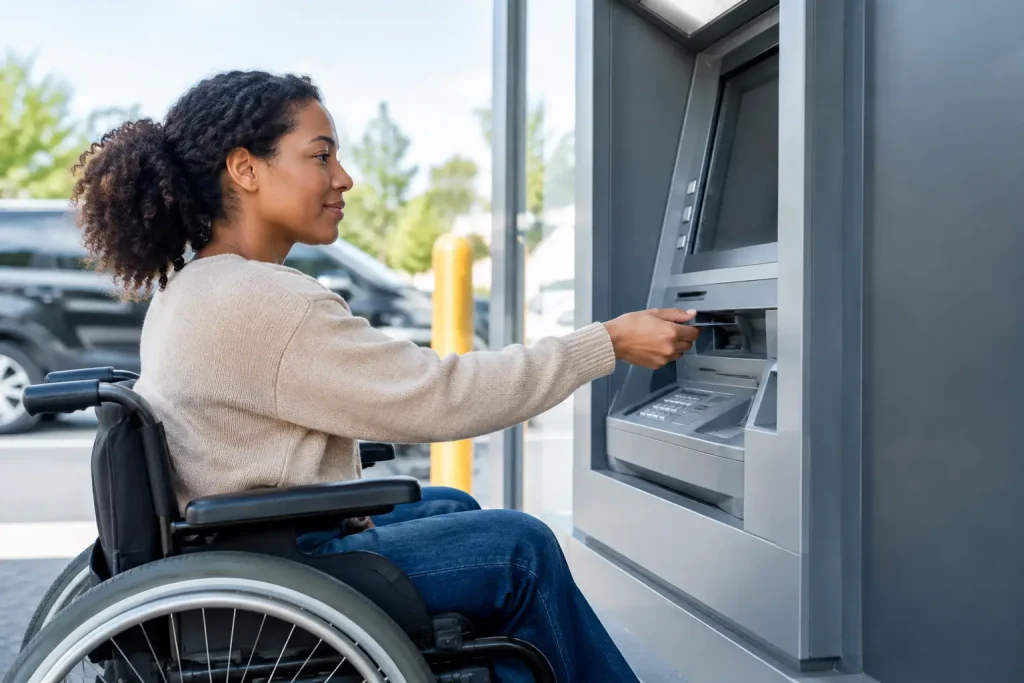
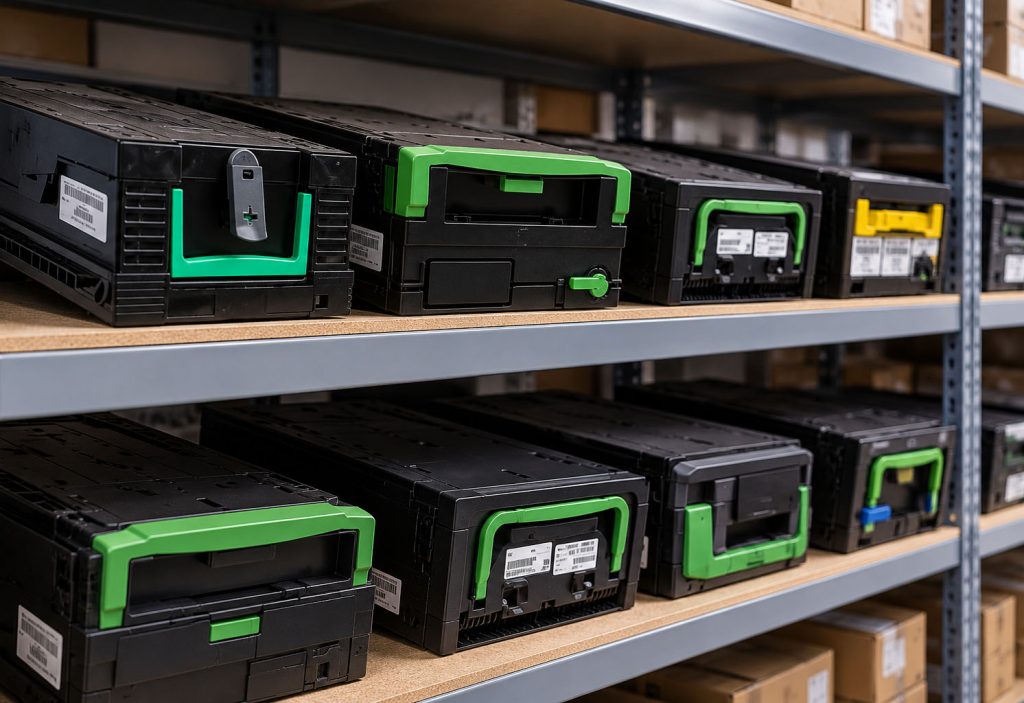
Inside the branch, teller cash recyclers were introduced to reduce drawer balancing time, simplify cash access for staff, and support universal banker workflows. In the lobby, older dispenser-based ATMs were replaced with multifunction terminals capable of envelope-free deposits and better user guidance. Drive-up locations received higher-throughput machines because those transactions remained more volume-sensitive and less tolerant of downtime.
The bank also standardized software layers that had previously varied by market. Transaction workflows, remote monitoring, alerting thresholds, and first-line support procedures were aligned across the pilot group. That step mattered because mixed software environments had been creating inconsistent fault handling and longer incident resolution times.
Staffing changed in parallel. Tellers were not simply relabeled. Employees were retrained to move between advisory conversations, assisted self-service support, and exception handling. That sounds straightforward, but it introduced a practical constraint: some employees adapted quickly, while others were less comfortable troubleshooting devices or guiding customers through digital steps. The pilot showed that branch transformation depends as much on workforce fit as on hardware deployment.
The metrics that mattered
The bank did not judge the pilot only on branch traffic or digital adoption. It tracked a narrower set of indicators tied to branch economics and service continuity.
Routine teller transactions dropped by just over 30% in the pilot sites within nine months. At the same time, ATM and self-service deposit volumes increased enough to absorb most of that shift. That was a positive result, but it was not evenly distributed. Branches in commuter-heavy suburbs adapted faster than branches serving older customers with stronger teller preferences.
Transaction time improved in two areas. Assisted cash transactions at recycler-equipped workstations became faster during peak periods, and drive-up throughput improved where older equipment had been a recurring bottleneck. Lobby wait times fell, although not always because more customers used self-service. In several branches, wait times improved because staff were no longer tied to fixed counters and could move based on demand.
Service performance produced more mixed results. Newer devices generated fewer hard failures than the legacy estate, but software and communications issues became more visible because the bank was now more dependent on integrated systems working properly. When middleware, network connectivity, or remote monitoring rules were misaligned, incident handling could actually become more complex than in the older branch model.
Cash management also improved, though gradually rather than immediately. Recyclers reduced idle cash levels and lowered the frequency of manual balancing tasks. Cash forecasting became more disciplined because device-level visibility improved. Even so, the pilot found that cash optimization gains depended heavily on local servicing discipline. Poor replenishment timing could still erase the expected benefits.
Where the branch transformation case study got difficult
The weak point in the program was not customer acceptance. It was exception management.
Standard transactions migrated well. Exceptions did not. Deposit disputes, image quality issues, check holds, temporary device outages, and customer uncertainty around assisted deposits created friction that branch managers had not fully planned for. In legacy branches, these issues were often absorbed informally at the teller line. In the new model, they became more visible because the process paths were more defined.
That had direct implications for support design. A branch with more self-service does not automatically need fewer operational resources. It may need different resources, including stronger remote diagnostics, tighter field service coordination, clearer escalation ownership, and better training for front-line staff who are now expected to bridge physical and digital service.
Physical layout also mattered more than expected. In branches where lobby devices were placed near the entrance with clear lines of sight, usage increased faster. In branches where machines were installed deeper in the floorplan or lacked privacy, adoption lagged. The equipment was the same. The customer behavior was not.
The bank also found that branch transformation created uneven pressure across service partners. Some sites saw reduced basic teller load but increased dependence on ATM uptime, note quality, receipt printer availability, and image capture performance. That shifted operational risk from people-intensive processes to device-intensive ones. If service-level agreements were written around older branch assumptions, they no longer fit the branch.
Lessons for banks and service organizations
This case points to a broader industry pattern. Branch transformation works best when institutions treat self-service, cash automation, and staffing redesign as one operating model rather than separate projects.
A common mistake is to modernize the branch visually while leaving support architecture untouched. If monitoring is inconsistent, software standards vary, or field service workflows remain fragmented, the branch may look newer without becoming easier to run. Another mistake is assuming all branches should move at the same speed. Transaction mix, customer demographics, and local staffing depth still matter.
For service organizations, the opportunity is clear but so is the challenge. Banks pursuing smaller-format branches often need fewer generic break-fix interactions and more coordinated lifecycle support. That includes staging, installation planning, network validation, software version control, cash device support, and incident triage that recognizes branch context rather than device status alone.
For banks, the most durable gains in this branch transformation case study came from standardization. Standardized hardware reduced parts complexity. Standardized software improved monitoring and support consistency. Standardized workflows made staff training more realistic. None of that is glamorous, but it tends to separate scalable transformation from isolated pilot success.
There is also a caution here for institutions tempted to use branch redesign as a cost-cutting exercise first and an operating model redesign second. The savings are real, but they tend to show up when migration, serviceability, and staff adaptation are managed carefully. If any of those pieces are weak, the branch can become less resilient even while transaction costs appear lower on paper.
The practical takeaway is simple. A modern branch is not defined by fewer teller windows. It is defined by how reliably customers can complete routine transactions, how effectively staff can handle exceptions, and how well the underlying service infrastructure supports both. That is the standard worth measuring before the next pilot moves from concept to rollout.