

Best Branch Teller Automation for Modern Branches


A branch can install advanced cash equipment and still create more work for tellers, operations staff, and field service teams. The best branch teller automation is not defined by the number of functions in a product brochure. It is defined by whether the equipment removes friction from the branch’s actual transaction mix while maintaining cash accountability, availability, and a supportable operating model.
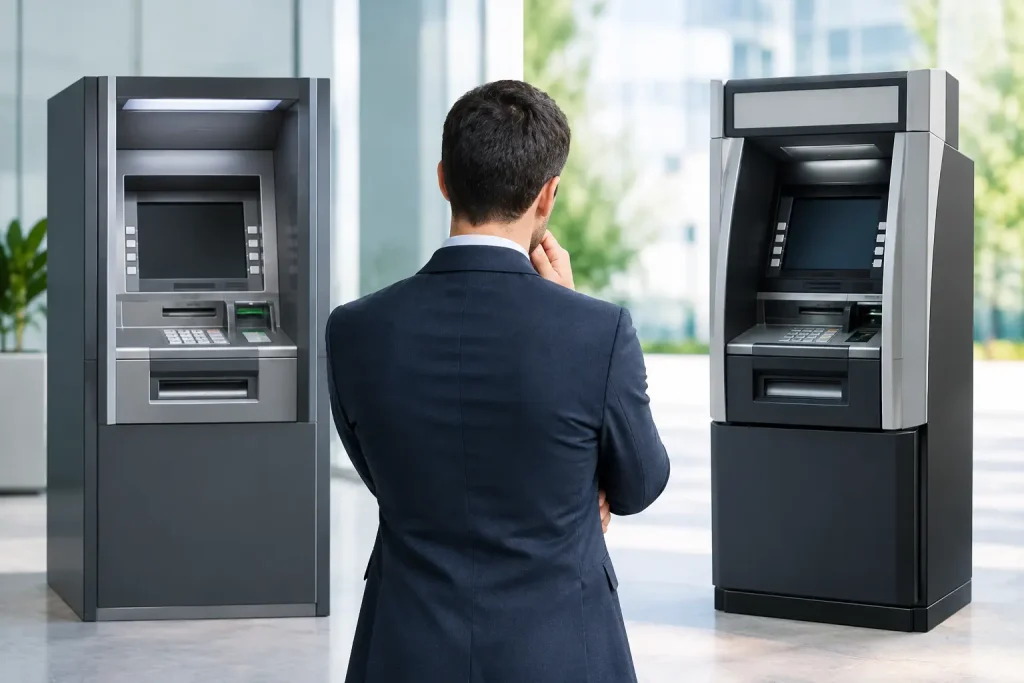
For many financial institutions, the decision is no longer simply whether to deploy teller cash recyclers. The practical questions are where automation belongs, what cash processes should remain under teller control, how equipment will connect to core and teller platforms, and whether service coverage can sustain the expected uptime. Those questions matter as branches reduce traditional teller lines, consolidate staff roles, and look for ways to keep cash access efficient without increasing operational exposure.
What the Best Branch Teller Automation Should Solve
Teller automation is often evaluated as a labor-saving investment. That is only part of the case. The stronger deployments improve several connected processes: cash dispensing and acceptance, transaction balancing, vault and cash-order activity, auditability, and branch continuity during peak periods.
A well-matched teller recycler, for example, can reduce the manual count-backs, drawer transfers, and end-of-day balancing activities that consume teller time. But the benefit depends on workflow design. If tellers repeatedly bypass the recycler for exceptions, large transactions, coin handling, or customers who require specialized service, projected time savings can disappear quickly.
The operating objective should be clear: automate repetitive cash handling while preserving a controlled path for exceptions. Equipment should support the branch rather than force the branch to redesign every procedure around device limitations.
Cash optimization is another important consideration. A recycler may reduce the amount of cash held in individual teller drawers and lower the frequency of vault access. That can improve security and simplify accountability. It does not automatically reduce total branch cash demand, however. Institutions need to distinguish between lower working cash at the teller line and a genuine reduction in branch cash inventory.
Start With the Branch Transaction Profile
The right automation model differs sharply between a suburban retail branch, a high-volume urban location, a small community branch, and a branch that handles commercial deposits. A standard deployment template can help with purchasing and support, but it should not replace transaction analysis.
Review at least several months of branch activity before selecting equipment. Cash withdrawals and deposits by denomination, transaction volumes by hour, deposit quality, large-value cash activity, currency exchange, coin demand, and commercial customer behavior all affect the fit. Peak-hour patterns matter as much as monthly averages. A device that performs adequately at normal volumes can become a bottleneck when several tellers need access at the same time.
Deposit behavior deserves close attention. Mixed deposits, worn notes, high reject rates, strapped currency, and business deposits with inconsistent preparation can create handling exceptions that are rarely visible in high-level branch data. If those exceptions require frequent supervisor involvement or manual verification, automation may shift work rather than remove it.
Branch layout is equally practical. Shared recycler models can work well where teller stations are close together and transaction volume is predictable. A dedicated device per station may offer better throughput and accountability in high-volume environments, but it increases capital cost, device count, maintenance exposure, and floor-space requirements. There is no universal answer. The best design is the one that fits staffing patterns, customer traffic, and contingency procedures.
Do not overlook coin and non-cash exceptions
Most teller cash automation platforms focus on banknotes. Branches that process meaningful coin volumes still need a defined coin workflow, whether that means separate equipment, manual handling, armored transport support, or a revised customer policy. The same is true for checks, foreign currency, cashier’s checks, and transactions that require enhanced review.
These exceptions should be designed into the operating model before rollout. Treating them as edge cases after deployment is a common source of teller frustration and inconsistent procedures.
Integration Is the Core Deployment Risk
Mechanical capability is visible during a demonstration. Integration quality is usually revealed only after the branch goes live.
The automation platform must work reliably with the teller application, core banking environment, transaction middleware, authentication model, and branch network. Institutions should establish which system is the system of record for each cash movement, how device transactions are reconciled, and what happens when a connection is interrupted mid-transaction.
A successful integration should give the teller a clear and consistent workflow. It should also give operations teams usable records for balancing, dispute review, cash position reporting, and device exception analysis. If staff must reconcile device journals, teller records, and separate reporting tools manually, the control environment may be weaker than it was with traditional drawers.
API availability alone is not a sufficient evaluation point. Teams should assess the maturity of the certified integration, version compatibility, ownership of interface support, testing requirements for software upgrades, and the timeline for resolving defects. A capability that exists in a vendor roadmap or a laboratory environment is different from one operating across a comparable branch estate.
Financial institutions should also test failure states. What occurs if the teller workstation loses connectivity while the recycler retains cash? Can the device continue in a controlled offline mode? How is a partial dispense recorded? Who can clear a transaction lock, and how is that action audited? These scenarios are not secondary technical details. They determine whether a branch can keep serving customers during an incident without creating unresolved cash exposure.
Evaluate Serviceability Alongside Uptime Claims
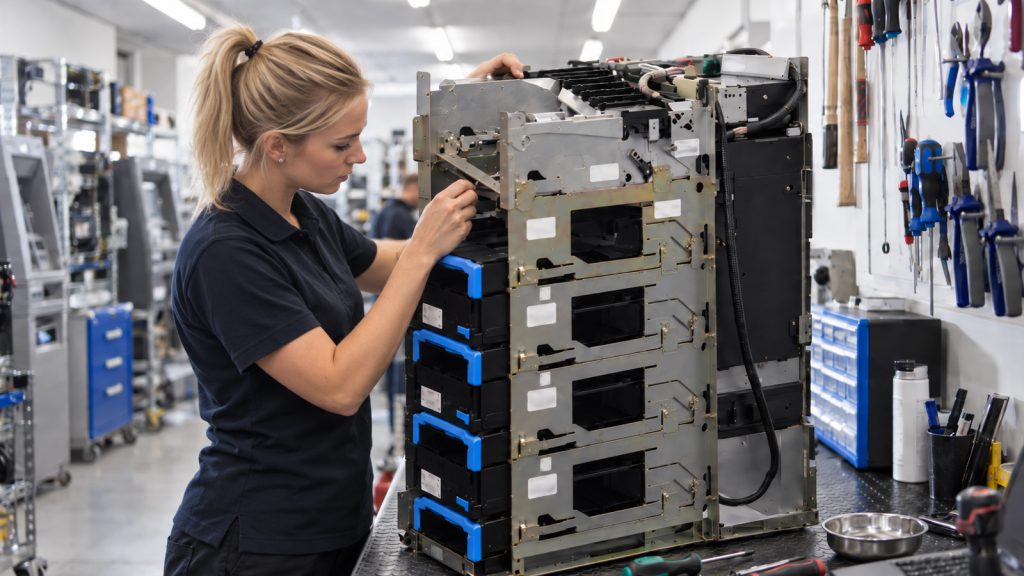
Branch teller automation is a physical operating asset. Note quality, dust, cassette configuration, reject handling, consumables, preventive maintenance, software health, and technician access all affect performance over time.
Uptime claims should be examined in context. Ask how uptime is measured, whether it excludes planned maintenance, what events are classified as device faults, and whether availability reflects a single device or the entire teller workflow. A recycler that is technically available but cannot complete transactions because of an integration issue is not operationally available to the branch.
Service leaders should also examine the support model in practical terms: local technician coverage, parts stocking, escalation paths, remote diagnostics, service-level commitments, and the availability of trained personnel for the selected configuration. A lower-cost device can become expensive if repeated incidents require long branch outages or specialized visits.
Remote monitoring can improve incident response when it provides meaningful fault data and supports triage before dispatch. It is less useful when alerts are noisy, codes lack context, or access to diagnostic information is limited to one party. The institution, equipment provider, and service organization should have a clear division of responsibility for monitoring, first-line support, software updates, and physical repair.
Security and Controls Need a Workflow View
Automation changes cash controls. It can reduce the exposure associated with open drawers and manual cash counts, but it also concentrates activity in a device, software interface, and access-control model that must be governed carefully.
Role-based permissions should align with branch responsibilities. Tellers, supervisors, cash operations staff, and service technicians should not have the same access to transactions, device configuration, cash cassettes, or override functions. Dual control may be appropriate for certain maintenance actions, cassette changes, and exception resolutions, depending on branch policy and risk tolerance.
Audit records need to make sense to people investigating a discrepancy. Time-stamped events, user IDs, device status, denomination details, transaction outcomes, and service actions should be available without an extended manual evidence-gathering exercise. This is particularly important when a cash dispute crosses the boundaries of teller operations, branch management, and vendor support.
Cybersecurity assessment should cover the endpoint, the management software, network segmentation, credential administration, patch processes, remote support controls, and third-party access. Legacy branch networks can complicate this work. A device may be capable of modern security controls, yet still be deployed into an environment with outdated segmentation or inconsistent patch governance.
Build the Business Case Beyond Headcount
The financial case for teller automation should account for more than anticipated staffing reduction. In many branches, the value comes from improving service capacity, reducing balancing time, lowering cash handling risk, supporting universal banker models, and avoiding unnecessary vault expansion or cash replenishment activity.
Costs should include equipment, installation, site preparation, integration, software licensing, network changes, training, maintenance, spare parts, and eventual replacement. Institutions should also consider the cost of process change. Supervisors may need new exception procedures, cash operations teams may need revised reporting, and field support may need training on new components and recovery steps.
A phased pilot is often more informative than a broad initial rollout. The pilot should include branches with materially different profiles rather than only the most cooperative or lowest-risk locations. Measure transaction completion rates, reject rates, balancing time, teller adoption, customer wait times, cash inventory movement, incident categories, and mean time to restore service. Those results will expose whether a configuration is ready for standardization.
Selecting the Best Branch Teller Automation
The best branch teller automation is the platform that supports a defined operating model with acceptable exception rates, reliable integration, clear controls, and service coverage that matches the institution’s tolerance for disruption. The most feature-rich unit is not necessarily the strongest choice for a smaller branch, and the least expensive option may not withstand heavy cash volumes or complex deposits.
Procurement teams should require vendors to demonstrate real workflows, including rejects, partial transactions, supervisor overrides, connectivity loss, device recovery, cassette changes, and end-of-day reconciliation. A polished cash dispense is easy to show. The operational value becomes clear when the process encounters the conditions branches deal with every week.
The most useful next step is to map one representative branch day in detail, from opening cash preparation through balancing and close. That exercise usually identifies where automation can deliver measurable control and efficiency, and where the branch still needs a disciplined human process.