


Hyosung versus Genmega for ATM Fleet Planning

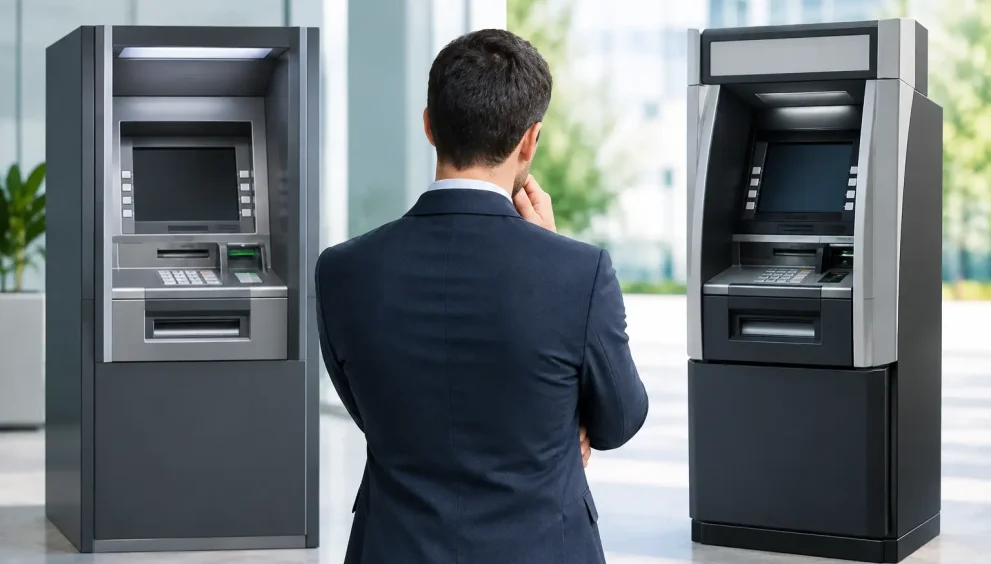
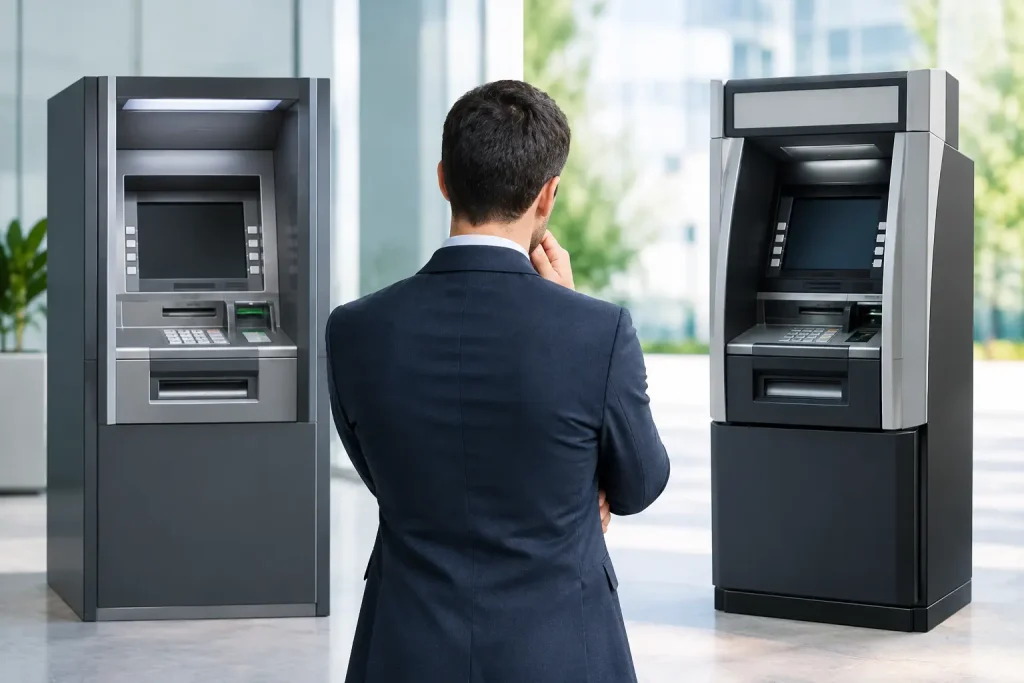
A Hyosung versus Genmega decision is rarely settled by the cabinet price alone. For ATM operators, the more consequential questions are whether a proposed configuration fits the site, how readily it can be serviced, which software and processing partners it supports, and what the platform will cost to operate over several years. Both vendors are familiar names in U.S. retail ATM deployment, but they can represent meaningfully different buying approaches depending on the fleet and operating model.
The right comparison starts with the operator’s business case. A multi-store independent deployer seeking consistent, cost-conscious placement has different priorities than a financial institution replacing aging branch units, or a service organization supporting a mixed fleet across a wide geography. Hardware capabilities matter, but standardization, parts access, field support, and configuration discipline often determine whether a purchase performs as expected after installation.
Hyosung versus Genmega: the practical distinction
Hyosung has a broad ATM presence in North America, including retail cash dispensers and financial-institution-oriented platforms. Its portfolio has generally given buyers a range of form factors, dispenser options, screen sizes, and feature sets to evaluate. That breadth can be useful to organizations trying to standardize across retail, branch, drive-up, or more specialized self-service locations.
Genmega is also well established in the retail ATM segment and is frequently considered by independent ATM deployers, distributors, and operators that place equipment in convenience stores, hospitality venues, cannabis dispensaries, and other cash-intensive locations. Its market position has often been associated with practical retail deployment, accessible configurations, and a distribution channel familiar with independent operators’ requirements.
Neither description establishes a universal winner. Product lines change, regional support arrangements vary, and a machine sold under a particular vendor label may have a different dispenser, printer, EMV card reader, or software package than another model from the same manufacturer. Procurement teams should compare the exact model and bill of materials, not just the name on the fascia.
Start with the deployment environment
Site conditions should narrow the field before feature lists do. A retail location with modest transaction volume and limited floor space may favor a compact through-the-wall or lobby unit with a straightforward cash-dispenser configuration. A high-volume location may need a larger cash capacity, a service arrangement that minimizes downtime, and physical dimensions that permit safe replenishment and repair.
For financial institutions, deployment requirements can become more involved. ADA considerations, branding, visibility, accessibility, lighting, surveillance coverage, transaction mix, receipt requirements, and integration with the institution’s software stack all shape the decision. A unit that is economical for a standalone retail ATM may not be the appropriate platform for a branch modernization program.
Environmental exposure also deserves attention. For exterior, drive-up, or semi-protected locations, buyers need to validate the rated environment, enclosure condition, heating and cooling behavior, installation method, and available service access. An attractive purchase price can disappear quickly if the machine requires repeated callouts because the site was not suitable for its intended duty cycle.
Cash handling and uptime are the core comparison
Cash handling is where field realities become visible. Cassette capacity, note mix, reject handling, dispenser architecture, cash forecasting practices, and replenishment intervals affect both availability and operating expense. A platform that works well with one operator’s vaulting model may create extra visits or cash-outs for another.
When reviewing Hyosung and Genmega models, ask for configuration-specific information on dispenser type, cassette count, supported note capacities, reject functionality, error reporting, and the practical procedure for clearing common faults. The question is not simply how much cash a machine can hold. It is whether the cash configuration supports the expected transaction profile without increasing service burden or excess cash exposure.
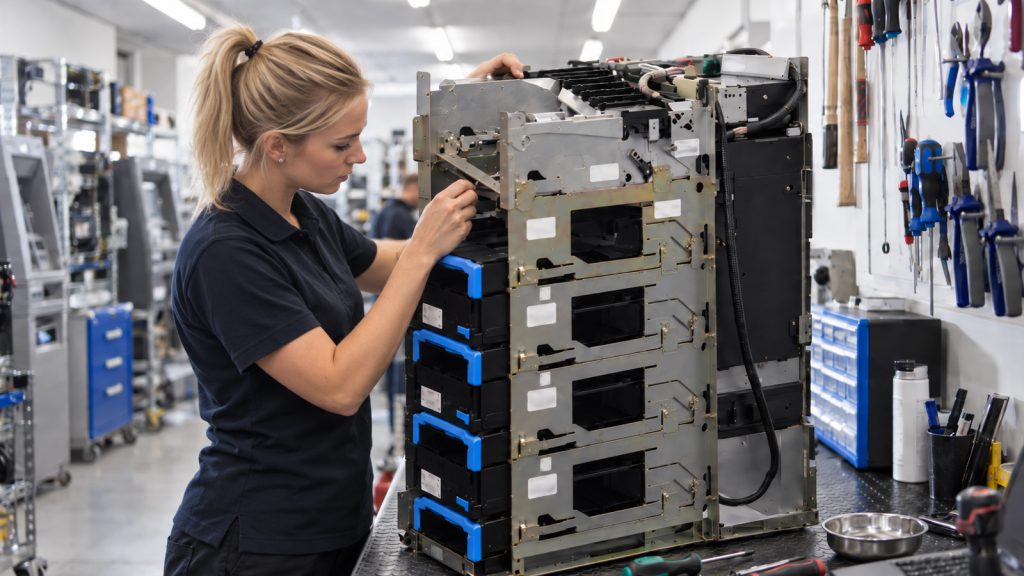
Service managers should also consider how the unit behaves during routine faults. Accessible components, clear diagnostics, familiar replacement procedures, and a reasonable path to restore service are operational advantages. A sophisticated feature set has limited value if technicians cannot efficiently isolate a common issue in the field or if a needed part is not stocked within the service network.
Software, processing, and security need model-level review
Hardware selection cannot be separated from the application and network environment. Operators should verify compatibility with their processor, terminal management system, remote monitoring tools, and planned payment features. This is especially relevant for fleets using a mix of legacy and newer equipment, where software versions, host certifications, and device drivers may introduce unexpected work.
Both platforms should be evaluated against the operator’s current and future requirements for EMV, encrypted PIN entry, remote software distribution, journaling, electronic receipts where applicable, and security patch management. The detail matters. A capability listed in general product material may depend on an optional device, a specific operating system, an application release, processor certification, or separate licensing.
Security evaluation should extend beyond compliance checkboxes. Confirm the physical security options for the model, the status of supported software releases, procedures for key management, remote-access controls, and the process for responding to vendor advisories. For operators with older fleets, the migration path from Windows-based legacy environments or unsupported applications may be more important than any visible feature on a new cabinet.
Service coverage and parts strategy can outweigh hardware differences
The most capable ATM is still a poor fleet asset if a failed component keeps it out of service for days. Before selecting either manufacturer, operators should map the support model in the territories where the fleet will operate. Manufacturer support, distributor support, third-party maintenance, depot repair, and internally trained technicians can all be effective, but they create different responsibilities and response expectations.
Ask who owns the first response, which parts are carried locally, how warranty claims are handled, and whether technicians have training on the exact models being purchased. Also examine the availability of replacement modules after the warranty period. A fleet with several thousand units may justify direct parts stocking and technician certification. A smaller operator may be better served by choosing the platform with stronger local distributor and service coverage.
Mixed fleets add another layer. Standardizing on one manufacturer can simplify technician training, spare parts inventories, device configuration, and operating procedures. Yet forcing every location onto one platform may sacrifice a better fit for a particular site. The practical goal is not perfect uniformity. It is controlled variation that the operations team can support.
Build the comparison around total operating cost
Purchase price should be evaluated alongside installation, communications, software, cash logistics, maintenance, parts, warranty, and expected replacement timing. A lower-cost configuration may be appropriate when transaction volume is limited and the operator has dependable local support. A higher initial investment can be justified where uptime, transaction volume, branding requirements, or lifecycle consistency carry more weight.
A disciplined evaluation should document at least five items for each candidate model:
- The exact hardware configuration, including dispenser, card reader, PIN pad, printer, screen, and communication components.
- Processor and software compatibility, including certifications required before deployment.
- Local service coverage, response expectations, technician capability, and parts availability.
- Cash capacity, replenishment assumptions, and the expected effect on cash-outs and service visits.
- Lifecycle commitments, including warranty scope, software support, security updates, and replacement-part availability.
This record is more useful than a broad manufacturer comparison because it exposes where assumptions differ. For example, two proposals may appear comparable until one includes a larger cash dispenser, a longer warranty, or a more favorable field-service arrangement. Those differences should be normalized before a buyer treats a unit price as meaningful.
The most productive way to approach Hyosung versus Genmega is to test each proposed model against the operating conditions it will actually face. Run a pilot where possible, track first-fill time, transaction availability, cash-out frequency, recurring faults, and mean time to repair. The better choice is the one that keeps the machine transacting with the least operational friction after the sales process is over.