



Branch Technology and the New Service Model


A branch remodel can replace a row of teller stations with assisted self-service devices, video connections, cash recyclers, and a smaller staff footprint. But branch technology is not defined by the equipment visible in the lobby. Its operational value depends on how well channels, software, cash processes, network controls, and field service practices work together after the installation team leaves.
For institutions balancing branch rationalization with customer access, that distinction matters. A device that reduces routine transactions at the counter may still create new exceptions for staff, new dependencies on network uptime, and a different repair profile for service organizations. The branch is becoming less uniform, not simply more automated.
Branch technology is an operating model, not a device category
The term branch technology is often used broadly enough to include nearly any bank technology deployed inside a physical location. In practice, it covers an interconnected set of capabilities: teller platforms, self-service kiosks, ATMs and ITMs, cash recyclers, account-opening tools, appointment systems, video banking, digital signage, queue management, and the infrastructure that supports them.
The common objective is to move routine work to the most appropriate channel while preserving support for transactions that need human judgment. That may mean a customer completes a withdrawal, check deposit, bill payment, or denomination request at a self-service terminal, while branch personnel focus on account servicing, problem resolution, and higher-value conversations.
The model is not automatically right for every location. A high-volume urban branch, a grocery-store location, and a rural office with limited staffing face different customer behaviors, connectivity conditions, and service constraints. Institutions that apply the same device mix everywhere can end up with expensive capacity in the wrong place or insufficient support at locations where customers need it most.
The ATM’s changing role inside the branch
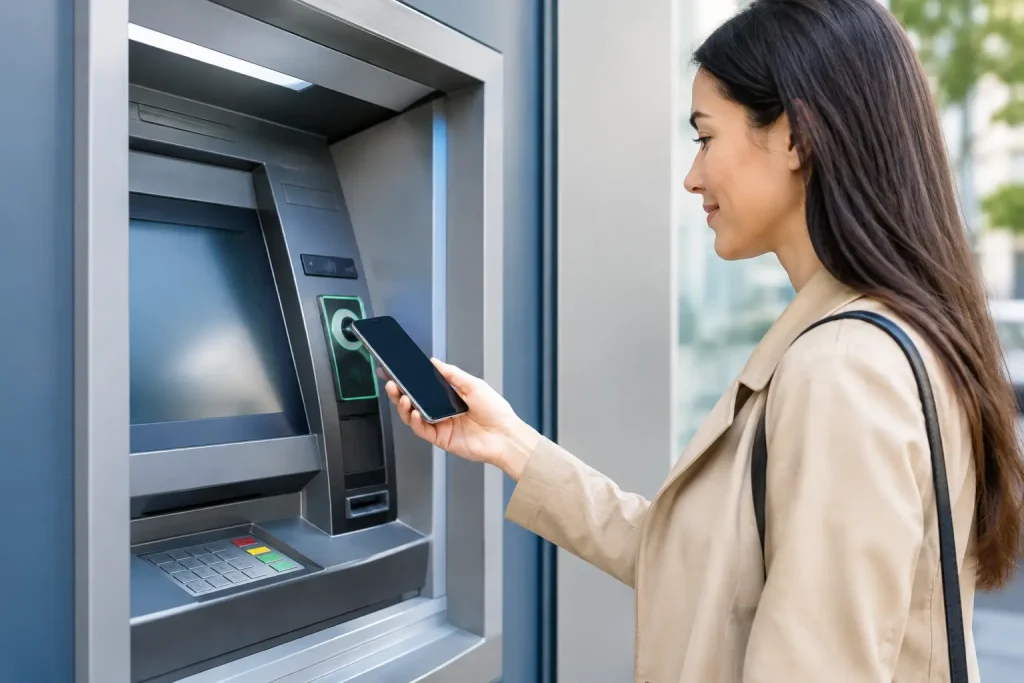
ATMs remain central to the branch technology discussion, but their role is broadening. A traditional lobby ATM may primarily absorb cash withdrawals and deposits. An advanced terminal or interactive teller machine can extend operating hours, support assisted transactions, accept more complex deposits, and connect a customer to centrally located staff.
That expansion creates choices for operations teams. More functions at the terminal can reduce counter traffic and improve access outside standard hours. It can also increase the consequences of an outage. When a device serves as the primary cash access point for a lightly staffed branch, a card reader fault, cash module issue, communications failure, or application error is more than a single-channel inconvenience.
Cash recycling adds another layer. Recyclers can reduce cash orders, lower the frequency of manual replenishment, and help branches manage cash more efficiently. Their return depends on transaction mix, local cash demand, armored carrier arrangements, vault practices, and the institution’s ability to maintain the units properly. A recycler with poor note quality management or inconsistent first-line support can shift labor rather than eliminate it.
Assisted self-service needs clear exception handling
The strongest assisted self-service deployments define what happens when the transaction does not follow the expected path. A customer may need help with a retained card, a disputed cash dispense, an identity check, a deposit exception, or an unfamiliar interface. The question is not whether exceptions will occur. It is whether the branch, contact center, and field service organization know who owns each one.
This is especially relevant for video-enabled service. Remote staff can broaden coverage and concentrate specialized skills, but they depend on reliable audio, video, identity workflows, and cash-device availability. A video connection cannot resolve a mechanical fault in the field, and a field technician cannot necessarily resolve an account-level exception. The operating model must connect both sides.
Integration determines whether the experience holds together
A modern branch can contain equipment from several suppliers, connected through layers of middleware, network services, security controls, and core banking interfaces. The visible user experience may appear unified while the underlying estate remains fragmented.
That fragmentation becomes apparent during incident response. A terminal may be online to the network but unable to complete transactions because of an application certificate issue. A cash recycler may report a device error while the root cause is a host configuration change. A new teller platform may alter workflows in ways that increase calls to the service desk. Without clear monitoring and escalation paths, individual teams can see only their portion of the failure.
Institutions should evaluate branch technology architecture with operational questions in mind. Can the organization identify whether an issue is at the device, local network, application, host, or payment-network layer? Are software versions and security patches tracked across the estate? Can a support team distinguish a recurring hardware defect from a transaction flow problem? Are remote diagnostics available and trusted enough to prevent unnecessary truck rolls?
Standards and common interfaces can reduce complexity, particularly where banks operate mixed fleets or need to integrate new self-service applications. They do not remove the need for disciplined testing. Changes to operating systems, endpoint protection, certificates, host software, or peripheral firmware should be evaluated against actual branch configurations, including older equipment that may remain in service longer than planned.
Reliability is a customer and cost issue
Branch modernization proposals often emphasize transaction migration and labor capacity. Those measures are useful, but availability deserves equal attention. A branch that shifts routine activity to self-service must be able to keep that self-service capacity running during the hours customers expect to use it.
Availability is influenced by more than mean time to repair. Preventive maintenance quality, parts positioning, technician training, remote monitoring, network resiliency, cash forecasting, environmental conditions, and branch staff procedures all affect real service levels. A terminal restored quickly after an incident still creates disruption if the same fault repeats every few weeks.
Service managers should also separate device availability from usable availability. An ATM can report as online while out of cash, unable to accept deposits, or operating with a failed peripheral that limits key transactions. Measuring only network connectivity can produce an overly favorable picture of customer access.
Field service requirements are becoming more specialized
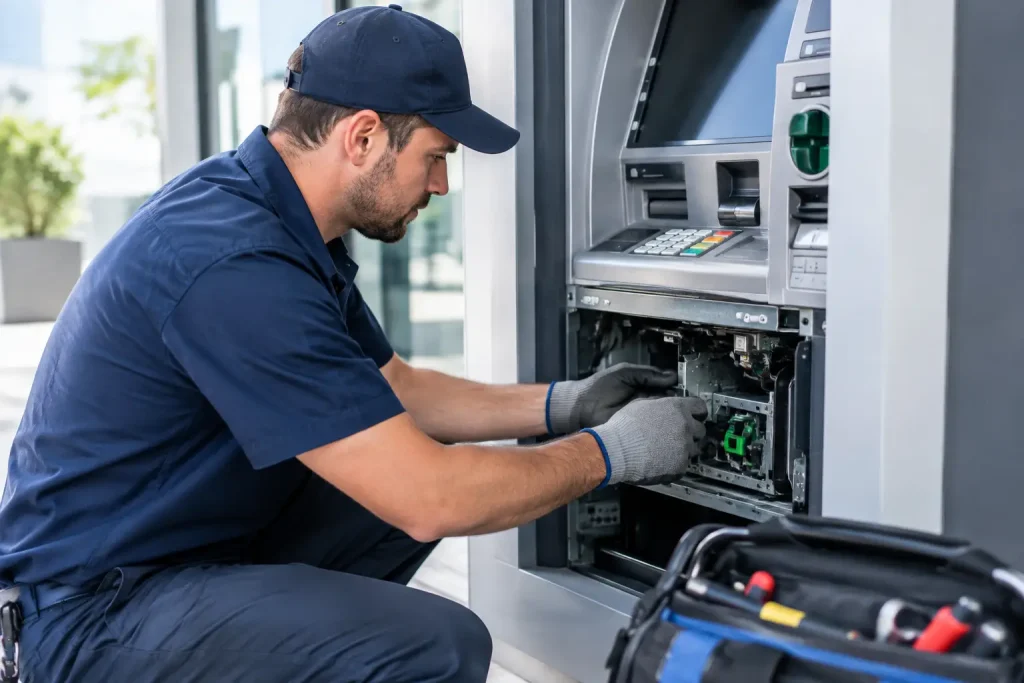
As branches add recycler technology, video components, biometric peripherals, and more software-driven workflows, technician skill requirements change. A technician may need to diagnose mechanical cash handling, validate network connectivity, replace a peripheral, collect logs, and recognize when a fault belongs with a software or host-support team.
This does not mean every provider needs the same service model. A concentrated regional network may justify dedicated expertise and local parts inventory. A dispersed fleet may rely on a tiered model with remote triage, regional dispatch, and carefully selected on-site coverage. The critical point is that service commitments match the technology’s role at each location.
Security cannot be added after deployment
The expanded branch footprint creates more endpoints and more paths into banking systems. Self-service devices need physical protection against skimming, shimming, tampering, and unauthorized access, but physical controls are only part of the requirement. Software hardening, patch governance, credential management, segmentation, encryption, logging, and incident response procedures are equally material.
Remote support can improve resolution times, yet it should be governed tightly. Institutions need clear controls for privileged access, session authorization, audit trails, and vendor responsibilities. Convenience features that help a service team access a device can become exposure points if ownership is unclear or credentials persist beyond their intended use.
Security planning should also account for branch staff. New devices change the way employees handle customer authentication, cash exceptions, and suspected fraud. Training must reflect the actual workflows employees will encounter, not only the launch-day demonstration. A process that is secure on paper but impractical during a busy afternoon will be bypassed under pressure.
Measure the branch by outcomes, not installation counts
A completed rollout is not proof that a branch technology strategy is working. Institutions need to track whether transactions shifted as expected, whether customers can complete them without staff intervention, how often devices require service, and whether cash and labor costs changed in the intended direction.
Useful indicators include transaction completion rates, assisted-session escalation rates, repeat service incidents, cash-out events, deposit acceptance availability, first-time fix rates, and time to restore full functionality. Customer feedback also matters, particularly during the transition period. A lower teller transaction count may look positive until it becomes clear that customers are leaving to find another access point.
The most durable programs treat those measures as inputs for ongoing design decisions. A location may need different signage, revised staffing schedules, a change in terminal configuration, or a stronger service response commitment. Technology is only one part of the branch equation; the operating discipline around it determines whether the investment delivers dependable access.
The practical test is straightforward: when a customer needs cash, makes a deposit, or requires assistance, the branch should offer a clear path to completion. Designing for that moment will usually produce better technology decisions than designing around the device list.