




Cardless ATM Examples and What They Require


A cardless withdrawal is not a single feature with a standard operating model. Cardless ATM examples range from a customer scanning a QR code at the terminal to a transaction initiated in a banking app and completed with a one-time code. For ATM operators and financial institutions, the visible customer interaction is the easy part. The harder work sits behind it: host integration, transaction-state management, authentication controls, software certification, dispute handling, and consistent field support.
The practical question is not whether a fleet can display a cardless option. It is whether the institution can support the full transaction path at scale without creating avoidable exceptions for the help desk, cash operations, network team, or field service provider.
Common Cardless ATM Examples in the Market
QR code initiation at the ATM
In a QR-based model, the ATM displays a dynamic QR code. The customer opens the institution’s mobile banking app, scans the code, authenticates within the app, selects or confirms the withdrawal amount, and completes the transaction at the terminal. Depending on the design, the ATM may also require a final confirmation on screen.
This approach can reduce keyboard use and keeps the customer’s mobile device central to the authentication process. It also requires the ATM application to generate or receive a short-lived session identifier and coordinate that session with the mobile platform and transaction host. A static QR code is generally not sufficient for a secure withdrawal flow; the code or the data behind it must be time-bound and tied to a specific ATM session.
For operations teams, QR initiation introduces basic but consequential dependencies. The terminal needs a readable display, reliable network connectivity, current application software, and an integration path that handles expired or abandoned sessions cleanly. A customer who scans a code and walks away should not leave the ATM in a state that blocks the next user or creates an ambiguous authorization record.
Pre-staged withdrawals from a mobile app
A pre-staged withdrawal begins before the customer reaches the ATM. In the mobile app, the customer chooses an account and amount, then receives a retrieval code, token, or confirmation method. At the ATM, the user selects cardless withdrawal and enters the code, sometimes with a second factor such as a PIN, biometric approval in the app, or a one-time passcode.
This is one of the more common cardless ATM examples because it can work on terminals without cameras or NFC readers. The ATM may need only a software workflow and secure host messaging, although the exact requirement depends on the deployed software stack and processor interface.
The trade-off is code management. The issuer must define how long a code remains valid, how many failed attempts are allowed, whether a code can be canceled, and what happens when the customer requests multiple staged transactions. These rules affect fraud exposure and call-center procedures. They also need to be visible in monitoring data, since a rise in expired codes may point to a usability issue, an app problem, or a communications delay.
Near-field communication withdrawals
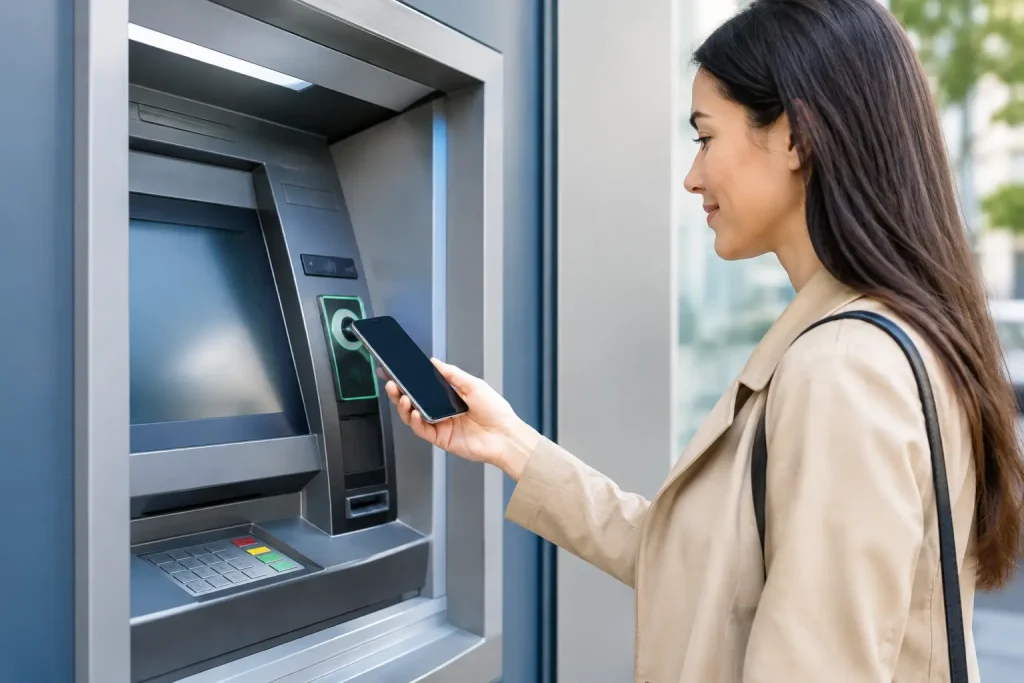
NFC-enabled cardless transactions use a mobile wallet or banking app to present a payment credential to the ATM’s contactless reader. The user may authenticate on the phone, tap the reader, and then complete the withdrawal using the ATM interface. In some implementations, the transaction resembles a contactless card transaction. In others, the app creates a device-bound credential or token for the session.
NFC can provide a familiar interaction for consumers already using tap-to-pay. From an infrastructure perspective, however, it typically has a higher hardware dependency than a code-entry approach. The terminal needs a certified contactless reader, correct device drivers, supported ATM application logic, and host or processor support for the chosen credential and message flow.
Fleet consistency matters. A bank that enables NFC at only part of its estate needs accurate channel presentation so customers do not arrive expecting a service that the terminal cannot provide. Hardware capability is also not the same as deployed capability. A reader installed as part of a hardware refresh may still require software activation, keys, certification, and network-side configuration before it can support production withdrawals.
App-generated one-time passcodes
A related model uses a one-time passcode generated by the mobile app or sent through an approved channel. The customer enters the code at the ATM, usually after choosing a cardless transaction option. This can be useful for institutions with older terminal fleets, as it may avoid a major peripheral upgrade.
Its limitations are equally clear. Numeric-code entry creates an observation risk at the terminal, particularly if the customer is prompted for several values in sequence. The design should avoid using predictable codes, minimize the valid window, restrict retries, and define how the ATM and host respond when the transaction is authorized but cash is not dispensed. The customer experience may also be slower than QR or NFC if the user must switch repeatedly between the phone and terminal.
The Infrastructure Behind a Cardless Withdrawal
Cardless ATM services create a transaction state that must be synchronized across the mobile channel, ATM middleware or application, switch or processor, core banking environment, and fraud controls. Each component may have a different view of whether a transaction is pending, authorized, completed, reversed, or expired.
That state management becomes most visible during exceptions. Consider a pre-staged transaction that is approved in the mobile app, reaches the ATM, and then encounters a dispenser fault. The system needs a defined reversal path that releases the staged funds and provides accurate status to the app. If the terminal goes offline after authorization, the design must determine whether the session can resume, whether the request is canceled, and how duplicate cash requests are prevented after connectivity returns.
Time synchronization is another operational detail that can be overlooked. Session expiration, token validity, ATM electronic journal records, host traces, and fraud-event timestamps need a common and reliable time reference. Poor clock discipline complicates dispute research and can make an otherwise routine cash claim difficult to reconcile.
Security Controls Need to Match the Method
Removing the physical card does not remove authentication risk. It changes where credentials are presented and where attackers may focus. QR workflows can attract phishing attempts if customers are trained to scan codes without clear application controls. One-time-code workflows face social engineering and code interception risks. NFC implementations require strong device credential management and careful treatment of lost or newly enrolled devices.
A sound control model typically combines short-lived tokens, transaction-specific binding, velocity limits, device or app risk signals, and clear retry thresholds. The ATM should receive only the data necessary to complete the transaction. Sensitive credentials should not be exposed in the screen flow, electronic journal, or local diagnostic logs.
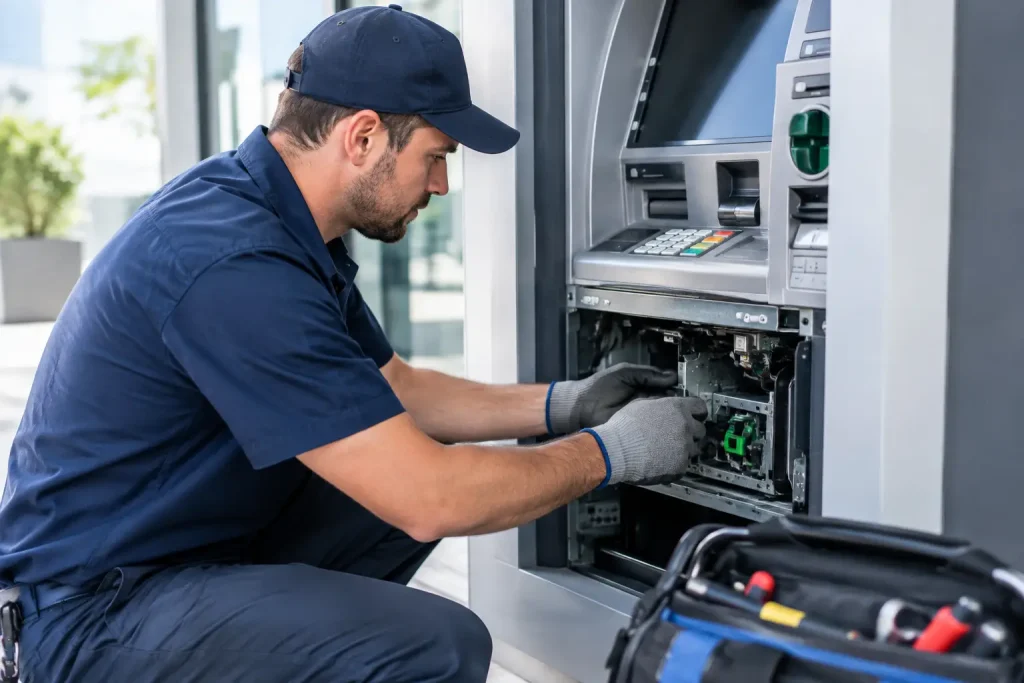
Physical attack scenarios remain relevant. Criminals may attempt to place overlays or signage near the terminal to redirect users to a fraudulent QR code or persuade them to disclose a retrieval code. Routine site inspections and technician awareness therefore remain part of the control environment, even when the transaction begins on a phone.
Field Operations and Support Considerations
A cardless rollout changes the service desk’s diagnostic playbook. Traditional card-retain and mag-stripe-read issues may decline for participating users, but support teams will see new failure categories: an app cannot recognize a QR session, an authorization expires at the terminal, a token is rejected, or a transaction remains pending after a cash-dispense fault.
Those incidents need correlation across channels. A terminal identifier, session reference, mobile-channel event ID, host trace, and electronic journal entry should be available to authorized support personnel. Without that linkage, teams may spend time treating a mobile authentication issue as an ATM fault or sending a technician to a terminal that is functioning as designed.
Software distribution also deserves scrutiny. A cardless feature can touch the ATM application, device middleware, remote-management configuration, security key management, host messages, and mobile releases. Staging should include more than a successful cash dispense. Test cases should cover timeout behavior, canceled sessions, partial notes, dispenser errors, offline conditions, duplicate submissions, and reversal timing.
Cash forecasting may change as well, although the effect depends on adoption and transaction limits. Pre-staged transactions can provide a stronger signal of customer intent than a conventional walk-up withdrawal, but only if the analytics distinguish staged requests from completed dispensations. Counting every initiated request as expected demand would overstate actual cash usage.
Choosing an Appropriate Model
The right design depends on fleet age, mobile-app maturity, processor capability, compliance requirements, and the institution’s tolerance for hardware upgrades. QR and pre-staged approaches may be practical for a broad installed base because they can rely primarily on software and host integration. NFC may fit a modernization program where contactless hardware is already being deployed and maintained.
Interoperability is often the limiting factor. An issuer-controlled fleet can align app, host, and ATM software under one operating model. Shared networks and third-party deployments introduce questions about branding, settlement, supported authentication methods, terminal certification, and responsibility for exceptions. A capability that works reliably on proprietary terminals may not translate directly to every endpoint in a broader network.
The most useful cardless deployment is usually the one that fits existing operational controls rather than bypassing them. Clear session rules, disciplined exception handling, and traceable records matter more than a polished screen flow. When those foundations are in place, cardless access can become a manageable extension of ATM service rather than a separate channel with its own unresolved operating problems.