



Are Contactless ATMs Secure? A Field View

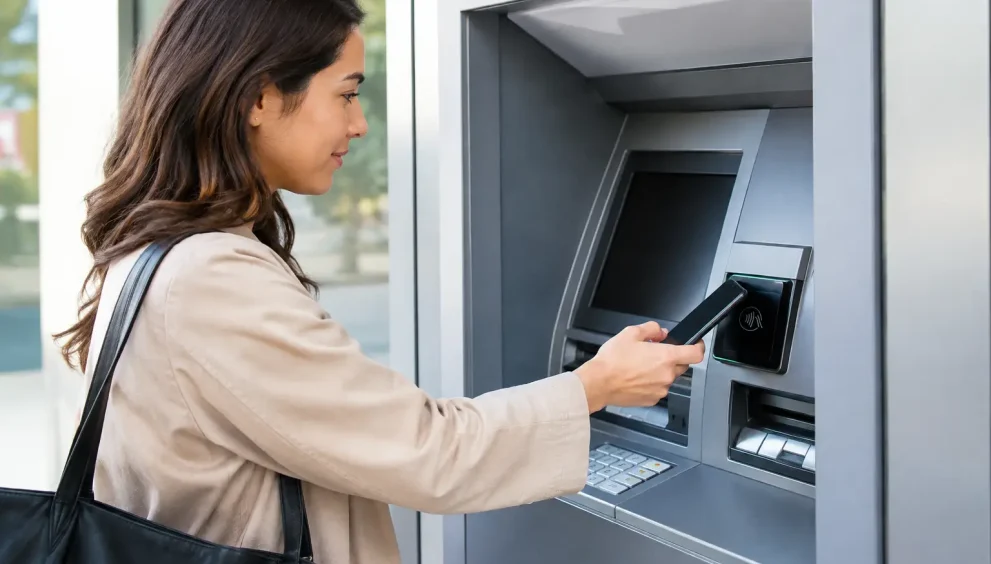
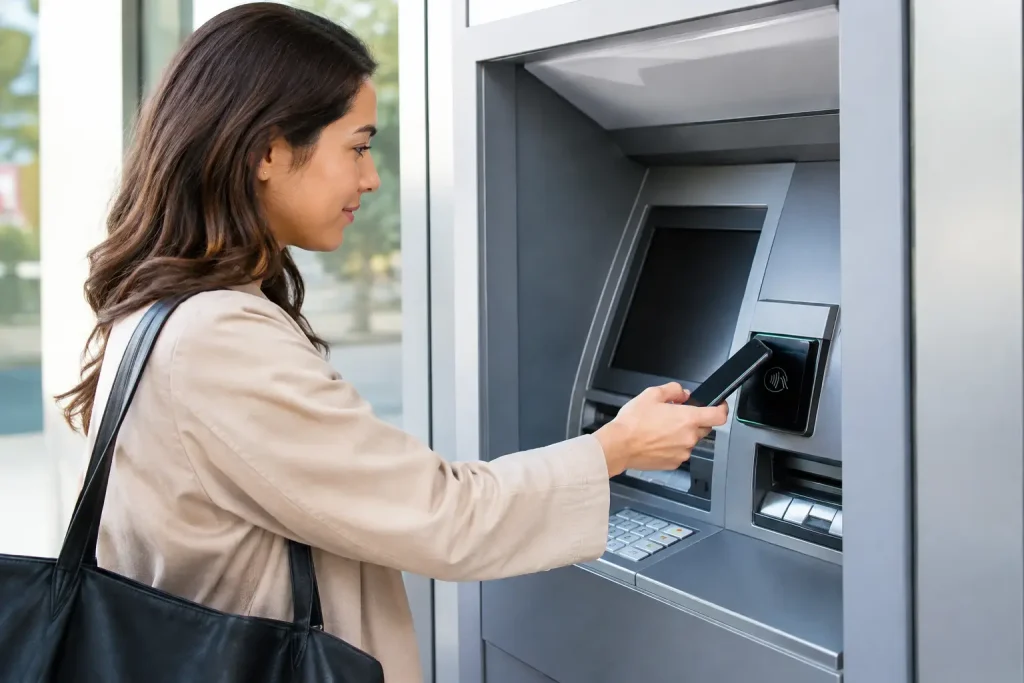
A customer taps a phone, authenticates with a wallet credential, and completes an ATM transaction without inserting a card. The interaction is brief, but the question behind it is operationally significant: are contactless ATMs secure? In most deployments, they can be as secure as, and in some respects more secure than, conventional card-based transactions. That outcome depends less on the contactless reader itself than on the complete chain of mobile credential, ATM software, host authorization, network controls, and field maintenance.
Contactless ATM use changes where credentials are presented and how they are protected. It does not eliminate fraud risk, nor does it make physical ATM security less relevant. For deployers and operators, the practical issue is whether the deployment reduces exposure without creating new support, interoperability, or exception-handling problems.
Why Contactless ATM Security Starts With the Credential
A traditional ATM transaction generally relies on the data read from a chip or magnetic stripe, plus the PIN. A contactless transaction typically uses near-field communication, or NFC, between the ATM reader and a phone, wearable, or contactless card. When a mobile wallet is involved, the device normally presents a payment token rather than the customer’s underlying card number.
That distinction matters. A token is designed for a specific credential and transaction environment, making it less useful if intercepted than reusable primary account data. Mobile wallets also commonly require device-level authentication through a passcode, fingerprint, or facial recognition before the credential can be used. This creates an additional control that a physical card alone may not provide.
The security benefit is conditional. Contactless card transactions may not have the same device-authentication layer as a mobile wallet. Meanwhile, a phone that is unlocked, compromised, or improperly enrolled can weaken the value of the credential controls. Banks should assess the credential types their ATM application will accept rather than treating all NFC transactions as equivalent.
Are Contactless ATMs Secure Against Skimming?
Contactless acceptance can reduce exposure to certain forms of skimming because the customer does not insert a card into the motorized reader. Criminals cannot harvest chip or stripe data from a card that never enters the card slot. For ATM fleets with persistent card-reader attack pressure, that is a meaningful advantage.
It is not a complete answer to ATM fraud. A contactless-capable terminal often retains a card reader for fallback and broad customer compatibility. That reader remains a potential target. Criminals may also focus on PIN capture, camera placement, fascia overlays, cash trapping, or compromised terminal components. The threat shifts rather than disappears.
PIN entry deserves particular attention. Many contactless ATM workflows still require a PIN, especially where the transaction model uses a debit credential. Privacy shields, encrypted PIN pads, inspection processes, and anti-overlay controls remain necessary. A mobile wallet may prove possession of a device, but it does not by itself protect the PIN pad from physical tampering.
The ATM, Not the Tap, Is the Larger Attack Surface
NFC communication occurs over very short range and is designed to support controlled exchanges. In a properly configured transaction, intercepting the radio exchange is difficult and does not generally yield a reusable card credential. The more consequential risks sit elsewhere in the stack.
ATM software must correctly identify the contactless interface, pass transaction data through the appropriate middleware, enforce transaction rules, and securely communicate with the host. The terminal’s operating system, application allowlisting, patch discipline, encryption keys, certificates, remote-management tools, and network segmentation all remain central security concerns.
A contactless reader connected to an outdated or poorly controlled ATM does not create a secure endpoint. In fact, adding acceptance methods can increase configuration complexity. The terminal may need new device drivers, updated XFS components, application changes, certification work, and monitoring rules. Each dependency should be accounted for in change control and tested under real operating conditions.
The same principle applies to transaction routing. Institutions should confirm how wallet-based ATM transactions are identified, authorized, logged, reversed, and reconciled across the acquirer, network, issuer, and switch environment. A security design is incomplete if operations teams cannot investigate disputes or determine whether a transaction was initiated through contactless, chip, or fallback processing.
Fraud Controls Must Follow the Transaction Context
Contactless ATM security is strongest when it is paired with risk controls that recognize device and transaction context. Issuers and acquirers can use velocity limits, geographic anomalies, transaction sequences, account behavior, and withdrawal patterns to identify activity that deserves additional scrutiny. The specific approach varies by institution, risk appetite, and network rules.
Limits should not be copied from card-present settings without review. A mobile-wallet transaction authenticated on a device may warrant different treatment from an unauthenticated contactless card tap. Conversely, a newly enrolled device making repeated high-value withdrawals may justify tighter controls. The objective is not to treat every contactless transaction as high risk, but to avoid granting it blanket trust.
Fallback handling is another area where fraud controls and customer experience can collide. If a contactless transaction fails, the customer may insert a card or retry through another channel. Repeated failures can create confusion at the terminal and generate avoidable service calls. Clear application logic, consistent user prompts, and reliable error codes help prevent a security feature from becoming an operational exception path.
Field Practices Determine Whether Controls Hold Up
The physical installation remains decisive. Contactless reader placement, fascia fit, cable routing, access to internal components, and tamper detection should be evaluated as part of the terminal design, not after deployment. A reader mounted behind a damaged or poorly fitted fascia can introduce both reliability and inspection concerns.
Service organizations need procedures that distinguish ordinary reader faults from potential tampering events. A loose reader assembly, unexpected device substitution, unexplained communication errors, or altered fascia should trigger defined escalation steps. Technicians should document the condition of security seals, terminal panels, PIN-entry components, and reader assemblies before and after service activity.
Remote monitoring can help identify faults, but it does not replace site inspection. Device health data may show an offline reader or repeated transaction failures without explaining whether the cause is configuration, wear, vandalism, or deliberate interference. Fleet operators need a service model that connects monitoring alerts with disciplined field diagnostics.
Key management also remains non-negotiable. Encryption keys for PIN processing and transaction security must be generated, distributed, stored, rotated, and retired under established controls. Contactless capability should be included in the institution’s key-management and certification review, particularly when terminal applications or security modules are upgraded.
Interoperability Can Create Quiet Security Gaps
A contactless ATM program often spans multiple manufacturers, software versions, acquirers, processors, wallet providers, and card networks. Security expectations can be lost at the edges when one participant assumes another is enforcing a rule.
Before broad rollout, operators should test supported wallet types, contactless cards, PIN flows, declined transactions, reversals, partial cash-dispense scenarios, network outages, and terminal recovery behavior. Test cases should include the less common paths that generate manual review or customer claims. Those events are where incomplete logging and inconsistent messaging become expensive.
Certification is necessary, but certification alone does not confirm that a fleet remains secure over time. A later software patch, reader replacement, OS update, communications change, or host migration can alter the transaction path. Configuration baselines and regression testing are particularly valuable for mixed fleets where terminal behavior may vary by model or application release.
A Practical Security Position
Contactless ATMs are not inherently less secure than conventional ATMs. Mobile-wallet transactions can reduce dependence on exposed card data and add device-based authentication, while tap-to-withdraw workflows can lessen exposure to card-reader skimming. Those benefits are real, but they apply to a portion of the threat model.
The remaining risks are familiar: compromised endpoints, weak software controls, insecure remote access, PIN capture, physical tampering, poor key management, and weak operational response. Contactless capability should therefore be evaluated as one layer within the ATM security architecture, not as a replacement for that architecture.
The most useful question for an operator is not whether NFC is secure in isolation. It is whether the institution can maintain secure configurations, detect anomalies, manage exceptions, and preserve consistent controls across every terminal and transaction path. That is where contactless ATM security is decided.