





ATM as a Service Trends Reshaping Fleets


A growing share of ATM fleet decisions now starts with a service model question rather than a hardware question. That is why atm as a service trends matter: they are changing how banks, independent deployers, and managed service providers structure ownership, support, software responsibility, and lifecycle risk.
For years, many institutions treated ATM programs as a capital asset supported by a patchwork of maintenance contracts, software licenses, cash services, and network relationships. The as-a-service model changes that logic. Instead of buying and managing each layer separately, operators increasingly evaluate bundled commercial models that combine hardware, monitoring, field service, software management, security support, and in some cases cash forecasting or transaction switching.
Why ATM as a service trends are gaining traction
The main driver is not novelty. It is operational strain. ATM estates have become harder to manage at the same time that many institutions are under pressure to simplify branch operations, control service costs, and modernize aging endpoints.
A traditional ownership model can still make sense for large banks with internal engineering depth, established vendor governance, and enough scale to absorb refresh cycles. But that model also leaves operators carrying multiple burdens at once: software patching, compliance tracking, parts planning, technician dispatch, incident management, and replacement timing. For smaller institutions and for larger organizations trying to reduce internal complexity, bundled service models are becoming more attractive.
There is also a financial logic behind the shift. Converting parts of the ATM channel from capital expenditure to a more predictable operating expense can help budgeting, especially when fleets are mixed in age and condition. That does not automatically make the service model cheaper over the full contract term, but it can make costs easier to forecast and service levels easier to define.
The service bundle is getting broader
Early managed ATM arrangements often centered on first-line maintenance, monitoring, and basic software support. Current ATM as a service trends point to much broader packaging.
Vendors and service organizations are increasingly positioning ATMaaS as a stack. Hardware provisioning, installation, remote monitoring, help desk, software distribution, key management coordination, compliance updates, and depot services are more often sold together. In some cases, cash management analytics, transaction processing, or branded user interface support are part of the same agreement.
That expansion has a practical benefit. Procurement teams prefer fewer handoffs when service quality is measured at the machine level. If one provider is accountable for uptime and another controls software, while a third manages cash forecasting and a fourth owns network transport, root-cause analysis becomes slower and accountability becomes blurred.
Still, broader bundles create their own trade-off. A single provider may reduce complexity, but it can also deepen dependency. Institutions need to look carefully at which layers are truly integrated and which are simply subcontracted under one commercial wrapper.
Uptime commitments are moving to the center
One of the clearer atm as a service trends is the shift from component-based contracting to outcome-based contracting. Buyers are less interested in isolated promises around break-fix response time if overall terminal availability remains inconsistent.
That is pushing more agreements toward service-level frameworks tied to uptime, incident resolution windows, software currency, and reporting cadence. On paper, this sounds straightforward. In practice, it raises several operational questions. Uptime definitions vary. Exclusions matter. Cash-out conditions, telecom failures, weather events, third-party network disruptions, and customer-induced damage can all complicate service-level measurement.
For operations leaders, the key issue is not just whether an uptime target exists. It is whether the data model behind it is credible. If different systems of record classify incidents differently, monthly SLA reports may not reflect field reality. That makes observability and event normalization increasingly important in ATMaaS contracts.
Software management is now a major value proposition
Hardware service alone is no longer enough to differentiate managed ATM offerings. Much of the current market movement is tied to software administration.
As fleets migrate toward newer operating environments, stronger security baselines, remote software orchestration, and more API-aware application layers, software support has become one of the most resource-intensive parts of channel management. This is particularly true for institutions running a mix of legacy terminals and newer platforms from multiple OEMs.
In that context, ATM as a service trends increasingly include lifecycle services around application deployment, patch validation, operating system updates, security hardening, and middleware compatibility management. The value is not only labor reduction. It is reduced exposure to missed updates, failed rollouts, and fragmented configuration control.
The caution is that software accountability must be defined with precision. A provider may manage deployment but not own application defects. Another may maintain middleware but exclude host-side integration issues. A managed service agreement is only as clear as its exception handling.
Security is becoming embedded, not bolted on
Physical and logical security expectations are reshaping service design. The market is moving away from treating security as a separate project that sits outside the managed service framework.
That means ATMaaS providers are more often expected to include security patching, vulnerability response processes, audit support, and stronger controls around remote access, user privileges, and software integrity. On the physical side, monitoring related to door events, tampering, and suspicious service patterns is receiving more attention, especially as service organizations try to combine ATM support with broader self-service endpoint oversight.
This shift is sensible, but it also raises vendor assessment standards. Institutions need more visibility into how service providers manage privileged access, subcontractor controls, credential rotation, and incident escalation. A service model can reduce internal workload while still increasing risk if governance is weak.
Multi-vendor interoperability remains a pressure point
One reason ATMaaS has appeal is the promise of simplification across fragmented fleets. Yet interoperability is still one of the harder parts of execution.
Many operators do not run a clean, single-vendor environment. They may have a mix of lobby units, drive-up terminals, recycler deployments, branch transformation equipment, and aging off-premise assets with different service histories. Layer on multiple software environments and inherited acquisitions, and standardization becomes difficult.
Current ATM as a service trends suggest that providers are getting better at managing mixed environments, but not all bundles are equally mature. Some are strong in first-line maintenance but less capable in software abstraction across OEM platforms. Others can handle software orchestration but rely heavily on regional subcontractors for field service quality.
This is where due diligence still matters more than the label. Calling an offer ATMaaS does not guarantee interoperability discipline, depot readiness, or standardized incident workflows.
Cash automation is influencing the service model
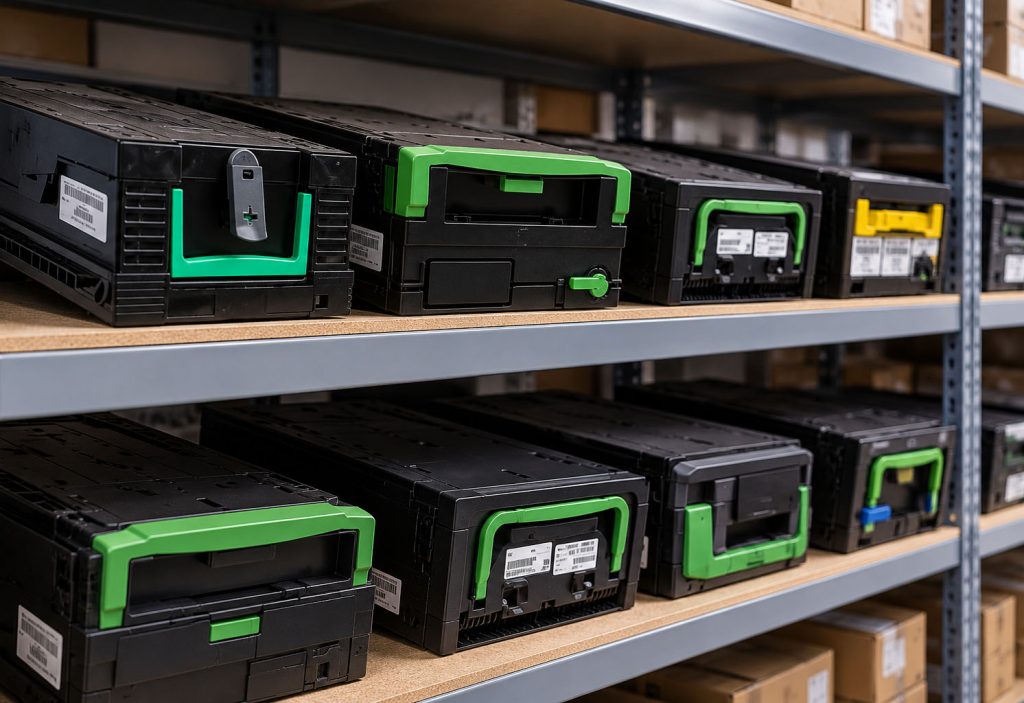
The rise of recyclers and smarter branch cash devices is also shaping ATMaaS design. Once an endpoint handles more than basic dispense functions, service requirements change. Forecasting, balancing, parts availability, software tuning, and staff workflows all become more interconnected.
For banks evaluating cash automation, a service model can be attractive because it places more of that operational coordination under one contract. But recycler estates are less forgiving than basic ATM fleets when service teams lack product-specific expertise. A generalized managed service model may not be enough if it does not account for cassette behavior, note quality issues, branch balancing procedures, and integration with broader cash operations.
Contract flexibility is becoming a differentiator
The market is showing more interest in modular deals rather than fully outsourced, all-or-nothing arrangements. This is one of the more practical ATM as a service trends because many institutions are not looking to surrender control of the entire channel.
Some want to retain software ownership but outsource field maintenance. Others want managed monitoring and patching while keeping cash logistics and branch support internal. Hybrid models are likely to remain common because ATM fleets sit inside broader operating structures that differ significantly by institution size, geography, and staffing model.
Providers that can support partial outsourcing, phased transitions, and mixed commercial structures may have an advantage over those pushing a fixed template. Flexibility matters most during migration periods, especially when institutions are replacing legacy terminals or consolidating vendors.
What buyers should watch next
The next phase of ATMaaS will likely be shaped less by branding and more by execution data. Buyers will look for evidence that providers can normalize events across fleets, maintain software currency at scale, support mixed hardware environments, and produce service reporting that stands up to operational scrutiny.
Artificial intelligence will likely appear more often in monitoring, dispatch optimization, and cash forecasting claims, but the practical question will remain simple: does it improve first-time fix rates, uptime, and cost predictability? If not, it is background noise.
There is also a broader strategic issue. As more ATM functions move into managed models, institutions will need to decide which competencies remain core. Outsourcing can reduce complexity, but it should not eliminate internal visibility into performance, security posture, and lifecycle planning.
The most useful way to view ATMaaS is not as a shortcut, but as a redistribution of operational responsibility. That can be highly effective when contracts are specific, governance is strong, and providers have real depth across software, service delivery, and endpoint infrastructure. When those conditions are missing, the same model can simply hide complexity behind a monthly fee.
For decision-makers evaluating their next fleet strategy, the better question is not whether ATMaaS is the future. It is which parts of the ATM operating stack are best managed internally, which can be externalized without losing control, and how much standardization the organization is realistically prepared to enforce.