





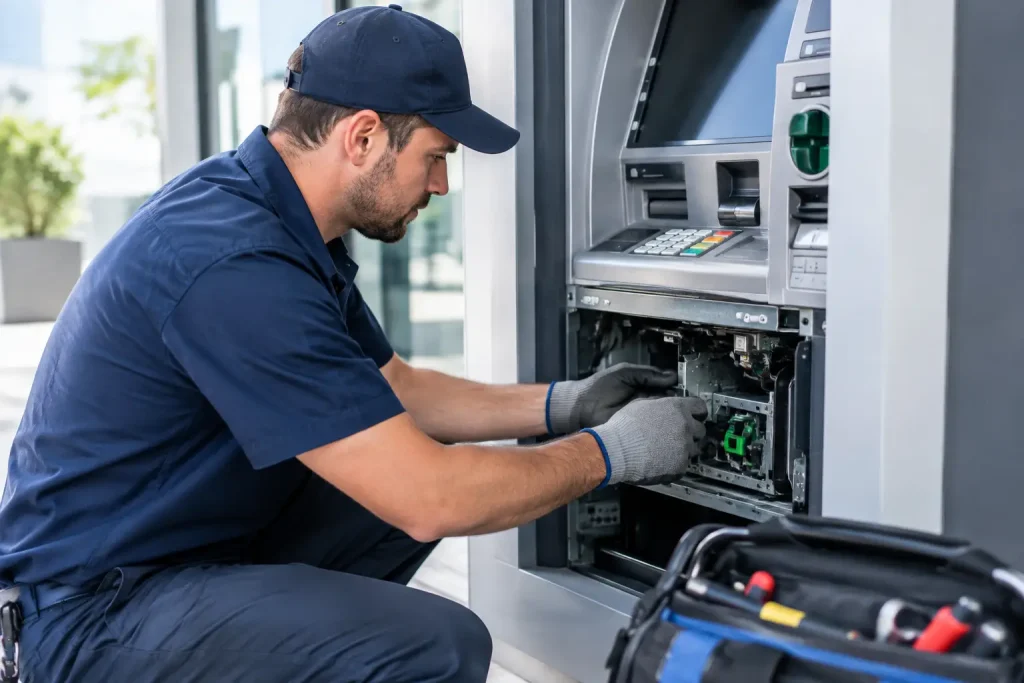
Cash Recycler Maintenance That Prevents Downtime

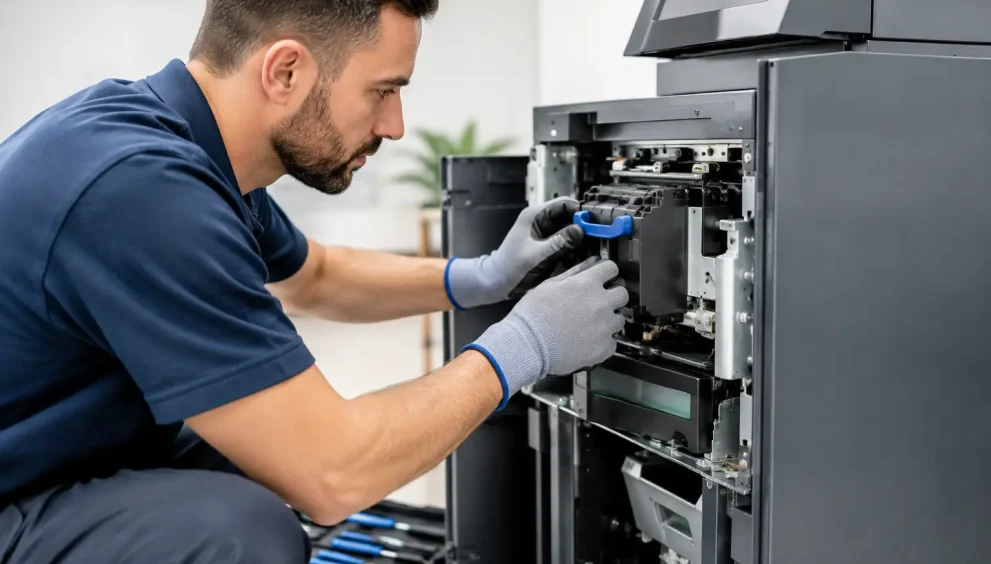
A cash recycler that accepts deposits accurately at 9 a.m. can still become a service problem by midafternoon if note quality, cassette loading, and cleaning practices are not under control. Cash recycler maintenance is therefore not limited to responding to jams or replacing worn parts. It is a disciplined operating process that connects branch behavior, field service, device telemetry, and cash-management controls.
For banks and service organizations, the stakes are higher than a single out-of-service terminal. A recycler failure can interrupt teller transactions, force manual cash handling, create balancing delays, and undermine the business case for branch automation. The most effective maintenance programs treat the device as part of a broader cash process rather than as an isolated piece of hardware.
Why Cash Recycler Maintenance Requires a Different Approach
A conventional cash dispenser has a relatively narrow job: dispense notes from assigned cassettes. A recycler must validate, route, store, retrieve, and account for notes moving in both directions. Its transport path, escrow areas, sensors, reject compartments, and recycling cassettes are exposed to a wider range of conditions.
That complexity does not mean recyclers are inherently unreliable. It does mean that maintenance intervals based only on calendar dates can be misleading. A device processing high volumes of deposit notes, particularly in a location with mixed note condition, may need attention much sooner than a lower-volume unit using mostly fit notes from an established cash supply chain.
The practical question is not simply whether the device has reached its scheduled service date. It is whether operating conditions are beginning to exceed the assumptions behind that schedule. Rising reject rates, repeated transport retries, increasing sensor-related faults, or a growing share of unfit deposit notes are signals worth investigating before they become an outage.
Start With the Notes, Not the Error Code
Field teams often receive a fault code after the underlying condition has been present for weeks. A transport jam may be associated with dust accumulation or a worn feed component, but it can also reflect note fitness problems, folded corners, adhesive contamination, excessive humidity, or incorrect cassette preparation.
Deposit behavior matters as much as cash-order quality. Branch employees and commercial customers may introduce notes that have been heavily circulated, damaged, stapled, taped, or exposed to moisture. Even when the recycler correctly rejects those notes, a consistently poor deposit stream increases wear on the note path and can fill reject areas faster than expected.
Maintenance planning should therefore include a review of reject contents and transaction patterns. Are rejected notes predominantly folded, soiled, or suspicious? Are rejects concentrated in a particular denomination? Do they occur after cash replenishment, after a busy deposit period, or across all operating hours? Those answers help distinguish a device condition from a cash-quality or process issue.
A recurring problem with one denomination may point to note fitness in the local supply rather than a mechanical failure. Conversely, failures involving multiple denominations and transaction types are more likely to justify a closer inspection of sensors, belts, rollers, gates, and transport components.
Build a Maintenance Schedule Around Real Utilization
Manufacturers provide preventive maintenance guidance for good reason, and those requirements should remain the baseline for warranty, service, and compliance purposes. But fleet operators should layer local operating data over those recommendations. Transaction volume, deposit mix, note circulation patterns, branch environment, and device configuration all affect maintenance demand.
A useful operating model separates routine branch tasks from technician-level preventive work. Branch personnel can keep exterior areas clear, remove visible debris when procedures permit, report unusual sounds or reject behavior, and follow disciplined cash-loading practices. Qualified technicians should handle internal cleaning, inspection, calibration where required, component replacement, firmware-related checks, and functional testing.
The division matters. Asking branch staff to perform work beyond their training can introduce security, balancing, or damage risks. Sending a technician for every minor reject issue, however, raises service costs and lengthens recovery time. Clear escalation rules provide a better balance.
For many fleets, maintenance triggers should include both elapsed time and transaction measures. A location with modest traffic may be adequately served by a scheduled interval. A high-volume branch, retailer, or cash-intensive commercial location may justify service based on notes processed, deposit transactions, reject trends, or error frequency. The right threshold depends on the equipment model and environment, but the principle is consistent: service the condition, not just the calendar.
What a Preventive Visit Should Verify
A productive preventive visit is more than a cleaning appointment. The technician should inspect the note path for dust, paper residue, foreign objects, and signs of abnormal wear. Rollers, belts, pickup mechanisms, transport gates, sensors, shutters, and cassette interfaces should be assessed according to the approved service procedure.
Cleaning must use materials and methods approved for the device. Excess liquid, inappropriate wipes, or compressed air used without care can move debris into sensors or damage sensitive areas. The goal is controlled removal of contamination, not simply making the interior look clean.
The visit should also confirm that cassettes are intact, properly identified, and seated correctly. Damaged cassette latches, warped components, worn interfaces, or incorrect denomination assignments can produce faults that resemble transport problems. Functional testing after service should cover both deposit and dispense operations, because a recycler can appear healthy on one transaction type while failing on the other.
A complete record should capture the reason for service, observed contamination, replaced parts, device counters, error history, test results, and any recommendation for follow-up. This documentation turns individual service calls into fleet intelligence.
Use Data to Find Repeat Failures
The most costly recycler issues are often not the dramatic failures. They are the repeat calls where a device is restored temporarily but returns to service with the same symptom days later. These cases consume field resources, frustrate branch staff, and can lead to unnecessary part replacement if fault history is incomplete.
Service managers should look for patterns across several measures: reject rate, jam rate, transport retries, deposit-versus-dispense errors, cassette-specific events, mean time between service calls, and repeat incidents after a repair. A fault code alone rarely provides enough context. It needs to be read alongside transaction logs, software status, recent cash activity, and prior technician notes.
For example, repeated errors after cassette swaps may indicate a cassette issue, loading method, denomination configuration, or a mechanical interface. Faults that increase during humid periods may suggest environmental exposure or note condition. A sudden rise in rejects after a software change may warrant validation of configuration, thresholds, and event reporting before mechanical work is authorized.
This analysis also improves spare-parts planning. Fleets that identify recurring wear components by model, transaction band, and operating environment can stock more intelligently. The objective is not to hold every part at every service location. It is to reduce the time spent diagnosing predictable issues while avoiding broad, speculative replacements.
Treat Software and Configuration as Maintenance Items
Cash recycler reliability has a software dimension. Device firmware, application versions, currency templates, denomination settings, transaction limits, and host integration can influence how faults appear and how recovery procedures work.
That does not mean every issue should be blamed on software. Mechanical wear and contaminated notes remain common causes of physical handling faults. Still, a maintenance program that ignores configuration control will miss a significant source of operational risk.
Changes should be documented and validated against a defined test plan. When a branch receives new note series, changes denomination use, adjusts deposit workflows, or updates terminal software, teams should confirm that acceptance, routing, accounting, and exception handling perform as intended. A device that recognizes a note correctly but routes it incorrectly is not a minor inconvenience. It can create balancing and customer-service problems that take longer to resolve than a simple jam.
Establish Clear Ownership Between Branch, Cash, and Service Teams
Recycler availability depends on coordinated ownership. The branch controls day-to-day use and often sees the first signs of trouble. Cash operations influence note quality, cassette preparation, and replenishment discipline. Field service owns technical diagnosis and repair. Technology teams may control software, networks, and monitoring.
Failures become prolonged when those responsibilities are unclear. A branch may repeatedly clear rejects without recording the condition. A technician may replace a transport component without knowing that a cassette was loaded with poor-quality notes. A service desk may close an incident after recovery without connecting it to a recurring pattern at the same location.
A practical governance model defines what each group records, who can clear or reset a condition, when a technician is dispatched, and when an incident requires root-cause review. It should also specify how cash discrepancies are isolated from equipment faults. Not every balancing issue is a recycler defect, and not every device fault has a cash impact. Separating those paths early prevents wasted investigation.
The Measure That Matters Is Stable Availability
A low number of service calls can look positive while concealing a fleet that is difficult for branch staff to use. Likewise, an aggressive preventive schedule can reduce incidents but produce unnecessary cost if it is not adjusted for actual device conditions.
The aim is stable availability: predictable operation, controlled cash exceptions, fewer repeat dispatches, and maintenance activity that matches each location’s risk profile. That requires consistent records and a willingness to revise assumptions when field data says they no longer fit.
The next service review is a useful place to start. Compare the devices generating the most rejects, repeat calls, and cash-handling exceptions with their transaction volume and note sources. The result may show that the maintenance issue is not inside the recycler at all, but in the process feeding it.